
Buyer's Guide to Stage Low Fog Equipment for Theaters
- Low-lying theatrical fog systems: technical characteristics and use cases
- Core physical parameters buyers must quantify
- Common technologies and their creative strengths
- Venue constraints: HVAC, sightlines, and stage infrastructure
- Operational safety, compliance, and maintenance requirements
- Regulatory and standards context
- Detector interaction and emergency planning
- Routine maintenance, consumables, and serviceability
- Procurement checklist and specification template for buyers
- Technical specification essentials
- Service-level and warranty terms
- Selection criteria matrix
- Vendor evaluation, customization, and integration: why manufacturer capabilities matter
- Required manufacturer deliverables
- Customization and systems integration
- Supplier support and training
- Siterui SFX capabilities and product fit for theatrical deployments
- Manufacturing strength and R&D alignment
- Customization, integration, and control ecosystems
- Relevant product lines and application match
- Service model, warranties, and global support
- Frequently Asked Questions
- How does dry-ice fog compare to chilled glycol ground fog in runtime and safety?
- Will theatrical aerosols trigger smoke detectors and how can that be managed?
- What are the recurring operational costs to budget for?
- Can fog and haze effects be controlled remotely and synchronized with lighting cues?
- What ventilation considerations should venue owners evaluate before purchase?
This buyer-focused procurement guide explains how to evaluate and specify low-lying theatrical fog systems—covering cryogenic dry-ice foggers, chilled glycol ground-fog units, water-based floor foggers, and complementary haze and CO₂ solutions—by prioritizing aerosol particle size, thermal stratification, persistence, HVAC interaction, safety standards, lifecycle operating cost, and system integration for theaters and performance venues. The guide provides comparative performance data, selection checklists, and compliance references to help facility owners, technical directors, and rental houses make risk-mitigated acquisitions that deliver repeatable creative outcomes while protecting audience health and venue operations. (Target keyword: stage low fog equipment)
Low-lying theatrical fog systems: technical characteristics and use cases
Core physical parameters buyers must quantify
Procurement decisions start with measurable effect attributes: floor adhesion (how well the vapor hugs the stage), visible density, particle size distribution, and dissipation time. These variables determine whether a device is suited for proscenium theaters, thrust stages, or intimate black-box venues. Particle sizes in theatrical aerosols typically range from submicron haze (<1 µm) to larger droplets produced by glycol-based low-lying machines (>1–10 µm); smaller particles remain suspended longer and affect HVAC filtration differently. Buyers should request manufacturer particle data and, when available, third-party lab reports showing aerosol size distribution and mass concentration.
Common technologies and their creative strengths
Cryogenic systems that use solid CO₂ (dry ice) produce dense, floor-hugging vapor ideal for short-duration dramatic entrances and visual separation; chilled glycol-based ground foggers generate longer-lasting sheets that can be tuned with glycol mixtures and chiller control; water-based low-temperature units and liquid-to-vapor hazers provide background atmospheric diffusion with less visible floor adhesion. CO₂ jets and high-velocity gas burst units provide instantaneous plumes but require careful audience safety planning. Understanding the creative profile required by a production—instant burst vs. persistent blanket—guides the technology choice.
Venue constraints: HVAC, sightlines, and stage infrastructure
Integration with building ventilation is critical. Low-level fog that remains close to the stage may still interact with intake vents, smoke detectors, and HVAC return flow. Buyers should coordinate with facility engineers to map airflow patterns and locate machine placement to minimize unintended migration into public spaces. Additionally, check sightlines and stage rigging points for cabling and remote-control runs. Where permanent installation is planned, specify flanged mounting or road-case design for repeatable placement.
Operational safety, compliance, and maintenance requirements
Regulatory and standards context
Health and safety reviews should reference industry and regulatory authorities. Guidance on indoor air quality and aerosol exposure from OSHA: Indoor Air Quality helps frame occupational exposure limits and ventilation requirements. The National Fire Protection Association publishes codes that impact theatrical effects and flame/fog use; consult NFPA resources for applicable standards on installation and operation in performance spaces. For technical descriptions of fog and haze apparatus, manufacturers often cite common references such as Fog machine - Wikipedia and Dry ice - Wikipedia for basic properties.
Detector interaction and emergency planning
Smoke detectors and aspirating systems may be sensitive to theatrical aerosols. Buyers should obtain compatibility statements from detector manufacturers and consider pre-programmed detector bypass protocols only when approved by the venue’s authority having jurisdiction (AHJ). Emergency procedures must include gas monitoring where CO₂ jets are used and evacuation protocols for inadvertent over-concentration. Fixed installations should include local interlocks or event-driven automation to prevent unsafe operation.
Routine maintenance, consumables, and serviceability
Total cost of ownership extends beyond capital expenditure. Consumables like glycol concentrate, cryogenic pellets, or specialized fluids, plus filters and heaters, create recurring costs. Buyers should require O&M manuals with mean time between failures (MTBF), spare parts lists, and local service options. For rental houses, quick-swappable components and front-access panels reduce downtime during turnover between shows.
Procurement checklist and specification template for buyers
Technical specification essentials
Include clear acceptance criteria in the purchase order: effect type (continuous floor fog, intermittent bursts), run-time at full output, warm-up time, fluid/consumable compatibility, mounting footprint, electrical load (voltage, current, phase), control interfaces (DMX, Wireless, Ethernet), and integration with existing control consoles. Require factory-stamped drawings for permanent installations and fail-safe control modes for automated scenes.
Service-level and warranty terms
Specify warranty duration, what is covered (electronics, pumps, heaters), and allowable mean repair times. For critical productions, include options for extended warranty, on-site commissioning, and factory acceptance testing. If rental or leasing is part of the procurement model, demand pre-delivery testing certificates and fluid quality verification.
Selection criteria matrix
Prioritize vendor reputation, third-party safety certifications, local service footprint, and customization capabilities. Scoring factors should weigh creative fidelity (how closely the effect matches the artistic brief), operational reliability, lifecycle cost, and compliance readiness. A formal scoring matrix helps procurement teams compare proposals objectively.
| Method | Typical persistence | Floor adhesion | Ventilation impact | Common use-cases |
|---|---|---|---|---|
| Dry ice (cryogenic) systems | Short to medium (minutes) | High (ground-hugging) | Moderate; CO₂ displacement risk if used indoors without ventilation monitoring | Quick dramatic entrances, photographic effects |
| Chilled glycol ground-foggers | Medium to long (several minutes to hours with diffusion) | High to adjustable | Higher aerosol load; affects HVAC filtration | Extended floor fog for scenes, touring shows |
| Water-based low-temp units | Variable; often short | Moderate | Lower; mostly water vapor but may carry additives | Family or museum shows with lower chemical exposure |
| Hazers (background haze) | Long (background haze persists) | Low (not floor-hugging) | Persistent; affects detectors and air quality over time | Lighting beams, atmospheric depth for concerts and theatrical cues |
| CO₂ jets (plume effects) | Very short (seconds) | Low | Gas concentration hazards; requires monitoring | High-impact bursts, transitions |
Vendor evaluation, customization, and integration: why manufacturer capabilities matter
Required manufacturer deliverables
A compliant supplier must provide detailed technical data sheets, electrical schematics, control protocol documentation, and MSDS for all fluid products. Request factory performance curves showing output vs. run-time and thermal behavior. For permanent installs, require installation templates and mechanical drawings. Certification documentation—CE, RoHS, or other regional compliance marks—should be included in the bid package.
Customization and systems integration
Customization can materially improve operational outcomes. Buyers should consider custom control interfaces (wired DMX, sACN/E1.31, or proprietary wireless), branded casings for touring units, integrated chillers or glycol heaters for stability, synchronized multi-device scenes, and routeable cabling for rapid stage changes. Integration into venue automation systems reduces operating complexity and ensures coordinated cues with lighting and pyro where permitted.
Supplier support and training
Buyers should demand on-site commissioning, operator training, and troubleshooting playbooks. For complex multi-device networks, require a factory-certified technician to support initial events. Verify local service partners or spare-parts depots to reduce downtime during seasons with frequent shows.
Siterui SFX capabilities and product fit for theatrical deployments
Manufacturing strength and R&D alignment
Siterui SFX is a professional manufacturer engaged in the research and development, production, sales, and service of professional stage special effects equipment. With a highly skilled team and cutting-edge technology, we are committed to providing innovative, reliable, and high-performance solutions for live events, theaters, concerts, film production, and entertainment venues worldwide. Buyers benefit from our engineering documentation, factory testing, and ability to supply performance data tied to real-world deployments.
Customization, integration, and control ecosystems
Our team offers flexible customization services to meet venue-specific needs—whether branding, special functions, size adjustments, or complete system integration. From custom casing and logo printing to wireless control systems and synced multi-device setups, our engineering team works closely with project owners to deliver turnkey solutions. Control options include DMX, sACN/E1.31, and wireless remote, enabling seamless integration with lighting consoles and automation platforms.
Relevant product lines and application match
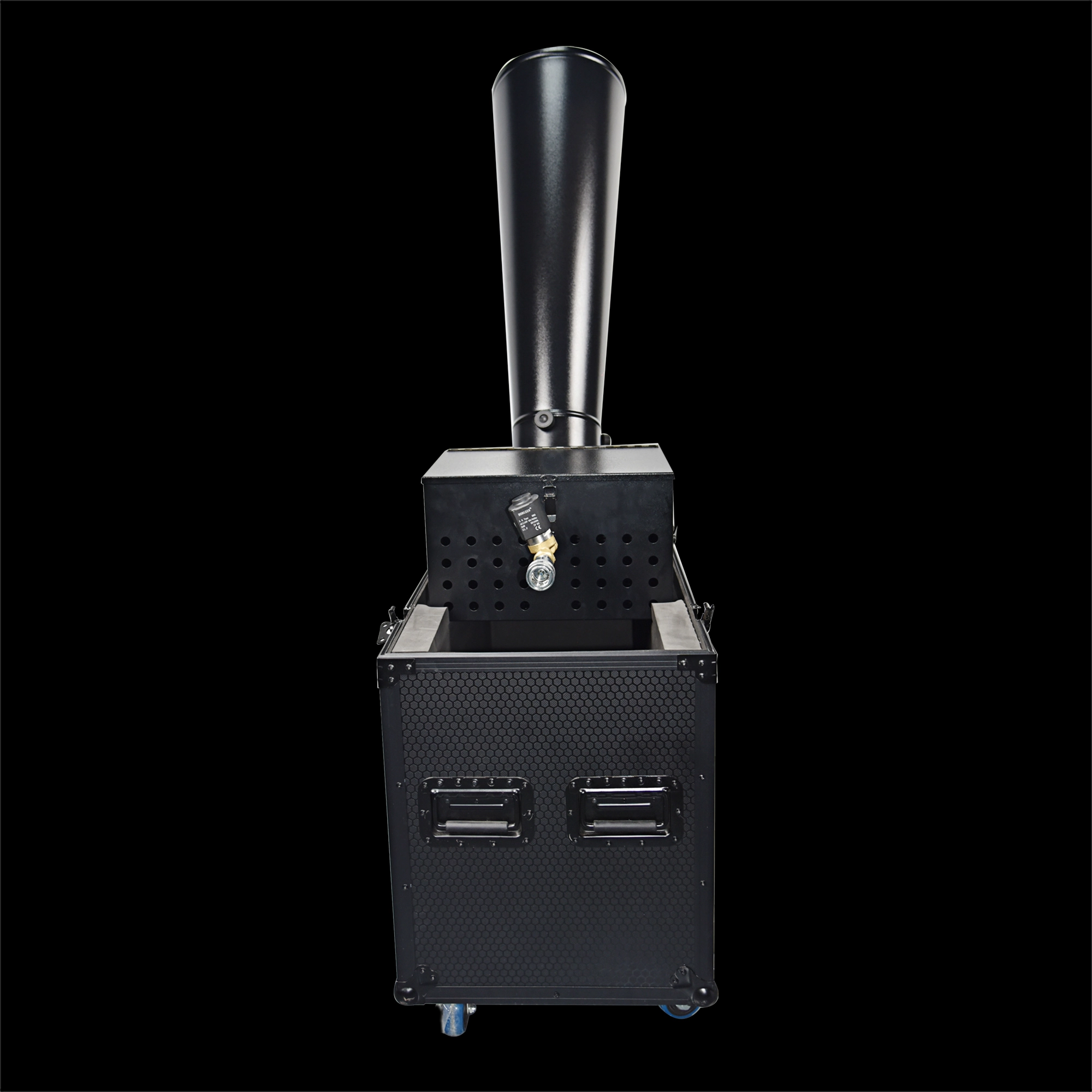
Siterui SFX supplies a broad portfolio that addresses the needs described in this guide, including spark machines, haze units, CO₂ jet machines, bubble and snow machines, foam and confetti systems, conventional fog units, theatrical flame-effect simulators, and dry ice generators. For venue owners seeking floor-hugging vapor, our chilled-ground foggers and dry-ice-compatible units are engineered for predictable stratification and long service intervals. For sustained atmospheric backdrops, our hazers provide controllable particle output with integrated filtration options.
Service model, warranties, and global support
We provide comprehensive after-sales services including warranty coverage, spare parts packages, and optional on-site commissioning. Our global sales and service teams support rental houses and fixed installations with training, maintenance contracts, and rapid spare delivery. For specifications and procurement inquiries, project owners can review product data and request site-specific proposals through our website and sales channels.
Frequently Asked Questions
How does dry-ice fog compare to chilled glycol ground fog in runtime and safety?
Dry-ice fog delivers immediate, dense ground-hugging effects with shorter persistence and requires CO₂ monitoring in poorly ventilated spaces; chilled glycol systems offer longer-lasting low-lying sheets with higher aerosol load and require fluid handling and HVAC coordination. Both require adherence to venue safety protocols and material safety data sheets.
Will theatrical aerosols trigger smoke detectors and how can that be managed?
Some smoke and aspirating detectors are sensitive to theatrical aerosols. Management strategies include detector zoning, AHJ-approved pre-show detector bypass procedures, use of less-dense atmospheric products, detector immunity tuning where permitted, and coordination with the venue’s fire safety officer. Always obtain written approval from the AHJ before altering detector behavior.
What are the recurring operational costs to budget for?
Recurring costs include consumables (glycol, fluids, dry-ice pellets), filters, electrical energy, chiller maintenance, and periodic pump/heater replacement. Budget for operator labor and service contracts. Request a total cost of ownership estimate from the vendor that includes expected consumable consumption rates.
Can fog and haze effects be controlled remotely and synchronized with lighting cues?
Yes. Modern effect generators typically support DMX, sACN, and proprietary wireless protocols for integration with lighting and automation systems. Specify required control protocol during procurement and verify vendor-provided control maps and scene presets for synchronization.
What ventilation considerations should venue owners evaluate before purchase?
Evaluate return and supply vent locations, audience airflow patterns, and HVAC filtration capacity. Coordinate with mechanical engineers to ensure effects do not migrate into public circulation paths or critical air intakes. For CO₂ or cryogenic use, install gas sensors and establish ventilation thresholds to prevent unsafe concentrations.
Contact Siterui SFX for product specifications, customization options, and procurement support or view our product catalog at https://www.siteruisfx.com/ or email sales01@strlighting.com.


Email: sales01@strlighting.com
WhatsApp: +86 189 2232 4800
© 2025 Siterui SFX All Rights Reserved.
 Scan QR Code
Whatsapp: +8618922324800
siteruisfx_stage_equipment
Siterui
SITERUI-SFX
STRlighting
@siterui.sfx