
Case Studies: Successful Events Using LCD Low Fog Machines
High-impact event designers and procurement teams requiring low-lying atmospheric effects prioritize reliability, venue safety, and easy integration—this article analyzes multiple successful deployments of lcd low fog machine systems across concerts, theatrical productions, and corporate activations, compares alternatives, highlights technical procurement criteria, and explains how professional manufacturing and customization improve uptime, compliance, and creative control for large-scale productions.
- Applications and outcomes of low-lying fog systems for live productions
- Event types and creative objectives
- Audience experience, camera and lighting integration
- Venue and HVAC considerations
- Technical performance, procurement checklist, and operational best practices
- Key specifications to evaluate
- Installation, control, and multi-device synchronization
- Maintenance, consumables, and lifecycle cost
- Case studies: measurable outcomes from real-world events
- International concert tour: consistent low-lying effects across venues
- Theatre production: quiet operation with tight density control
- Corporate launch and brand activation: safety and quick turnover
- Comparative performance: fog technologies and procurement implications
- Selecting a supplier and the advantage of purpose-built manufacture
- Procurement criteria for reputable manufacturers
- Siterui SFX capabilities and tailored solutions
- Product portfolio, integration and support
- Frequently Asked Questions
High-impact event designers and procurement teams requiring low-lying atmospheric effects prioritize reliability, venue safety, and easy integration—this article analyzes multiple successful deployments of lcd low fog machine systems across concerts, theatrical productions, and corporate activations, compares alternatives, highlights technical procurement criteria, and explains how professional manufacturing and customization improve uptime, compliance, and creative control for large-scale productions.
Applications and outcomes of low-lying fog systems for live productions
Event types and creative objectives
Buyers should match the selection of an lcd low fog machine to the creative brief: concert tours often require high-output, portable low-lying effects that can operate reliably across venues; theatre productions require quiet operation and fine-grained density control to preserve sightlines; corporate brand activations need fast warm-up, predictable run-time, and compatibility with DMX/RDM or wireless control for synchronized cues. Using an lcd low fog machine helps production teams achieve the cinematic ‘‘floor-level’’ cloud effect without obstructing performers or cameras when properly specified.
Audience experience, camera and lighting integration
When integrated with lighting rigs and follow-spot choreography, an lcd low fog machine enhances beam visibility and volumetric lighting while maintaining low penetration into audience sightlines. Technical buyers should insist on devices that support variable output and scene presets so lighting designers can tune scattering properties for HD broadcasting and live-streamed content. This reduces retakes and improves ROI on camera time.
Venue and HVAC considerations
Facility owners must plan for HVAC interaction and egress safety. Low-lying fog tends to remain at floor level, but HVAC return points and smoke detectors can alter its behavior. Procurement teams should coordinate with venue engineering to map airflow and choose an lcd low fog machine with adjustable thermal output and low residue fluid chemistry to prevent accumulation on stage surfaces. Refer to general theatrical smoke guidance for safety practices from authoritative bodies such as Theatrical smoke and haze - Wikipedia and ventilation best-practices from national regulators like HSE.
Technical performance, procurement checklist, and operational best practices
Key specifications to evaluate
RFPs for an lcd low fog machine should specify: output rate (m3/min), power draw, warm-up time, fluid type and consumption rate, duty cycle, control protocols (DMX512/RDM, Art-Net, wireless), footprint and weight for trucking, and maintenance access. Emphasizing measurable metrics prevents under-specced purchases that lead to mid-tour swap-outs.
Installation, control, and multi-device synchronization
Large-scale productions often deploy decentralized systems with synchronized cues. Select an lcd low fog machine with built-in synchronization features or support for external show-control systems so multiple units can produce identical density curves. Robust error reporting and network-compatible firmware reduce technician troubleshooting time on load-in days.
Maintenance, consumables, and lifecycle cost
Operational budgets must account for consumable fluids, filter replacement, and periodic pump servicing. Buyers should request Mean Time Between Failures (MTBF) and a spare-parts list. Choosing an lcd low fog machine with modular components shortens rack-time for repairs; warranty and spare-part availability from the manufacturer are decisive for long tours and fixed-venue installations.
Case studies: measurable outcomes from real-world events
International concert tour: consistent low-lying effects across venues
A major touring act required repeatable low-lying atmospheric effects across arenas with differing HVAC profiles. The production specified rack-mountable lcd low fog machine units with integrated DMX and wireless trigger options. The result was consistent visual density on camera, reduced cue variance, and lower on-site fluid consumption compared with the previously used dry ice method. Technical riders noted improved load-out speed and reduced labor for the automated refill system.
Theatre production: quiet operation with tight density control
A regional theatre production prioritized near-silent operation and precise effect curves for choreography. The procurement team selected compact lcd low fog machine models capable of micro-output adjustments and time-coded playback. This avoided sound interference, preserved dialogue clarity, and enabled repeatable cues over a six-week run, reducing overall production risk.
Corporate launch and brand activation: safety and quick turnover
A global brand launch required a low-lying fog effect during multiple short sessions per day. The activation needed fast warm-up, fast cooldown, and minimal residue to protect AV equipment. The chosen lcd low fog machine offered a sealed-fluid system and rapid refill exchange, which cut downtime between activations and ensured consistent client-facing visuals without extra cleaning labor.
Comparative performance: fog technologies and procurement implications
| Parameter | Dry ice (solid CO2) low fog | lcd low fog machine | Haze machine |
|---|---|---|---|
| Consumable | Dry ice (solid CO2), requires storage and handling | Designed fluid cartridges or liquid/gas solution with sealed delivery | Oil- or water-based haze fluid (propylene glycol or mineral oil variants) |
| Typical effect | Very low, dense floor-hugging fog; limited duration without HVAC control | Low-lying, controllable floorscape with timed output and integration | Atmospheric beam enhancement, longer-lasting airborne particles |
| Residue & cleaning | Minimal chemical residue but surface moisture and CO2 handling required | Low-residue fluids engineered for stage environments when specified | Potential oily residue where mineral-oil fluids are used; water-based reduces residue |
| Operational complexity | High: dry ice logistics, PPE, storage, and transport constraints | Medium: electrical and fluid logistics, simpler on-site handling vs dry ice | Low-medium: simple fluid top-up, continuous runtime possible |
| Safety considerations | CO2 accumulation risks; coordinate with venue ventilation and safety officers (Dry ice - Wikipedia) | Requires fluid safety data sheets (SDS) and compliance with venue environmental policies | May interact with smoke detectors; check detector tolerance and manufacturer guidance (Fog machine - Wikipedia) |
| Best procurement fit | Short, dramatic moments where infrastructure for dry ice exists | Medium- to large-scale productions requiring repeatable, synchronized low-lying effects | Ambient beam effects and sustained atmospheric looks |
Sources and safety guidance referenced include theatrical effect summaries and regulator guidance such as Fog machine - Wikipedia, general dry ice considerations from Dry ice - Wikipedia, and venue-safety standards and event guidance from organizations including NFPA and national workplace safety regulators like HSE. Technical stakeholders are advised to cross-check device SDS sheets and local regulations before procurement.
Selecting a supplier and the advantage of purpose-built manufacture
Procurement criteria for reputable manufacturers
Procurement teams should evaluate suppliers on product testing, factory QA, local support, spare parts availability, and certification. Request third-party reports on emissions and particulate size distribution when required by venue rules. A reliable supplier should provide full technical documentation, firmware update policies, and training for venue technicians.
Siterui SFX capabilities and tailored solutions
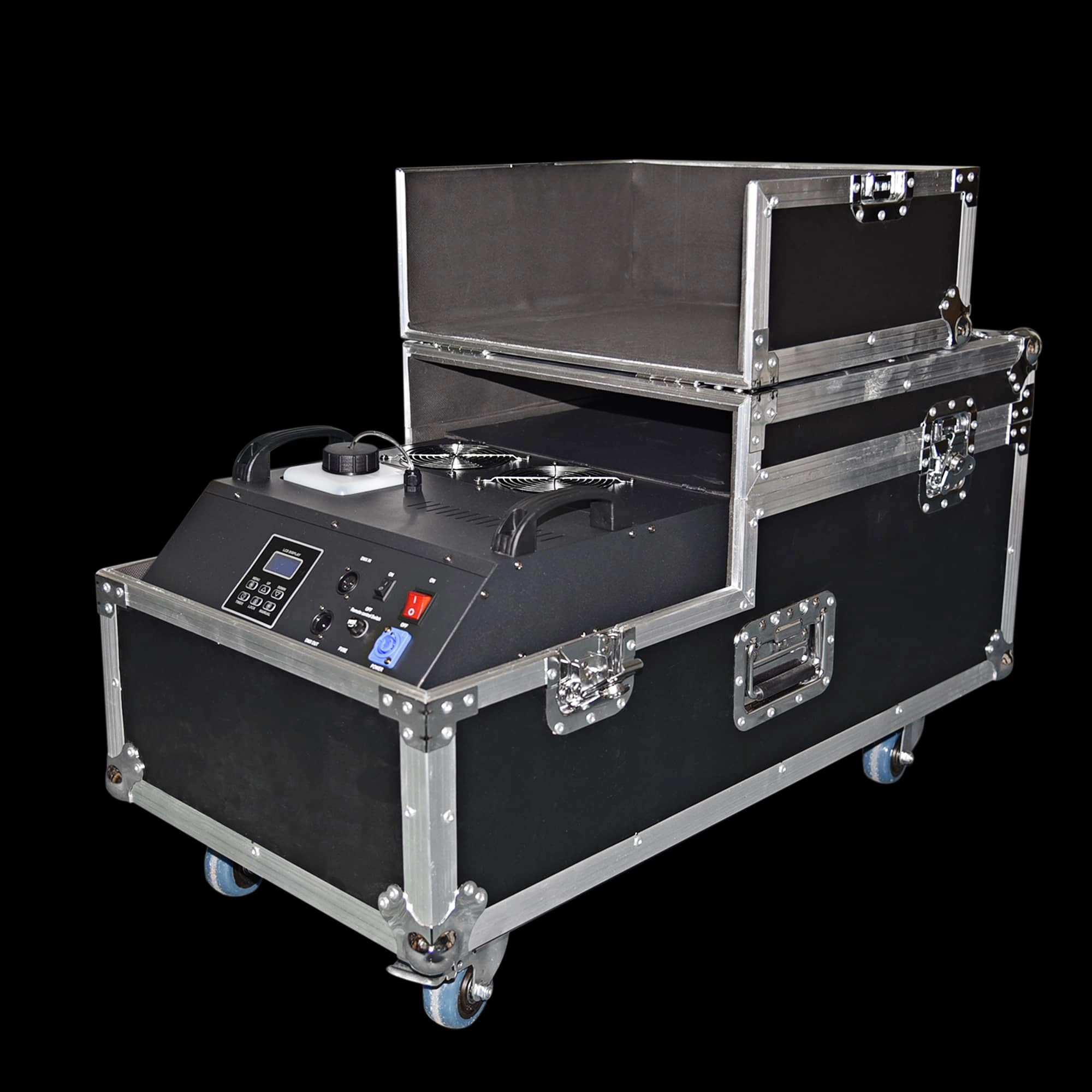
With extensive project experience, Siterui SFX supports buyers through design, production, and after-sales service. We are a professional manufacturer engaged in the research and development, production, sales, and service of professional stage special effects (SFX) equipment. Our engineering team develops lcd low fog machine systems that prioritize low residue, DMX and wireless control options, and modular service access. We offer flexible customization services—ranging from branding and custom casing to dedicated control interfaces and multi-unit synchronization—to meet the specific needs of touring productions, theaters, and corporate events.
Product portfolio, integration and support
We provide a broad portfolio including spark machine, Haze Machine, CO₂ Jet Machine, Bubble Machine, Snow Machine, Foam Machine, Confetti Machine, fog machine, fire machine, and dry ice machine solutions to complement lcd low fog machine deployments. Our manufacturing process emphasizes component-level testing, on-site system validation, and global spare-parts logistics. Buyers benefit from documented maintenance schedules and optional technician training packages, reducing downtime and lifecycle costs for long-term installations.
Technical teams are encouraged to request performance data, SDS documentation for fluids, and integration diagrams from suppliers during the RFP stage. Siterui SFX provides explicit documentation for electrical load planning, DMX addressing, and rack-mount schematics to simplify integration with existing show-control systems. For compliance-sensitive installations, our team assists with venue coordination and can produce certification evidence where required.
To discuss technical specifications, customization or to request a quotation, contact Siterui SFX via our website at https://www.siteruisfx.com/ or by email at sales01@strlighting.com.
Frequently Asked Questions
What is an lcd low fog machine and when should it be used?
An lcd low fog machine produces low-lying atmospheric effects ideal for floor-hugging fog scenes; it should be used when productions require repeatable, controllable low-lying clouds that integrate with lighting and camera systems while minimizing interference with performers.
How does an lcd low fog machine compare to dry ice and haze systems?
Compared with dry ice, an lcd low fog machine reduces logistical complexity and eliminates the need to handle solid CO2, while providing synchronized output; compared with haze, it creates floor-level density rather than suspended ambient particles. Each technology has different consumable, safety, and maintenance profiles that should be matched to event objectives.
What specifications should procurement include in an RFP for an lcd low fog machine?
Include output rate (m3/min), warm-up time, duty cycle, consumable type and consumption rate, control protocols (DMX/RDM, Art-Net, wireless), mounting and footprint requirements, MTBF, spare-part lists, and required documentation such as SDS and integration diagrams.
Are there venue safety or regulatory considerations when using low-lying fog?
Yes. Venue engineers must assess HVAC effects, smoke-detector interactions, and potential CO2 accumulation if dry ice is used. Review local safety regulations and manufacturer SDS documentation; authoritative guidance is available from bodies such as NFPA and national workplace safety regulators.
Why choose a professional manufacturer like Siterui SFX for lcd low fog machine procurement?
A professional manufacturer offers tested products, global after-sales support, modular design for rapid repair, comprehensive documentation, and customization services (branding, control integration, casing) that reduce operational risk and total cost of ownership.

Email: sales01@strlighting.com
WhatsApp: +86 189 2232 4800
© 2025 Siterui SFX All Rights Reserved.
 Scan QR Code
Whatsapp: +8618922324800
siteruisfx_stage_equipment
Siterui
SITERUI-SFX
STRlighting
@siterui.sfx