
Dual Outlet Snow Machine vs Single Outlet: Which to Choose?
- Dual-Head vs Single-Head Snow Emitters: Performance and Use Cases
- Coverage, throw pattern, and audience sightlines
- Density control and programmable sequences
- Installation logistics and rigging constraints
- Operational Reliability, Maintenance, and Lifecycle Costs
- Redundancy and failure modes
- Consumable usage and service intervals
- Spare parts strategy and field serviceability
- Control Integration, Safety, and Compliance
- Control protocols and synchronization
- Air quality, ventilation, and audience comfort
- Regulatory matters and documentation
- Procurement Checklist, Deployment Scenarios, and ROI Analysis
- Selecting by venue type and scale
- Total cost of ownership and utilization modeling
- Installation best practices and pre-show testing
- Why Choose Siterui SFX for Multi-Outlet Snow Effects
- Manufacturing capability and quality assurance
- Customization, integration, and system design
- Product portfolio and service model
- Case-ready support and global logistics
- Frequently Asked Questions
High-level operational summary: Event producers, rental houses, and venue engineers evaluating multi-nozzle versus single-nozzle artificial snow systems must balance coverage footprint, shot density, equipment redundancy, control integration, ongoing consumable costs, and safety/ventilation requirements; this analysis compares twin-output assemblies to single-output units across load distribution, DMX/RDM or wireless control interoperability, fluid consumption profiles, serviceability, and total cost of ownership—referencing industry guidance on special effects and indoor air quality to inform procurement and deployment decisions (Special effects (Wikipedia), EPA indoor air quality guidance, ISO 9001 quality management).
Dual-Head vs Single-Head Snow Emitters: Performance and Use Cases
Coverage, throw pattern, and audience sightlines
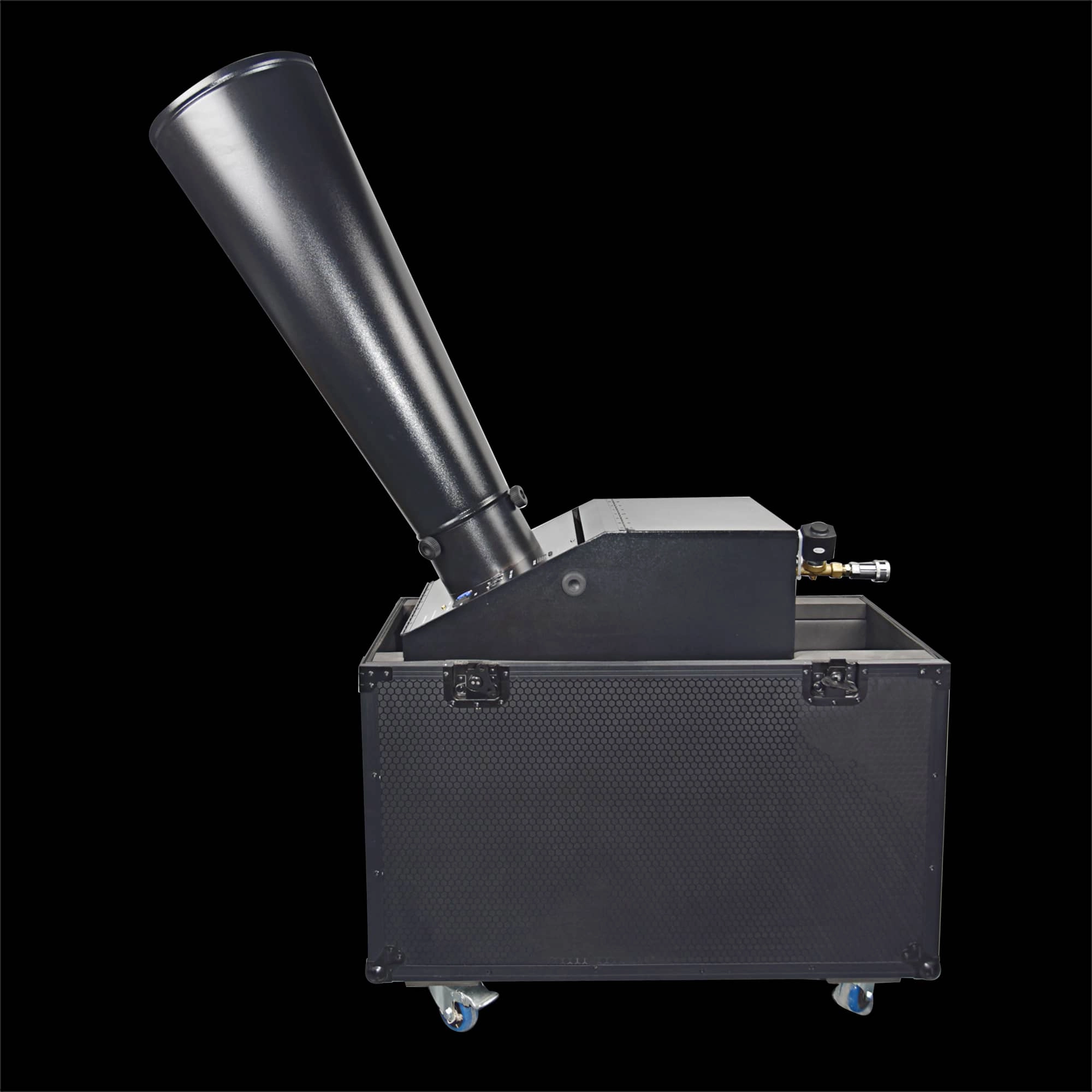
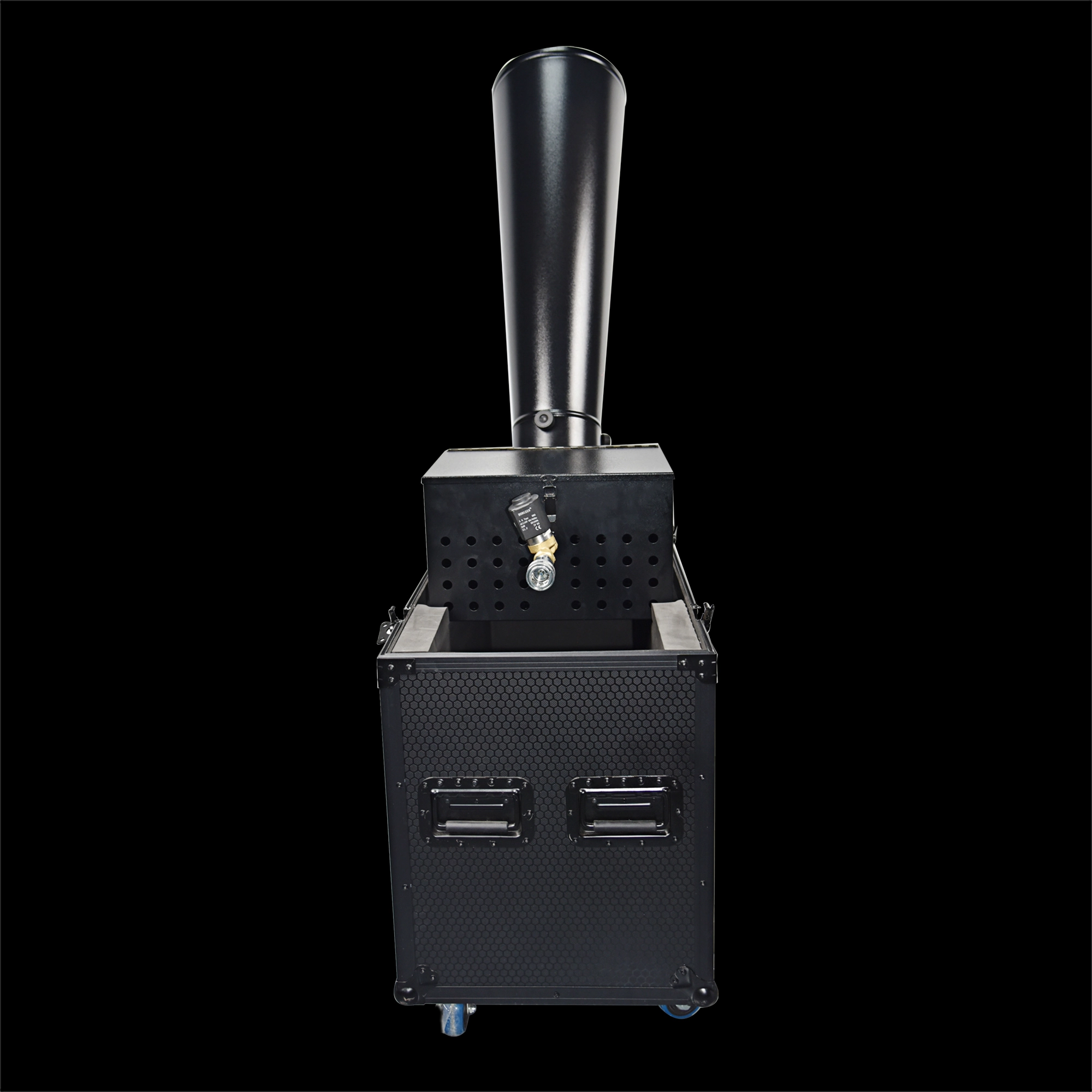
Dual-output configurations typically deliver a wider lateral dispersion and can cover a broader audience plane with fewer fixtures; this reduces the number of installation points for arena-scale activations. Single-nozzle units concentrate output into a narrower plume, delivering higher perceived density within a smaller footprint. Buyers should match nozzle architecture to sightline plans: wide-throw dual arrangements for general crowd snowfall, single-cone streams for focused stage or camera-centric shots.
Density control and programmable sequences
Systems with two independently controllable outlets provide finer temporal and spatial modulation: one head can operate at 60% while the other pulses at 30%, producing layered visual texture without additional hardware. For productions requiring complex choreography with lighting and pyrotechnics, multi-output devices simplify synchronized dynamics and reduce chaser wiring.
Installation logistics and rigging constraints
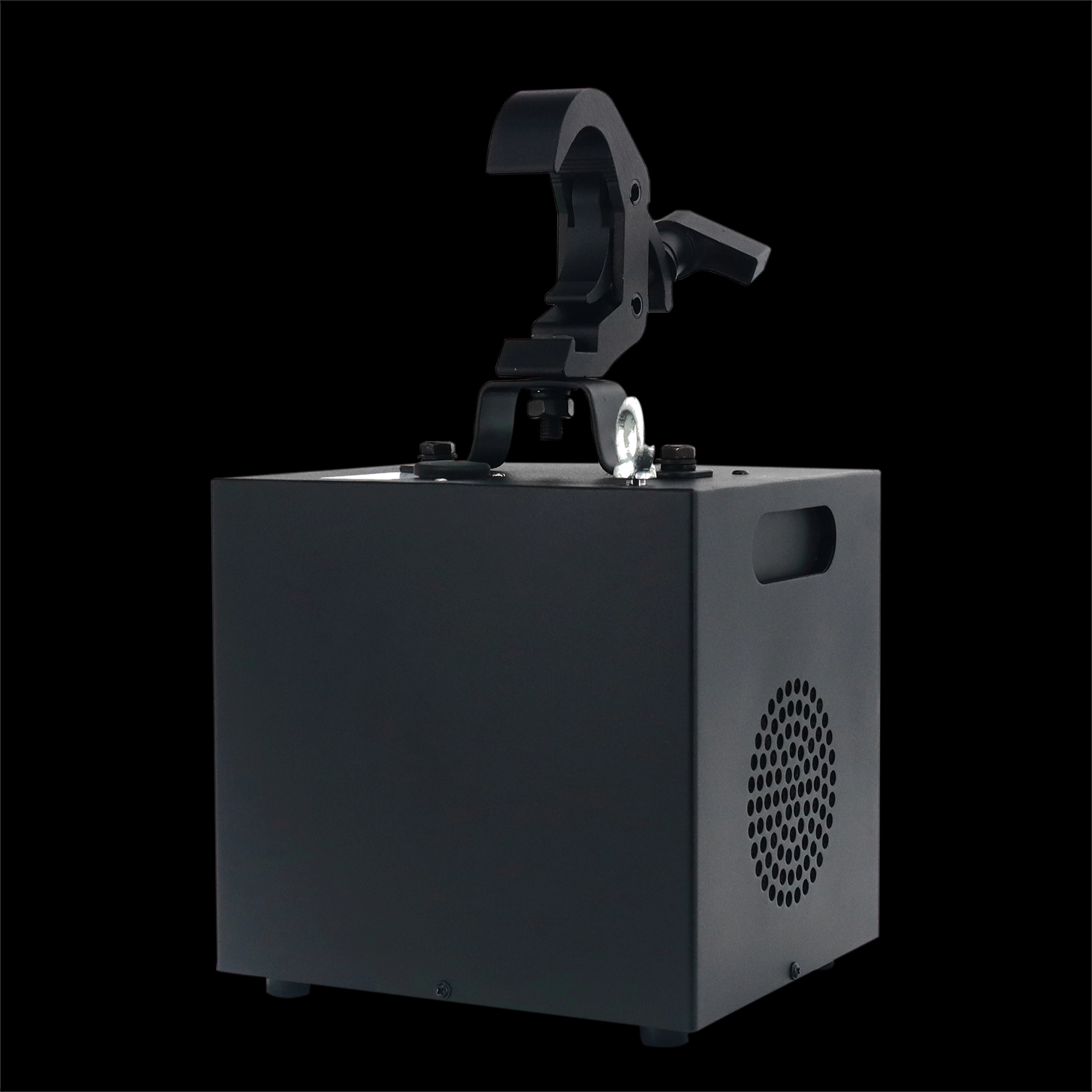
Dual-head housings increase mechanical and electrical load at each rig point. Structural engineers and rigging teams should confirm that truss points, clamps, and safety cabling accommodate the combined mass and torque. When overhead weight or network drops are limited, distributed single-output fixtures across more points may be preferable despite greater setup time.
Operational Reliability, Maintenance, and Lifecycle Costs
Redundancy and failure modes
Redundancy is a primary operational rationale for multi-outlet machines: if one nozzle or pump fails, the second outlet can often sustain an acceptable effect level while technicians complete repairs, minimizing downtime. Single-nozzle failures result in total loss of the snow effect at that position, which carries higher replacement or contingency costs for high-profile events.
Consumable usage and service intervals
Dual outlets usually increase fluid throughput if both are used continuously; however, they can be operated asymmetrically to conserve fluid during long events. Maintenance tasks—nozzle cleaning, pump seals, tubing checks—scale with outlet count. Procurement teams should model consumable spend (fluids, filters, seals) into multi-year TCO rather than focusing exclusively on unit price.
Spare parts strategy and field serviceability
A modular dual-output design that allows independent removal and replacement of nozzle modules reduces mean time to repair. Rental operators should require clear parts lists and modular spare kits from suppliers to enable on-site exchanges. Warranty terms and lead times for replacement components materially affect operational risk.
Control Integration, Safety, and Compliance
Control protocols and synchronization
Professional stage rigs demand predictable integration with lighting consoles and show control systems. Multi-outlet devices that expose per-head DMX/RDM channels or provide Art-Net/sACN via an embedded gateway make precise sequences easier and reduce the need for external multiplexing. Wireless control options reduce cabling but require frequency planning and validation during load-ins.
Air quality, ventilation, and audience comfort
Artificial snow solutions rely on surfactant-based fluids or glycerin blends; venue health & safety teams must assess aerosol behavior and ventilation impacts. Follow established guidance on indoor environmental quality and occupational safety when deploying effects in enclosed spaces (EPA guidance, OSHA). Pre-event air exchange calculations and HVAC coordination are critical to prevent accumulation and to maintain acceptable residence time for particulates.
Regulatory matters and documentation
Major productions require documented risk assessments, material safety data sheets (MSDS) for fluid products, and compliance with local fire and venue codes. Buyers should request third-party test reports or certification evidence and confirm that the manufacturer follows an accredited quality system such as ISO 9001 to reduce procurement risk.
Procurement Checklist, Deployment Scenarios, and ROI Analysis
Selecting by venue type and scale
Small theaters and intimate clubs benefit from single-nozzle boxes for tight camera shots and rapid teardown. Mid-sized arenas and outdoor festivals obtain efficiency gains from dual-nozzle units that reduce the total fixture count and labor hours. Buyers should perform sightline mockups and power distribution audits early in the bid process.
Total cost of ownership and utilization modeling
Estimate TCO by combining upfront capital, amortized over expected rental cycles, with operating expenses: fluid, spare parts, labor, shipping, and certified inspections. Dual-head devices can lower labor and transport costs per square meter of coverage, but higher initial expenditure needs to be justified by utilization forecasts.
Installation best practices and pre-show testing
Run full-scale rehearsals with final fluid loads and control data to validate timing, coverage, and HVAC interactions. Implement a pre-show checklist that includes nozzle sweeps, pump pressure verification, tubing integrity tests, and DMX channel confirmation to eliminate last-minute surprises.
| Attribute | Dual-Outlet Units | Single-Outlet Units |
|---|---|---|
| Typical deployment | Large venues, arenas, outdoor stages | Small theaters, broadcast sets, focused stage areas |
| Coverage flexibility | Wider lateral dispersion; per-head modulation | Concentrated plume; higher point density |
| Redundancy | Partial failover if one outlet stops | No built-in redundancy |
| Setup complexity | Higher rigging and electrical load per unit | Lower per-unit complexity but more fixtures for same area |
| Consumables | Potentially higher fluid throughput if both used; controllable | Lower throughput for single point; easier to predict |
| Cost profile | Higher unit cost, lower fixture count needed | Lower unit cost, potentially higher labor and logistics |
| Ideal buyer | Rental fleets, festivals, touring productions | Installers, small venue operators, broadcast studios |
Why Choose Siterui SFX for Multi-Outlet Snow Effects
Manufacturing capability and quality assurance
Our team at Siterui SFX designs and manufactures a range of stage special effects devices with an emphasis on modularity, serviceability, and certified processes. We maintain production controls and documentation aligned with international quality principles (ISO 9001) to provide predictable performance and reliable after-sales support for rental companies and venues.
Customization, integration, and system design
We offer tailored casing, logo printing, per-head control mapping, and wireless gateways to match existing show control infrastructures. Our engineering team supports DMX/RDM, Art-Net/sACN integration, and synchronized multi-device setups, enabling complex choreography between snow emission, haze, CO₂ jets, and lighting cues.
Product portfolio and service model
Our product family covers spark machines, haze generators, CO₂ jets, bubble and foam equipment, artificial snow systems, confetti and fog machines, fire effect devices, and dry ice haze solutions. For events requiring combined modalities, our systems can be configured to operate together with centralized control and coordinated safety interlocks. Siterui SFX also provides comprehensive training, spare parts kits, and scheduled maintenance programs to maximize uptime and asset life.
Case-ready support and global logistics
We work with project owners and system integrators to prepare load-in documentation, MSDS and technical data sheets for fluids, and venue-specific deployment plans. For international tours, our logistics team supports compliant packing, cross-border shipping, and priority service options to reduce downtime between events.
To learn more about our snow systems and the full SFX product range, visit our website at https://www.siteruisfx.com/ or contact sales at sales01@strlighting.com for custom quotations and technical datasheets.
Frequently Asked Questions
What are the main operational differences between dual-nozzle and single-nozzle snow generators?
Dual-nozzle units provide wider dispersion and per-head modulation, offering redundancy and lower fixture counts for large venues; single-nozzle devices concentrate output for camera-focused shots and small-stage use. Selection depends on coverage needs, rigging constraints, and desired visual density.
How does outlet count affect consumable (fluid) usage and maintenance?
More outlets generally increase fluid throughput when operated concurrently, but dual-head machines can be run asymmetrically to conserve fluid. Maintenance tasks rise with outlet count—nozzle cleaning, pump servicing, and tubing inspections—so procurement should factor spare parts and service intervals into TCO calculations.
Are multi-output snow systems compatible with standard show control protocols?
High-end multi-output devices typically support per-head DMX/RDM channels and may include Art-Net/sACN or wireless gateways for synchronization with lighting and show control systems; ensure the selected model exposes per-head control if complex sequences are required.
What safety and regulatory documents should buyers request from manufacturers?
Buyers should request material safety data sheets (MSDS) for fluids, engineered risk assessments, HVAC interaction studies, and evidence of quality management practices (e.g., ISO 9001). Coordination with venue fire and safety officers and adherence to local codes are essential.
When is a dual-outlet machine a better investment than multiple single-outlet units?
Dual-outlet units become cost-effective when reducing fixture count lowers labor, transport, and rigging time in large venues or touring scenarios. For limited rigging points where each position must deliver broad coverage, a twin-head solution reduces complexity despite higher per-unit cost.

Email: sales01@strlighting.com
WhatsApp: +86 189 2232 4800
© 2025 Siterui SFX All Rights Reserved.
 Scan QR Code
Whatsapp: +8618922324800
siteruisfx_stage_equipment
Siterui
SITERUI-SFX
STRlighting
@siterui.sfx