
How DMX Control Enhances Low Lying Fog Effects
- Precision and Synchronization: From Manual Output to Networked Effect Control
- How channelized control improves timing and repeatability
- Integration with lighting and show control systems
- Practical benefits for touring and repeatable installs
- Operational Performance: Fluid Dynamics, Output Control and Environmental Management
- Controlling density, spread, and dissipation
- Sensor feedback and closed-loop management
- Compliance with venue ventilation and air-quality concerns
- Procurement and Lifecycle Economics: Making a Buy/Lease Decision for Controlled Floor-Fog Systems
- Key specifications to evaluate
- Total cost of ownership and maintenance implications
- Installation complexity and commissioning guidelines
- Comparative Data: Traditional Manual Systems versus Networked DMX-Driven Architectures
- Interpreting the comparison
- Vendor Selection and Integration Checklist for Buyers
- Technical validation and factory acceptance tests
- Support, spares, and aftermarket services
- Customisation and systems integration capabilities
- Why Choose Siterui SFX for Networked Low-Fog Solutions
- Engineering and manufacturing capabilities
- Customization, system integration and product range
- Service, documentation and buyer support
- Frequently Asked Questions
Advanced protocol-driven control enables precision, reproducibility, and scalable choreography for chilled-floor haze and ground-hugging vapor effects, transforming low-lying atmospheric treatments from manual, reactive elements into fully integrated components of live production design. This summary highlights the functional benefits of digital lighting interfaces on cryogenic and glycol-based fog systems, addresses operational safety and compliance, compares legacy methods with networked control architectures, and outlines procurement criteria and integration practices for buyers adopting DMX-enabled chilled-surface fog systems in theaters, touring shows, and fixed entertainment installations.
Precision and Synchronization: From Manual Output to Networked Effect Control
How channelized control improves timing and repeatability
Moving from on/off or thermostat-based activation to a channel-based control bus allows stage technicians to program exact output curves for surface-hugging vapor machines. Using a standardized lighting-control universe, designers can cue volumetric density, pump speed, and chiller timing with millisecond accuracy across up to 512 addresses per universe, enabling synchronized sequences across multiple devices and fixtures. For reference on the industry-standard lighting bus, see the DMX512 protocol.
Integration with lighting and show control systems
Integrating ground fog units into the central show controller eliminates operator latency and enables scene-based presets. DMX addressing or art-net/sACN bridging permits effects to follow lighting states, music cues, and safety interlocks, so the chilled vapor effect becomes a predictable element within the overall visual narrative rather than an isolated device reacting to manual input.
Practical benefits for touring and repeatable installs
For touring productions and repeat engagements, DMX-configurable low fog units reduce setup time by preserving channel maps, addressing, and scene libraries. Production crews can quickly restore identical atmospheric profiles at each venue, ensuring brand-consistent visual outcomes while minimizing troubleshooting during load-in and tech rehearsals.
Operational Performance: Fluid Dynamics, Output Control and Environmental Management
Controlling density, spread, and dissipation
Chilled-surface generators and glycol fog systems depend on controlled vapor temperature and volumetric flow. Digital control inputs allow incremental modulation of fluid feed, fan speed, and chiller engagement, enabling operators to balance low-lying persistence against venue ventilation and HVAC constraints. This reduces overuse and mitigates visibility or sensor-triggering risks.
Sensor feedback and closed-loop management
Advanced rigs can stream telemetry such as fluid level, pump RPM, and internal temperature back to a supervisory controller. Closed-loop behaviours—where DMX commands adjust output based on sensor thresholds—improve safety and longevity of the equipment while preserving effect fidelity under changing environmental conditions.
Compliance with venue ventilation and air-quality concerns
Effective deployment requires coordination with facility HVAC and safety teams. Operators should reference regulatory guidance to manage occupant exposure and smoke-detector interactions. Authoritative resources include general information on atmospheric theatrical devices via Fog machine overviews and safety standards published by recognized bodies; for broader safety policy consult NFPA standards and workplace guidance at OSHA.
Procurement and Lifecycle Economics: Making a Buy/Lease Decision for Controlled Floor-Fog Systems
Key specifications to evaluate
Buyers should prioritize control interface options (DMX, art-net, sACN, wireless DMX), channel granularity, maximum output rate (liters/hour or g/min), fluid compatibility, onboard safety interlocks, and serviceability. Consider modular expansion capacity—whether additional units can be linked under a single universe—and the vendor’s documentation for addressing and firmware updates.
Total cost of ownership and maintenance implications
Compare initial capital cost with recurring consumables (fog fluid, glycol, cryogenic media), maintenance intervals (pump seals, heat exchangers, filters), and spare-part availability. DMX-enabled units often reduce labour costs by lowering manual intervention requirements and minimizing rehearsal time, improving ROI across touring cycles or venue seasons.
Installation complexity and commissioning guidelines
Networked chilled fog systems require careful cable management, reliable power feeds, and if applicable, chilled-water or glycol connections. Commissioning checklists should include DMX addressing verification, fail-safe behaviour tests, interlock validation (with fire panel and HVAC), and rehearsal-based calibration of visual density against audience sightlines and safety thresholds.
Comparative Data: Traditional Manual Systems versus Networked DMX-Driven Architectures
| Characteristic | Manual/Legacy Fog Method | DMX-Integrated Chilled Fog | Networked Show-Control Architecture (multi-device) |
|---|---|---|---|
| Control granularity | Binary or analog knob (low/med/high) | Per-machine channel control (pump, fan, heat) | Unified cue-based control across devices; programmable curves |
| Synchronization | Manual timing; higher latency | Millisecond-level cueing via DMX | Synchronized across universes via art-net/sACN |
| Installation complexity | Low; basic power and fluid | Moderate; DMX cabling and addressing | Higher; networking, redundancy, and central controller |
| Operational cost | Lower upfront; higher labour over time | Moderate upfront; labour savings in operation | Higher upfront; lower per-show cost for complex productions |
| Use cases | Small events, single-use installations | Theaters, concerts, corporate shows | Large tours, theme parks, multi-zone venues |
Interpreting the comparison
The table illustrates that DMX-enabled units occupy a middle ground in terms of installation complexity and lifecycle cost, while delivering disproportionate gains in reproducibility and show-quality. For multi-site operations or touring productions, investment in networked architectures typically amortizes faster due to faster load-ins and reduced programming rework.
Vendor Selection and Integration Checklist for Buyers
Technical validation and factory acceptance tests
Buyers should require pre-shipment testing: DMX addressing confirmation, response timing logs, and demonstration of safety interlocks with simulated fault conditions. Request firmware versioning policies and an upgrade path to maintain compatibility with evolving show-control infrastructures.
Support, spares, and aftermarket services
Assess vendor capacity for global support, on-site commissioning assistance, and spare-part logistics. For touring customers, regional stocking and rapid RMA processes reduce downtime. Verify a clear escalation path for software and hardware issues and availability of training for technical crews.
Customisation and systems integration capabilities
A reliable supplier should offer tailored control modules, branded housings, and bespoke channel mappings where required. Confirm whether the vendor provides APIs or OSC bridges for deeper integration into custom show-control ecosystems.
Why Choose Siterui SFX for Networked Low-Fog Solutions
Engineering and manufacturing capabilities
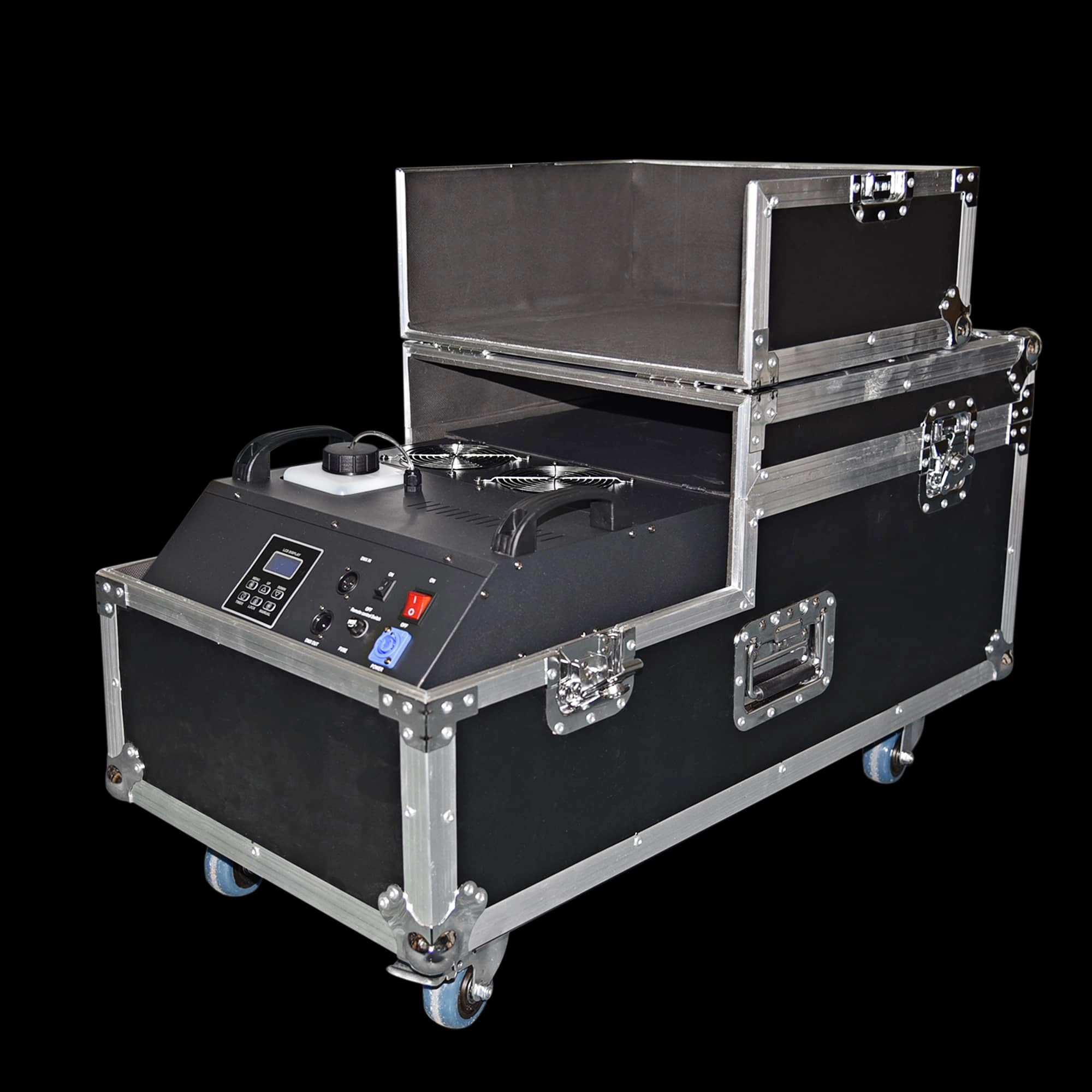
Siterui SFX is a professional manufacturer engaged in the research and development, production, sales, and service of professional stage special effects equipment. Our engineering team designs DMX-capable chilled-floor machines and glycol generators with modular control interfaces, robust sensor suites, and industrial-grade components to ensure repeatable performance in live environments.
Customization, system integration and product range
We offer flexible customization services to meet specific project needs—ranging from custom casings and logo printing to tailored channel maps and wireless control modules. Our product portfolio includes high-performance spark generators, haze machines, CO₂ jet devices, bubble and snow systems, foam and confetti units, classic fog machines, specialized flame effects, and dry ice vaporizers suited for low-lying atmospherics.
Service, documentation and buyer support
Our sales and technical support teams provide commissioning assistance, on-site training, and readily available spare parts. Buyers receive comprehensive manuals, DMX addressing guides, and pre-configured scene libraries that integrate with common show-control platforms. For more information about our solutions, visit our website at https://www.siteruisfx.com/ or contact our sales team at sales01@strlighting.com.
Adopting DMX-driven chilled-surface fog systems converts atmospheric effects into consistent, programmable, and safe elements of production design—driving down rehearsal time, improving audience experience, and increasing operational predictability for venues and touring productions.
Contact Siterui SFX to evaluate DMX-enabled low-lying fog solutions tailored to the scale and safety requirements of specific productions.
Frequently Asked Questions
What are the primary operational advantages of using DMX-controlled chilled fog units vs manual fogers?
DMX-enabled chilled fog units provide precise, repeatable control of output, allow synchronization with lighting and audio cues, enable scene-based presets for quick setup, and support closed-loop safety interlocks—reducing manual intervention and rehearsal time for touring or repeat installations.
Which control protocols are commonly used to network low-lying vapor systems for shows?
Common protocols include DMX512 for direct channel control, and network protocols such as art-net or sACN for larger distributed installations. These allow multiple devices to be coordinated from a central show controller and provide scalability for multi-zone venues.
What safety and compliance checks should buyers demand before installing glycol or dry-ice based floor fog systems?
Buyers should require validation of fail-safe interlocks, compatibility with venue fire detection and HVAC systems, documented material safety data sheets for consumables, and supplier-provided commissioning tests. Reference NFPA guidance and coordinate with venue safety officers and local authorities prior to public performance.
How does DMX integration affect total cost of ownership compared to legacy systems?
While DMX-integrated systems can have a higher upfront capital cost due to controllers and networking, they typically lower operational expenses by reducing labour, cutting rehearsal time, and preventing inconsistent effects. For frequent-use venues or touring productions, these savings often offset the initial investment over time.
What specifications should be prioritized when procuring networked low-lying fog equipment?
Prioritize control interface options (DMX/art-net/sACN), channel granularity, fluid compatibility, onboard safety features, serviceability, telemetry capabilities, and the vendor’s support infrastructure for spare parts and firmware updates.

Email: sales01@strlighting.com
WhatsApp: +86 189 2232 4800
© 2025 Siterui SFX All Rights Reserved.
 Scan QR Code
Whatsapp: +8618922324800
siteruisfx_stage_equipment
Siterui
SITERUI-SFX
STRlighting
@siterui.sfx