
How to Maintain and Service Dual Oil Heating Fog Machines
- Equipment Fundamentals and Risk Controls for Twin-Element Fog Generators
- Core system architecture and critical components
- Fire and occupational safety considerations
- Regulatory and standards alignment
- Preventive Maintenance Protocols and Diagnostic Procedures
- Daily and pre-show checks
- Weekly and monthly servicing tasks
- Advanced diagnostics and fault isolation
- Fluid Management, Cleaning Chemistry, and Consumables Planning
- Selecting and handling oil-based fluids
- Safe cleaning agents and deposit removal techniques
- Spare parts inventory and life-cycle forecasting
- Lifecycle Economics, Retrofit Options, and Data-Driven Maintenance
- Comparing preventive vs reactive maintenance outcomes
- Retrofit upgrades: controls, sensors, and integration
- Data comparison: maintenance strategies and outcomes
- Siterui SFX: Service Capabilities, OEM Support, and Product Ecosystem
- Manufacturing and R&D strengths
- Custom solutions, retrofits, and system integration
- Service, training, and after-sales support
- Product portfolio and compatibility
- Frequently Asked Questions
- How often should heating elements be replaced in oil-heated, dual-channel fog systems?
- What fluid handling practices reduce nozzle fouling and residue?
- Can legacy fog generators be retrofitted for remote diagnostics?
- What certifications and inspections should buyers request from suppliers?
- Which spare parts are essential for a touring rig or rental fleet?
- How should a facility document maintenance to satisfy auditors and insurers?
Operational excellence for oil-heated, dual-channel fog generators demands a structured maintenance regimen that reduces downtime, extends heater life, and ensures consistent aerosol output for live events; this guide delivers actionable service protocols, safety controls, procurement checklists, and retrofit options for buyers and facilities managing twin-oil heated smoke systems while aligning with industry standards and occupational safety guidance.
Equipment Fundamentals and Risk Controls for Twin-Element Fog Generators
Core system architecture and critical components
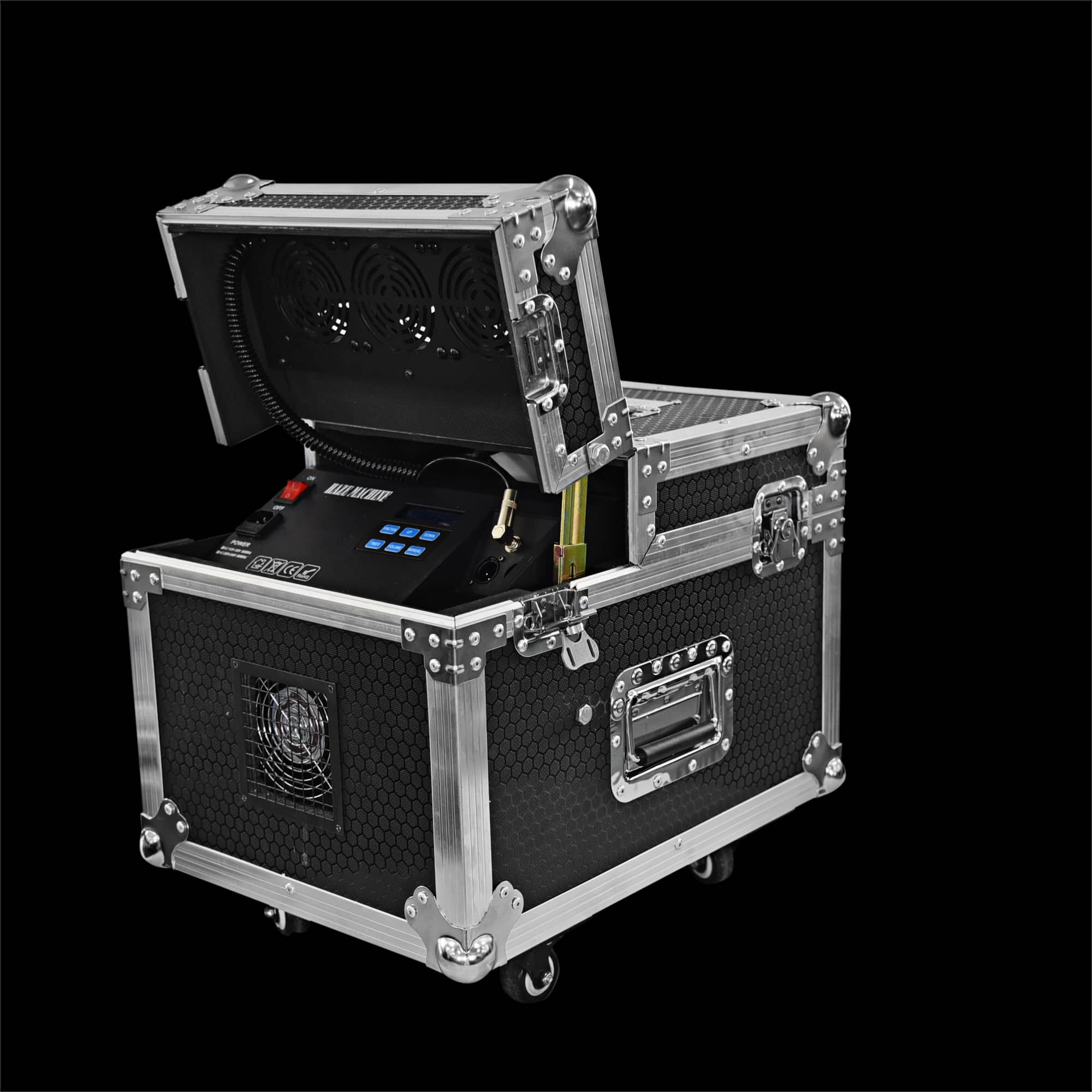
Understanding the anatomy of a twin-element vaporizer helps technicians prioritize interventions: primary components include independent heating cartridges, oil metering pumps, separate supply manifolds, dual nozzles or atomizers, thermal coupling sensors, and a centralized control interface. Knowing which subsystem drives aerosol density vs. smoke temperature allows maintenance teams to isolate performance issues rapidly and to allocate spare parts intelligently.
Fire and occupational safety considerations
Oil-based aerosol units present thermal and flammability risks that must be mitigated through interlocks, over-temperature protection, and documented ventilation strategies. Facilities should reference NFPA guidance for fire protection and consult local authority having jurisdiction (AHJ) requirements for venue installations. Regular inspection of electrical grounding, insulation resistance, and emergency shutoffs is required to comply with industry safety norms.
Regulatory and standards alignment
Procurement specifications and service records should be aligned with recognized standards for electrical safety and workplace hazards. For corporate procurement, referencing ISO frameworks for asset management and occupational safety—such as ISO standards—helps justify preventive maintenance budgets and supports insurer requirements.
Preventive Maintenance Protocols and Diagnostic Procedures
Daily and pre-show checks
Operators should perform a concise pre-event checklist: confirm oil levels in both reservoirs, run a short warm-up cycle to verify even heat-up across heating elements, validate that steam/particle output matches setpoint, and test remote control responsiveness. Visual inspection for leaks, residue build-up around nozzles, and abnormal noise from metering pumps will catch issues before performances.
Weekly and monthly servicing tasks
Weekly service includes nozzle cleaning using manufacturer-approved solvents, checking pump calibration and flow rates, and inspecting wiring harnesses for wear. Monthly activities should add thermocouple calibration, replacement of fine inline filters, and an oil quality assessment to identify polymerization or contamination that accelerates deposit formation.
Advanced diagnostics and fault isolation
When aerosol density drifts or heaters trip, apply a methodical isolation procedure: swap reservoirs to rule out fluid faults, run individual heater channels and monitor current draw, use thermal imaging to detect hotspots, and scan control logs for error codes. A portable multimeter and clamp ammeter are essential tools for field troubleshooting.
Fluid Management, Cleaning Chemistry, and Consumables Planning
Selecting and handling oil-based fluids
Choosing certified fluid formulations significantly reduces deposit rates and combustion residues. Procurement teams should insist on fluids tested for low-viscosity at operating temperatures, low ash content, and compatibility with elastomers used in seals. Proper storage—cool, dark, sealed containers—extends shelf life and prevents contamination that can clog metering systems.
Safe cleaning agents and deposit removal techniques
Periodic chemical cleaning prevents nozzle fouling and maintains atomization quality. Use solvents and descalers specified by the equipment manufacturer or a qualified supplier, and observe ventilation and PPE guidance in line with manufacturing best practices and occupational exposure limits. Avoid abrasive mechanical scraping that can alter nozzle geometry.
Spare parts inventory and life-cycle forecasting
Budgeting for wear items—heating cartridges, inlet strainers, pump diaphragms, and thermocouples—reduces event risk. Track mean time between failures (MTBF) for key components and maintain a rotating spare-parts pool sized to expected tour lengths or seasonal peaks. Cost-justification models often show that a stocked spare set saves multiple times its cost in avoided show cancellations.
Lifecycle Economics, Retrofit Options, and Data-Driven Maintenance
Comparing preventive vs reactive maintenance outcomes
In rental and touring operations, planned interventions minimize emergency service calls. Facilities that move from run-to-failure to time-based servicing typically see reductions in unscheduled downtime and lower average cost per incident. Maintenance software or CMMS integration enables evidence-based scheduling and parts procurement optimization.
Retrofit upgrades: controls, sensors, and integration
Installing remote diagnostics, log capture, and cloud-enabled alerts transforms a legacy smoke generator into a monitored asset. Upgrades often include redundant temperature probes, flow sensors, and networked control modules that enable predictive alarms and reduce onsite troubleshooting time.
Data comparison: maintenance strategies and outcomes
| Strategy | Typical Annual Downtime | Average Annual Maintenance Cost | Operational Risk | Recommended For |
|---|---|---|---|---|
| Reactive (run-to-failure) | 10–40 hours | $3,000–$10,000 | High (show cancellations) | Low-budget, non-critical fixtures |
| Time-based preventive | 2–12 hours | $1,500–$4,000 | Moderate | Fixed installations, touring rigs |
| Predictive (condition-based) | 0–4 hours | $1,000–$3,000 + sensors | Low | High-value assets, rental fleets |
Siterui SFX: Service Capabilities, OEM Support, and Product Ecosystem
Manufacturing and R&D strengths
As a professional manufacturer engaged in research and development, production, sales, and service of stage special effects equipment, Siterui SFX provides validated maintenance plans and OEM spare parts for oil-heated, twin-channel vapor systems. Our engineering team performs accelerated life testing and provides documented service intervals to help facilities budget for total cost of ownership and maintain regulatory compliance.
Custom solutions, retrofits, and system integration
We offer flexible customization—custom casing, branding, wireless control systems, and synchronized multi-device setups—to fit unique stage environments and control architectures. Retrofit packages include upgraded thermal protection, redundant flow metering, and networked telemetry to enable predictive maintenance and fast field diagnostics.
Service, training, and after-sales support
Our service model pairs trained technicians with documented procedures, spare-parts kits, and remote troubleshooting assistance. Buyers and rental houses benefit from scheduled maintenance contracts, on-site commissioning, and technical training for local crews—reducing mean repair time (MRT) and improving event reliability. For technical references, operators should consult occupational safety guidance such as OSHA and industry safety best practices.
Product portfolio and compatibility
Siterui SFX manufactures and supports a range of effects devices that integrate seamlessly into modern production stacks, including spark machine, Haze Machine, CO₂ Jet Machine, Bubble Machine, Snow Machine, Foam Machine, Confetti Machine, fog machine, fire machine, and dry ice machine. These devices can be configured to share control protocols and safety interlocks, simplifying venue-level maintenance and operations.
For technical guidance on aerosol generation physics and system-level design considerations, reputable resources include Wikipedia: Fog Machine and engineering bodies such as IEEE which cover control-system best practices.
Frequently Asked Questions
How often should heating elements be replaced in oil-heated, dual-channel fog systems?
Replacement intervals depend on duty cycle and operating temperature but typically range from 1,000 to 5,000 operational hours; suppliers should provide MTBF data and replacement guidance, and critical venues should keep a set of spare cartridges on hand to avoid show disruption.
What fluid handling practices reduce nozzle fouling and residue?
Store fluids in sealed containers away from UV and heat, use manufacturer-approved formulations with low ash content, install fine inlet filtration, and perform scheduled chemical cleanings to prevent polymerized deposits that clog atomizers.
Can legacy fog generators be retrofitted for remote diagnostics?
Yes—many older units can receive retrofits including temperature redundancy, flow sensors, and networked control modules; these upgrades allow predictive alarms and remote log access, improving uptime and simplifying troubleshooting.
What certifications and inspections should buyers request from suppliers?
Buyers should request CE or equivalent electrical safety certification, documentation of EMC compliance if devices will be networked, and factory test reports; for installations in public venues, provide service records and risk assessments to local AHJs and insurers.
Which spare parts are essential for a touring rig or rental fleet?
Essential spares include heating elements, pump diaphragms or metering pump modules, nozzle tips, thermocouples, fuses, and inline filters; a recommended starter kit typically covers the most common field failures for multiple shows.
How should a facility document maintenance to satisfy auditors and insurers?
Maintain time-stamped service logs, parts change records, pre- and post-event checklists, incident reports, and calibration certificates for sensors; using a CMMS or shared cloud folder improves auditability and supports insurance claims if needed.
Contact Siterui SFX to request maintenance packages, retrofit quotations, or to view our complete product range at https://www.siteruisfx.com/ or email sales01@strlighting.com.

Email: sales01@strlighting.com
WhatsApp: +86 189 2232 4800
© 2025 Siterui SFX All Rights Reserved.
 Scan QR Code
Whatsapp: +8618922324800
siteruisfx_stage_equipment
Siterui
SITERUI-SFX
STRlighting
@siterui.sfx