
Portable Low Fog Machines for Touring Productions
- Compact atmospheric fog systems for road shows
- Why mobile ground-hugging fog matters for touring
- Primary system topologies and their touring fit
- Venue safety and compliance considerations
- Performance specifications touring buyers evaluate
- Output characteristics and run-time profiles
- Power, weight, and case logistics
- Control systems and show integration
- Cost of ownership, logistics and lifecycle planning
- Consumables, hazardous-materials logistics and operational cost
- Maintenance strategy and field-serviceability
- Insurance, permits and venue negotiation tactics
- Vendor selection checklist and procurement KPIs
- Technical documentation and verifiable testing
- Spare-part ecosystems and global service coverage
- Customization, integration and branding options
- Siterui SFX: solutions for touring professionals
- Manufacturing strength and R&D for touring demands
- Product portfolio aligned to touring workflows
- Customization, quality assurance and after-sales support
- Procurement-friendly policies and global logistics
- Frequently Asked Questions
High-performance, transportable low-lying fog solutions are increasingly required on multi-leg tours where rapid load-in, predictable visual output, and venue compliance determine creative success and operational efficiency; this guide distills technical specifications, safety and regulatory checkpoints, lifecycle cost factors, and integration requirements for buyers of stage low fog equipment, with practical procurement criteria calibrated for production managers, rental houses, and technical buyers who must balance artistic intent with touring logistics.
Compact atmospheric fog systems for road shows
Why mobile ground-hugging fog matters for touring
Touring productions demand atmospheric effects that reproduce a dense, low-lying layer of mist without interfering with sightlines, smoke alarms, or quick scene changes. Portable chill-fog units and dry-ice ground systems are designed to generate a floor-level cloud that accentuates lighting and camera silhouettes while minimizing airborne particulates that linger in the breathing zone. Procurement decisions hinge on a unit’s on-tour footprint: case dimensions, weight per flight case, and the speed of on-stage deployment directly affect crew hours and truck space allocation.
Primary system topologies and their touring fit
There are three commonly used approaches to produce low-lying theatrical mist: dry-ice (solid CO₂) systems that create heavy ground fog via sublimation and mechanical mixing; glycol-based chilled fog that uses cooled fluid and heat-exchange to condense a suspended layer; and hybrid units that combine fan-driven dispersal with localized chilling for extended coverage. Each approach has trade-offs in portability, refill logistics, effect duration, and compatibility with venue fire detection systems.
Venue safety and compliance considerations
Venue acceptance and firefighter sign-off are frequent gating items for touring effects. Safety checks should confirm interaction with smoke detectors, local fire codes, and the venue’s venting capacity. Authoritative bodies such as NFPA and workplace regulators like OSHA provide guidance on hazardous atmospheres and working conditions, and production teams should document mitigation strategies—such as detector masking approvals, temporary ventilation plans, and test runs—to obtain necessary permits prior to load-in.
Performance specifications touring buyers evaluate
Output characteristics and run-time profiles
Buyers evaluate fog-layer density, vertical dispersion, run duration per refill, and recovery time between cues. Useful procurement metrics include burst duration (seconds of dense layer), continuous output mode capability (sustained minutes/hours), and refill interval measured in liters or kilograms per show. Touring-friendly units typically allow cue-based bursts for short scenes and a continuous low-output mode for extended sequences, with adjustable fan-speed or chilled setpoints to fine-tune layer thickness relative to stage slope and wind conditions from HVAC systems.
Power, weight, and case logistics
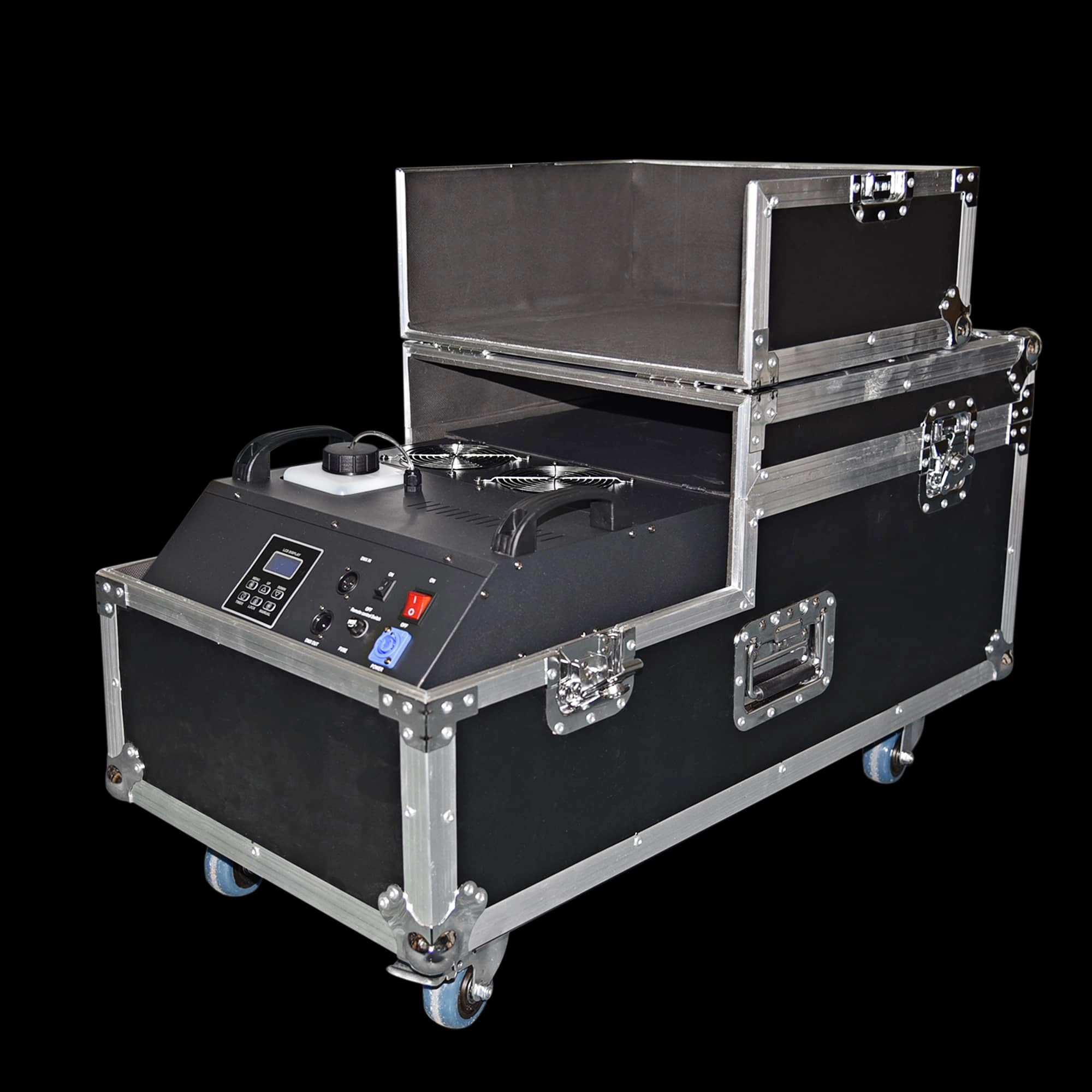
Units intended for multi-venue schedules must support universal mains (110–240V) and include IEC or stage-ready power connectors. Typical touring-grade chill-fog machines are engineered to be flight-case mountable with quick-release brackets, weighing from approximately 10 kg for very compact units up to 30–40 kg for higher-capacity models; power draw commonly ranges from a few hundred watts to around 2 kW for larger chilled systems. Buyers should specify shock-rated cases, lifting points aligned with rigging plans, and stage-crew-friendly access to service panels.
Control systems and show integration
Standardized control protocols reduce integration time across venues. DMX512 remains the industry baseline for cue-based control (DMX512), and support for RDM, Ethernet-based show control, or wireless trigger modules enhances flexibility for remote console placements. Touring productions benefit from units that support both manual local control and networked operation, and from clear documentation on latency, minimum pulse width for bursts, and feedback channels for remote diagnostic monitoring.
Cost of ownership, logistics and lifecycle planning
Consumables, hazardous-materials logistics and operational cost
Consumable costs vary by method: glycol/glycerin-based fluids are billed per liter and require safe storage (with attention to concentration and freeze points), while dry-ice systems involve CO₂ replenishment and associated handling gear. For international tours, shipping and import of consumables can trigger dangerous-goods rules under airline regulations (consult the IATA dangerous goods guidance) and local hazardous-materials statutes. Buyers should model per-show consumable spend and factor in customs lead times when planning supply chains.
Maintenance strategy and field-serviceability
Planned preventive maintenance reduces show-stopping failures. Recommended inventory for touring packages typically includes spare heater cartridges, pump modules, quick-connect fittings, and a local toolkit for descaling and filter replacement. A mean-time-between-failures (MTBF) metric, clear replacement-part lead times, and availability of certified service partners in major touring territories are key procurement requirements for risk-averse buyers.
Insurance, permits and venue negotiation tactics
Special effects clauses in production insurance and rider language with venues should explicitly define permitted devices, allowed fluid types, and emergency ventilation procedures. Production managers should provide venue operators with technical sheets, a pre-show test record, and a risk assessment that references recognized standards (e.g., ISO 9001 processes for quality-controlled suppliers) to streamline permit approvals and reduce last-minute refusals.
| Method | Typical Visual Effect | Portability | On-site Requirements | Run-time / Refill | Safety & Permits |
|---|---|---|---|---|---|
| Dry-ice ground fog (solid CO₂) | Very dense, heavy layer hugging the floor | Moderate—requires insulated containers for dry ice | CO₂ handling gear, PPE for crew, ventilation planning | Short bursts; depends on dry-ice mass (minutes per refill) | CO₂ safety precautions; notify venue/fire officials |
| Chilled glycol/fog fluid systems | Controlled low-lying mist with adjustable density | High—units can be flight-cased and rack-mounted | Power supply, fluid storage, occasional descaling | Continuous modes available; liters per hour varies by model | Fluid handling, slip-hazard mitigation, detector testing |
| Standard warm fog generators | Wide dispersion, elevated haze for light beams | Very portable; many compact models exist | Fluid access and warming-up time; minimal chill systems | Continuous operation for long durations with refills | Visibility and air-quality checks; detector interaction |
Vendor selection checklist and procurement KPIs
Technical documentation and verifiable testing
Buyers should require laboratory and field-test reports documenting output metrics, warm-up times, and detector interaction tests. Suppliers who publish repeatable test protocols and who adhere to recognized quality frameworks (for example documented ISO quality-management practices) reduce procurement risk by providing traceable product performance records.
Spare-part ecosystems and global service coverage
Procurement contracts should guarantee parts availability in touring territories and provide SLAs for expedited shipments. Rental houses and tour technical managers should prioritize vendors offering on-tour swap programs or regional service partners to minimize downtime between shows.
Customization, integration and branding options
Touring productions often require bespoke features such as custom flight-case dimensions, cable lengths compatible with stage pin systems, or logoed housings for artist-specific requests. A supplier’s willingness to implement software hooks for show-control systems, add redundant safety interlocks, or supply bespoke wireless triggers can be a decisive factor during vendor evaluation.
Siterui SFX: solutions for touring professionals
Manufacturing strength and R&D for touring demands
Siterui SFX is a professional manufacturer engaged in the research and development, production, sales, and service of professional stage special effects equipment. Our engineering team focuses on ruggedizing designs for road use, reducing mean-time-to-repair through modular assemblies, and optimizing thermal efficiency to reduce power draw while sustaining dense, controllable low-lying fog effects for live events, theaters, concerts, and film productions worldwide.
Product portfolio aligned to touring workflows
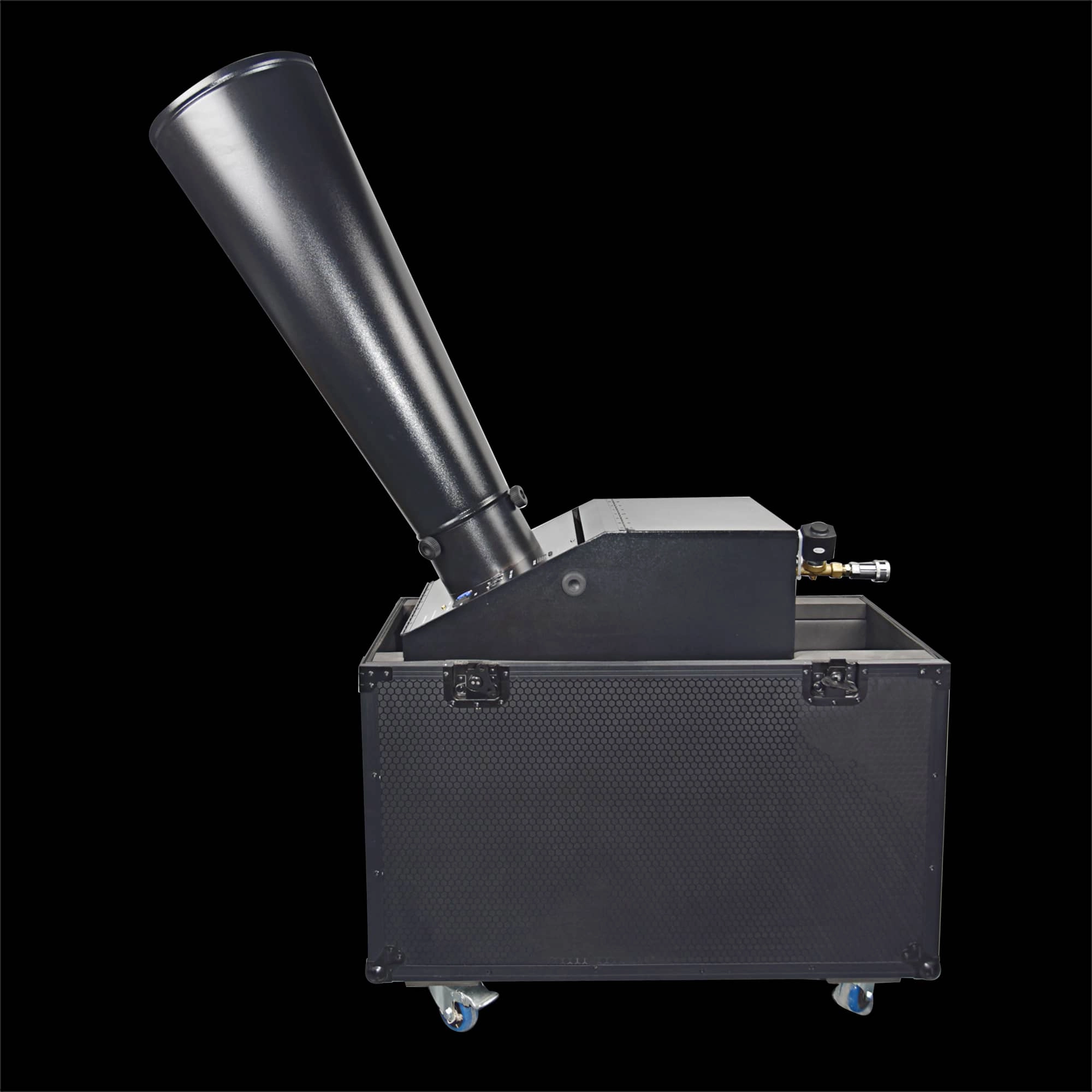
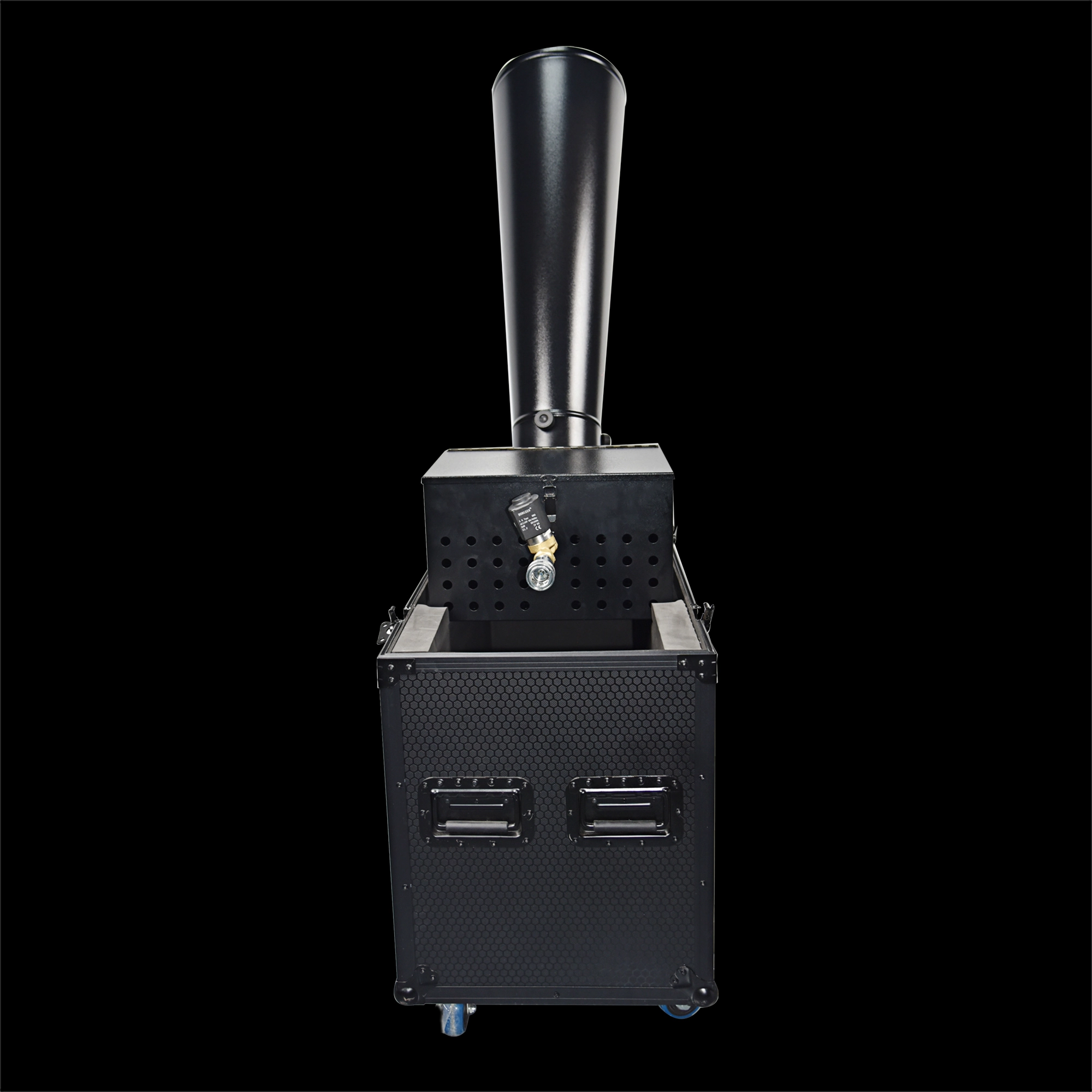
Our product range supports touring requirements with compact chilled fog units, dry-ice compatible ground foggers, and integrated control options for DMX/RDM and Ethernet show systems. Key products include High Quality spark machines, haze generators, CO₂ jet devices, bubble and snow units, foam and confetti systems, fog machines, fire-effect units, and specialized dry-ice machines—the lineup satisfies diverse production briefs from intimate theater runs to stadium-scale tours.
Customization, quality assurance and after-sales support
We offer customization services—custom casing, logo printing, wireless control modules, and synced multi-device setups—to align SFX assets with a production’s brand and technical ecosystem. Quality control follows documented manufacturing procedures and test plans; buyers gain access to spare-part kits, regional service guidance, and pre-tour technical checklists to streamline on-site approvals and reduce unauthorised surprises during load-in.
Procurement-friendly policies and global logistics
To support touring operations, Siterui SFX provides export-ready packing, hazardous-material declarations for consumables, and guidance on customs classification. Our sales and project teams can supply specification packs, risk-assessment templates, and venue-compatibility documentation to assist rental houses and production managers in securing permits and ensuring consistent effect reproduction across tour stops. For more information about our capabilities and to request technical documentation, visit our website at https://www.siteruisfx.com/ or contact our sales team at sales01@strlighting.com.
For procurement teams evaluating low-lying atmospheric systems for touring programs, the selection should prioritize predictable performance metrics, documented safety testing, modular maintainability, and supplier commitments to parts and service in touring territories—criteria that reduce operational risk and protect show schedules across multi-leg productions.
Contact Siterui SFX to request datasheets, trial units, and customization quotations to validate fit for your touring package.
Frequently Asked Questions
What is the main difference between dry-ice ground fog and chilled fluid low fog?
Dry-ice systems use solid CO₂ sublimation to create an immediate, very dense floor-hugging cloud but require on-site dry-ice handling and short-duration bursts; chilled fluid systems use cooled glycol or glycerin-based fluids and heat-exchange to create a controllable, longer-duration low layer with fewer logistics for solid CO₂ replenishment.
How should touring productions manage safety and venue approvals for low-lying atmospheric effects?
Production teams should provide venue operators with technical data sheets, conduct detector interaction tests, obtain written approvals from venue safety officers or local fire marshals, and document ventilation and emergency procedures; referencing standards and regulators such as NFPA and OSHA helps streamline permit reviews.
What control protocols are recommended for integrating fog units into show automation?
DMX512 remains the baseline protocol for cue-based control, and support for RDM, Ethernet-based show control, and wireless triggering increases flexibility; units that offer both local manual overrides and remote networked diagnostics simplify on-tour troubleshooting and synchronization with lighting and audio cues.
Which consumables and logistical factors drive operating costs on tour?
Costs are influenced by type of fluid (glycol/glycerin), frequency of dry-ice or CO₂ refills, shipping and import rules for hazardous materials on international legs, and the need for spare parts; buyers should model per-show consumable spend and factor customs lead times into supply planning.
What maintenance and spares strategy minimizes downtime for touring rigs?
Maintain an inventory of critical spare parts (heater elements, pump modules, filters, fittings), schedule preventive inspections before multi-show blocks, and prioritize vendors or rental houses that offer rapid part supply or regional service partners to reduce turnaround time.
How can suppliers demonstrate suitability for touring contracts?
Suppliers should provide verifiable test results for output and detector interaction, offer documented quality management practices, guarantee parts availability in target territories, and provide customization options (flight-case dimensions, cable lengths, branded housings) along with clear SLAs for support.

Email: sales01@strlighting.com
WhatsApp: +86 189 2232 4800
© 2025 Siterui SFX All Rights Reserved.
 Scan QR Code
Whatsapp: +8618922324800
siteruisfx_stage_equipment
Siterui
SITERUI-SFX
STRlighting
@siterui.sfx