
Safety & Compliance for SFX Oil Based Smoke Machines
- Operational Risks of Oil-Based Theatrical Fog Generators
- Chemical composition and residue profile
- Fire and ignition considerations
- Air quality and respiratory exposure
- Regulatory Standards, Codes, and Best Practices
- Relevant fire and life-safety codes
- Industrial hygiene and ventilation standards
- Labeling, MSDS, and environmental compliance
- Procurement Checklist and Technical Specifications for Buyers
- Site risk assessment and integration
- Key technical specs to verify
- Maintenance, spare parts, and lifecycle costs
- Mitigation Strategies and Operational Controls
- Engineering controls and ventilation design
- Operational SOPs and training
- Emergency planning and testing
- Siterui SFX: Compliance-driven Design and Custom Solutions
- Manufacturing quality and standards alignment
- Product range and application fit
- Customization, integration, and lifecycle support
- Client services and documentation
- Frequently Asked Questions
Comprehensive operational and procurement guidance for oil-based theatrical smoke systems, covering chemical hazards, fire-code interactions, ventilation engineering, and lifecycle compliance to help venue operators, production buyers, and equipment specifiers select and deploy a compliant sfx oil based smoke machine solution that minimizes residue, reduces ignition risk, and meets industrial hygiene expectations for live events and permanent installations.
Operational Risks of Oil-Based Theatrical Fog Generators
Chemical composition and residue profile
Petroleum- or mineral-oil formulations used in hydrocarbon fog devices produce aerosolized droplets that can settle on rigging, lighting optics, and scenic finishes. Buyers should request detailed material safety data sheets (MSDS) to confirm ingredients, flash point, and residue tendency. Equipment that atomizes heavier oils may leave a greasy film requiring increased cleaning cycles and can accelerate corrosion on certain metals if hygroscopic additives are present.
Fire and ignition considerations
Oil-derived aerosols can change the local flammability characteristics; higher concentrations near heat sources or pyrotechnic cues increase ignition probability. Procurement teams must verify that units incorporate overheating cut-offs, insulated heaters with certified temperature sensors, and clearly documented separation distances from open flames, incandescent fixtures, and stage pyrotechnics. Operators should also cross-check any planned flame or spark effects with the fog system’s operating envelope.
Air quality and respiratory exposure
Particle size distribution from oil-based foggers can include fine fractions capable of deep lung penetration. Occupational health reviews for long-term or repeat exposure should reference industrial hygiene assessments and consult ventilation requirements to maintain airborne particulate and volatile compound concentrations below recommended thresholds. For guidance on indoor air health considerations, refer to WHO indoor air quality recommendations and general aerosol controls published by industrial hygiene authorities.
Regulatory Standards, Codes, and Best Practices
Relevant fire and life-safety codes
Venue safety must align with applicable fire codes and standards. Event producers and facility managers should consult national and local authorities having jurisdiction (AHJs) and reference industry guidance when integrating theatrical fog systems. Authoritative organizations that influence code interpretation include NFPA (standards for flame effects and life safety), which facility owners often use as the baseline for permitting and inspections.
Industrial hygiene and ventilation standards
Mechanical ventilation and exhaust strategies must be engineered to control aerosol concentrations during shows and rehearsals. Design teams commonly use ASHRAE guidance for venue ventilation rates and local exhaust principles; see ASHRAE resources for calculating air changes and capture effectiveness. OSHA technical guidance also provides baseline workplace exposure controls that can be adapted for performance environments (OSHA).
Labeling, MSDS, and environmental compliance
Suppliers should provide compliant Safety Data Sheets, product labeling that specifies flash points and storage limits, and declarations regarding volatile organic compound (VOC) content. Where operations cross international borders, confirm the fluid chemistry meets regional chemical regulations such as REACH in the EU and other transport or waste-disposal laws to avoid noncompliance during import or on-site disposal.
| Effect Type | Primary Fluid | Residue/Surface Impact | Ventilation Concern | Typical Use Case |
|---|---|---|---|---|
| Oil-derived theatrical haze | Mineral/paraffinic oil | Moderate to high; oily film on fixtures | Requires upgraded HVAC filtration and increased air changes | Long-duration ambient haze for concerts/theatre |
| Water-glycol fog | Glycol/water blends | Low to moderate; some hygroscopic residues | Standard ventilation with routine filtration | Concerts, TV sets where residue sensitive |
| CO₂ and compressed-gas jets | Liquid CO₂ / compressed gas | None chemical; no oily residue | Asphyxiation risk in confined spaces; requires monitoring | Short, cold plumes for stage moments |
| Dry ice fog | Solid CO₂ | No chemical residue | High CO₂ concentrations risk; ventilation critical | Low-lying fog for dramatic effects |
Procurement Checklist and Technical Specifications for Buyers
Site risk assessment and integration
Before purchasing, buyers should document venue geometry, HVAC capacity, proximity to sensitive assets, and planned effect sequences. A simple risk matrix should evaluate residue sensitivity (e.g., film projection optics), pyrotechnic adjacency, and audience sightlines. This information supports selecting devices with appropriate output control, nozzle orientations, and mounting hardware.
Key technical specs to verify
Essential specifications to request from vendors include fluid flash point, heater wattage and thermal cutouts, aerosol particle size distribution (PM2.5/PM10 profiles when available), recommended operating cycles, ingress protection (IP) ratings for outdoor use, and control protocols (DMX/RDM, wireless). Contracts should require third-party testing data for emissions where available.
Maintenance, spare parts, and lifecycle costs
Total cost of ownership includes scheduled cleanings, heater element replacements, pump servicing, and recommended consumables. Procurement teams should require spare-parts lists and lead times for critical components, plus clear service-level agreements for warranty and on-site technical support to reduce downtime during event cycles.
Mitigation Strategies and Operational Controls
Engineering controls and ventilation design
Effective mitigation combines source controls (low-residue fluids, metered outputs) with engineered ventilation. Design options include dedicated local exhaust at rigging locations, increased supply air in audience areas to dilute aerosol concentrations, and HEPA-stage-side filtration units for sensitive environments. Performance venues should model smoke dispersion during design and use tracer tests during commissioning.
Operational SOPs and training
Develop Standard Operating Procedures that define pre-show system checks, fluid handling and storage protocols, permitted operator certifications, and interlocks with flame-effect cues. Training programs should verify competence in setup, daily maintenance tasks, and emergency shutdowns. Documentation of operator competencies is often required by AHJs during permitting.
Emergency planning and testing
Emergency response plans should cover accidental high-concentration releases, equipment overheats, and interactions with fire detection systems. Test routines for smoke detectors and suppression interlocks should be documented and scheduled with local fire officials where required. Routine functional tests reduce the chance of false alarms and ensure effect systems behave predictably during performances.
Siterui SFX: Compliance-driven Design and Custom Solutions
Manufacturing quality and standards alignment
Our engineering team designs systems with compliance and maintainability at the core. We produce equipment that incorporates thermal protection, sealed fluid systems, and serviceable modules to reduce contamination risk. Documentation packages include MSDS references, wiring diagrams, and recommended maintenance schedules to support permits and AHJ reviews.
Product range and application fit
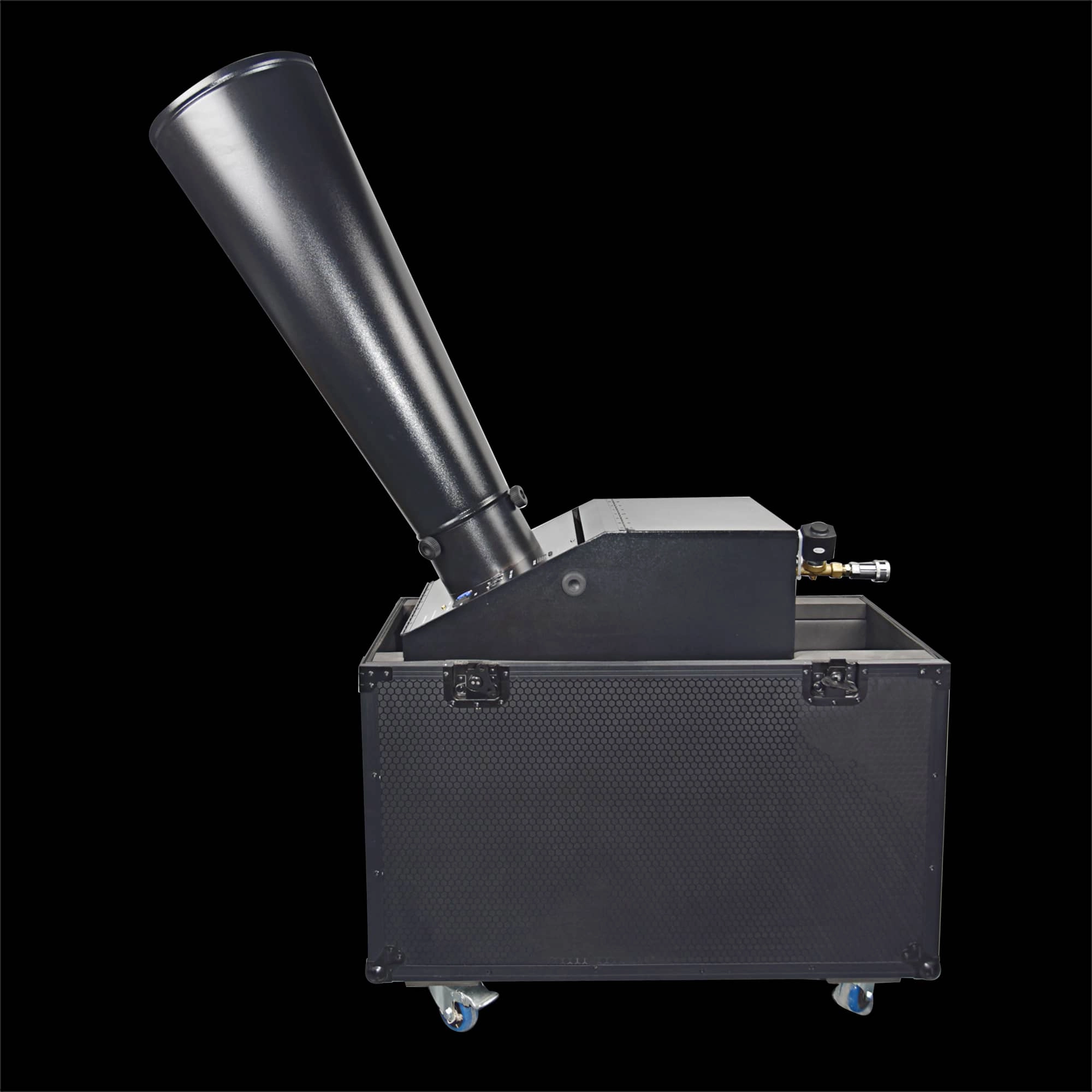
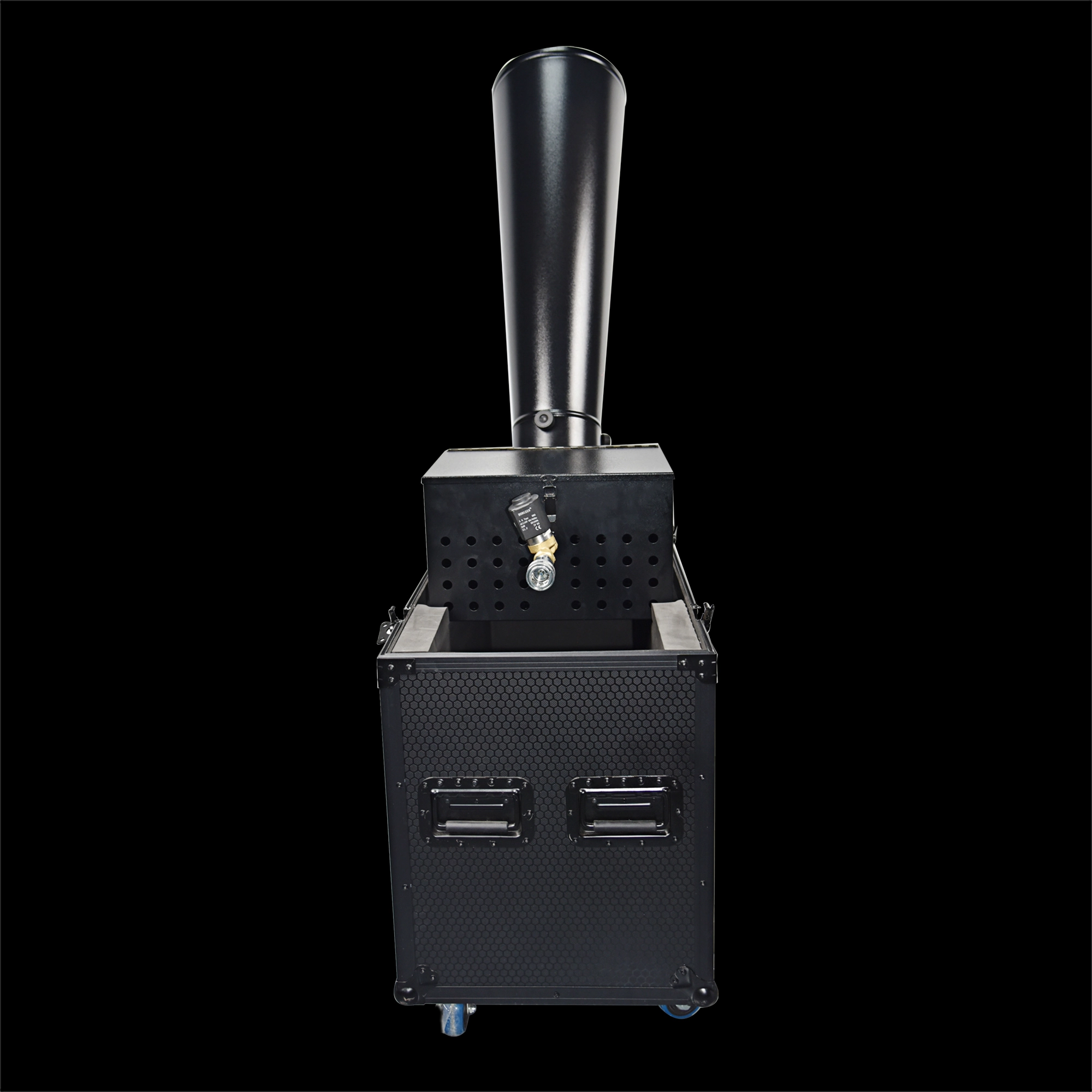
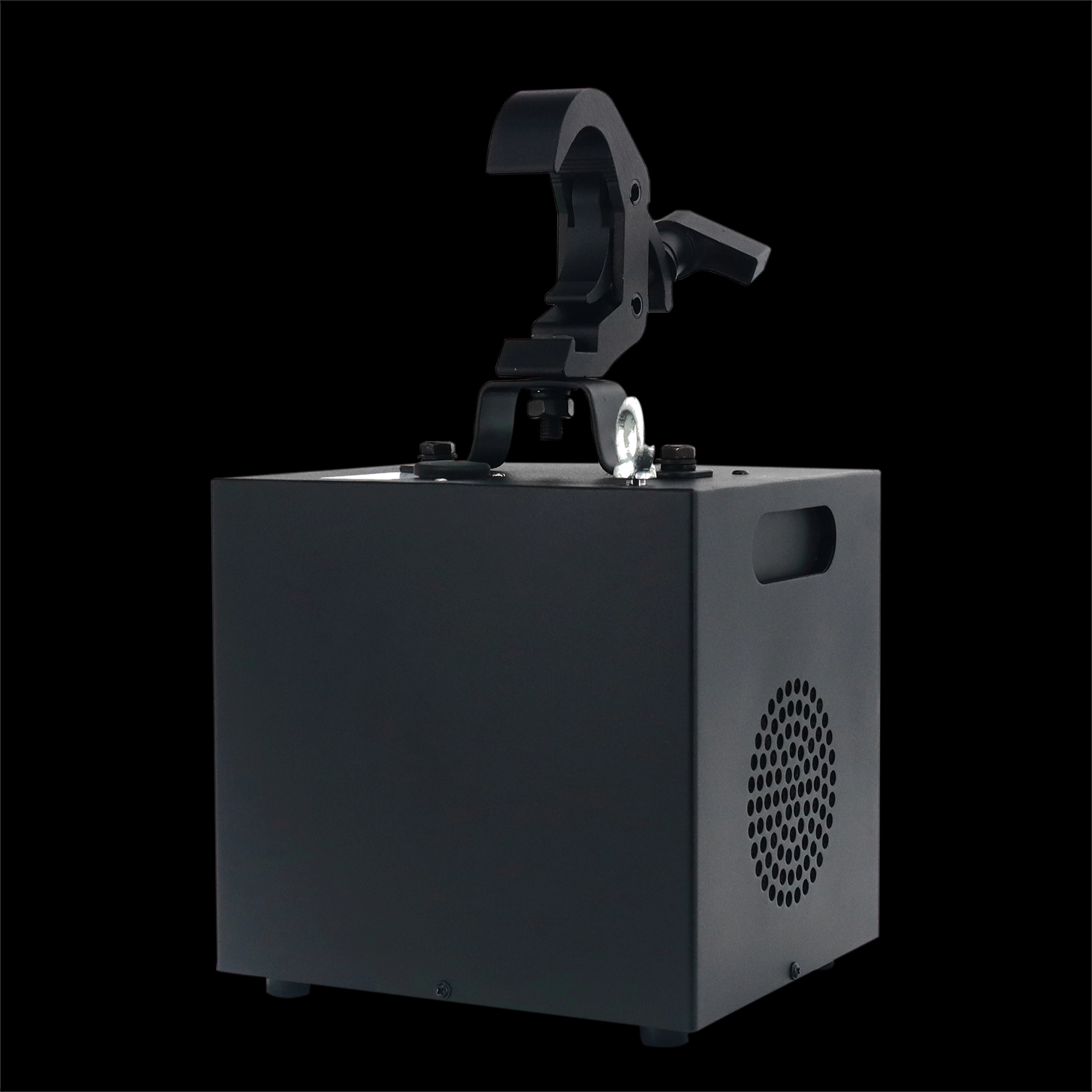
We offer a comprehensive portfolio—ranging from low-residue haze units to high-output foggers and complementary devices such as spark machines, Haze Machine, CO₂ Jet Machine, Bubble Machine, Snow Machine, Foam Machine, Confetti Machine, fog machine, fire machine, and dry ice machine—enabling designers to select the right effect type with appropriate safety characteristics for each performance environment.
Customization, integration, and lifecycle support
Recognizing that every production has unique constraints, we provide flexible customization: custom casings, branded panels, wireless and DMX/RDM control systems, and multi-device synchronization. Our field support and spare-parts logistics reduce downtime and support lifecycle planning for venues and rental houses. For procurement teams, we supply detailed technical submittals to accelerate approval and installation.
Client services and documentation
To support buyer due diligence, our sales and engineering staff provide pre-sale site consultations, risk assessments, and post-sale commissioning assistance. Comprehensive documentation—installation guides, preventive maintenance plans, and troubleshooting flowcharts—helps facility managers and technical crews maintain compliance and maximize equipment ROI. For enquiries: Siterui SFX, https://www.siteruisfx.com/ and sales01@strlighting.com
Contact the manufacturer for site-specific guidance, third-party testing data, or to schedule a specification review with our compliance engineers.
Frequently Asked Questions
What are the primary safety hazards associated with oil-based theatrical foggers?
Primary hazards include surface residue that can affect equipment, potential increased ignition risk near heat sources, and respiratory exposure to fine aerosol particles; these require MSDS review, ventilation controls, and operational procedures.
Which standards and organizations should venues consult when using oil-derived fog effects?
Venues should consult NFPA for life-safety considerations, ASHRAE for ventilation best practices, and OSHA for workplace exposure controls; local AHJs determine code enforcement and permitting.
How can procurement teams verify a fogger’s suitability for a sensitive venue?
Request technical submittals showing fluid chemistry and flash point, particle size profiles if available, maintenance and spare-parts information, IP ratings, control protocols, and third-party testing documentation.
What mitigation measures reduce residue and air-quality impacts during shows?
Use low-residue fluids, meter output carefully, install local exhaust or increased HVAC dilution, deploy HEPA filtration where needed, and implement SOPs for handling and cleaning to limit accumulation on fixtures.
What documentation should be provided with equipment to support permitting and inspections?
Suppliers should supply MSDS, installation and wiring diagrams, operational manuals, maintenance schedules, emergency shutdown procedures, and any third-party emission or safety test reports to facilitate AHJ review.

Email: sales01@strlighting.com
WhatsApp: +86 189 2232 4800
© 2025 Siterui SFX All Rights Reserved.
 Scan QR Code
Whatsapp: +8618922324800
siteruisfx_stage_equipment
Siterui
SITERUI-SFX
STRlighting
@siterui.sfx