
Safety Tips for Using DMX Low Lying Fog Machines
- Ground-hugging fog mechanics and venue risk profile
- How cold-floor fog systems create low-lying effects
- Venue airflow, stratification, and occupant safety
- Residue, slip risk, and surface compatibility
- Operational controls, electrical integration, and DMX management
- Safe DMX/RDM integration practices
- Electrical installation and power management
- Interlocks, alarms, and integration with building management
- Procurement checklist and compliance framework for buyers
- Specification items buyers must demand
- Regulatory and standard compliance
- Vendor qualification and lifecycle costs
- Maintenance, commissioning, and emergency procedures
- Commissioning and acceptance testing
- Routine service intervals and consumable management
- Emergency response and medical considerations
- Siterui SFX: Manufacturer capabilities, customization, and support
- Engineering quality and compliance
- Customization, system integration, and DMX-ready solutions
- Product range and lifecycle services
- Frequently Asked Questions
High-density, search-optimized summary: Professional venue operators, system integrators, and procurement teams will find a compact, action-oriented reference for deploying DMX-controlled ground-hugging fog systems safely. This document explains mechanism differences between dry-ice low fog units, chilled-fluid floor foggers, and burst-style CO₂ jets; prescribes ventilation metrics and oxygen-displacement monitoring; details electrical, DMX/RDM and wireless control safeguards; provides a pre-procurement checklist and maintenance schedule to reduce liability; and maps compliance touchpoints to authoritative sources including Fog machine - Wikipedia, OSHA, NFPA, and ISO standards for risk management.
Ground-hugging fog mechanics and venue risk profile
How cold-floor fog systems create low-lying effects
Low-level atmospheric effects are achieved via three primary physical processes: sublimation-driven CO₂ plumes from solid carbon dioxide (dry ice), chilled-fluid condensation that produces dense vapor that hugs surfaces, and cryogenic gas bursts (CO₂ jets) that create instantaneous low fog. Each method carries distinct operational constraints—CO₂ sublimation can displace oxygen in confined spaces; chilled-fluid machines may deposit propylene glycol or glycerin residues on surfaces; burst jets generate high-velocity cold plumes requiring distinct placement and thermal shielding. Understanding the mechanism is the first step to specifying appropriate ventilation, sensor placement, and control interlocks for a safe installation.
Venue airflow, stratification, and occupant safety
Low-lying fog often accumulates at floor level before dissipating; this stratification interacts with HVAC return/exhaust locations and can create pockets of elevated particulate or gas concentration. For enclosed venues or long runs of low fog, buyers should commission a short computational fluid dynamics (CFD) assessment or simple smoke test during commissioning to map likely stagnation zones and confirm that installed returns clear the effect without creating hazardous pockets. OSHA guidance on confined-space and indoor air safety should inform oxygen-displacement risk assessments.
Residue, slip risk, and surface compatibility
Residue from glycol-based fluids can increase slip risk on polished stages and equipment platforms. Procurement specifications must require manufacturer-provided material safety data sheets (MSDS) for any fluid, surface-compatibility testing results, and recommended cleaning procedures. Where carpeting or electronics sit near fog outlets, select systems with targeted low-ground dispersion or include non-slip floor treatments and drainage to mitigate accumulation.
Operational controls, electrical integration, and DMX management
Safe DMX/RDM integration practices
Modern stage-level fog systems commonly support DMX512, and many devices now implement RDM for two-way configuration and monitoring. Control-system architects should segregate control wiring from high-voltage runs, implement termination and surge protection, and configure address and channel maps to prevent accidental triggering. Where wireless control is used, require encrypted protocols and a site survey to avoid interference with critical comms. Lockout/tagout procedures should be defined for maintenance to prevent unintended remote activation.
Electrical installation and power management
Power quality affects pump life and heater stability. Specify machines with inrush-limiting circuitry or soft-start on fan and pump motors to avoid nuisance tripping. Electrical installation should follow local code and use circuit breakers sized per nominal current and tested under load. For multi-device networks, consider central power distribution with monitoring to detect leakage current that could indicate fluid ingress.
Interlocks, alarms, and integration with building management
Essential fail-safes include pressure and temperature sensors, low-fluid alarms, and oxygen/CO₂ monitors where cryogenic products are in use. Integrate critical alarms to the venue’s building management system (BMS) and to the stage automation console. Fire-detection systems must be configured to avoid false alarms while preserving occupant safety; consult NFPA guidance on integrating theatrical effects with fire alarm systems.
Procurement checklist and compliance framework for buyers
Specification items buyers must demand
Buyers and project owners should require: CE/UL/ETL or equivalent safety listings, full MSDS documents for any supplied consumables, DMX512/RDM compatibility documentation, built-in safety interlocks and firmware rollback capability, warranty and service-level terms, and factory acceptance test (FAT) reports. Include contractual acceptance testing for on-site commissioning and a clause for periodic safety audits.
Regulatory and standard compliance
Compliance touches include electrical safety certifications, local fire marshal approvals for theatrical effects, and workplace exposure limits where dense aerosols are used. NFPA provides theatrical-safety guidance and OSHA covers workplace hazards; ISO guidance on risk management is a useful framing tool for enterprise-level procurement policies. Include coordination with the venue’s fire authorities prior to first use.
Vendor qualification and lifecycle costs
Evaluate suppliers on engineering documentation, spare parts availability, local service coverage, and quality-control processes. Total cost of ownership should include consumables, recommended maintenance intervals, spare parts, and the cost of periodic gas or oxygen monitoring. Request mean time between failures (MTBF) statistics and failure-mode analysis to quantify operational risk.
| Method | Mechanism | Oxygen/CO₂ Risk | Residue | DMX Integration | Typical Use Case |
|---|---|---|---|---|---|
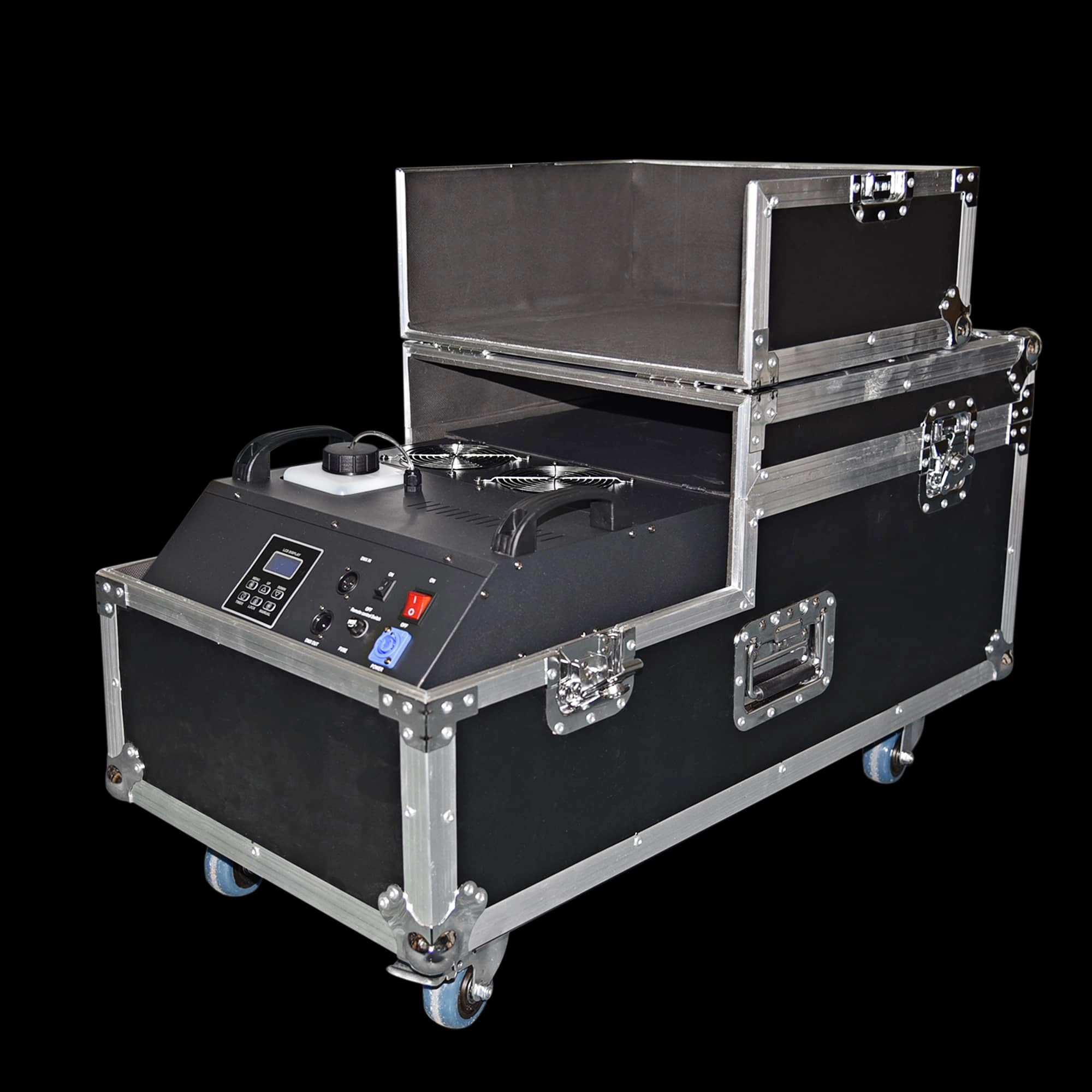
| Dry-ice low fog | CO₂ sublimation producing dense cold vapor | Moderate–High (CO₂ can displace O₂ in confined spaces) | Minimal surface residue | Often standalone; DMX-ready units available | Theatrical floor fog, film sets requiring authentic cold-hugging smoke |
| Chilled-fluid floor fog | Heated fog condensed and chilled to remain low | Low (fluid-based, limited CO₂ generation) | Potential glycol/glycerin residue—requires cleaning | High compatibility with DMX/RDM and timed cues | Concerts and theatrical productions requiring sustained low fog |
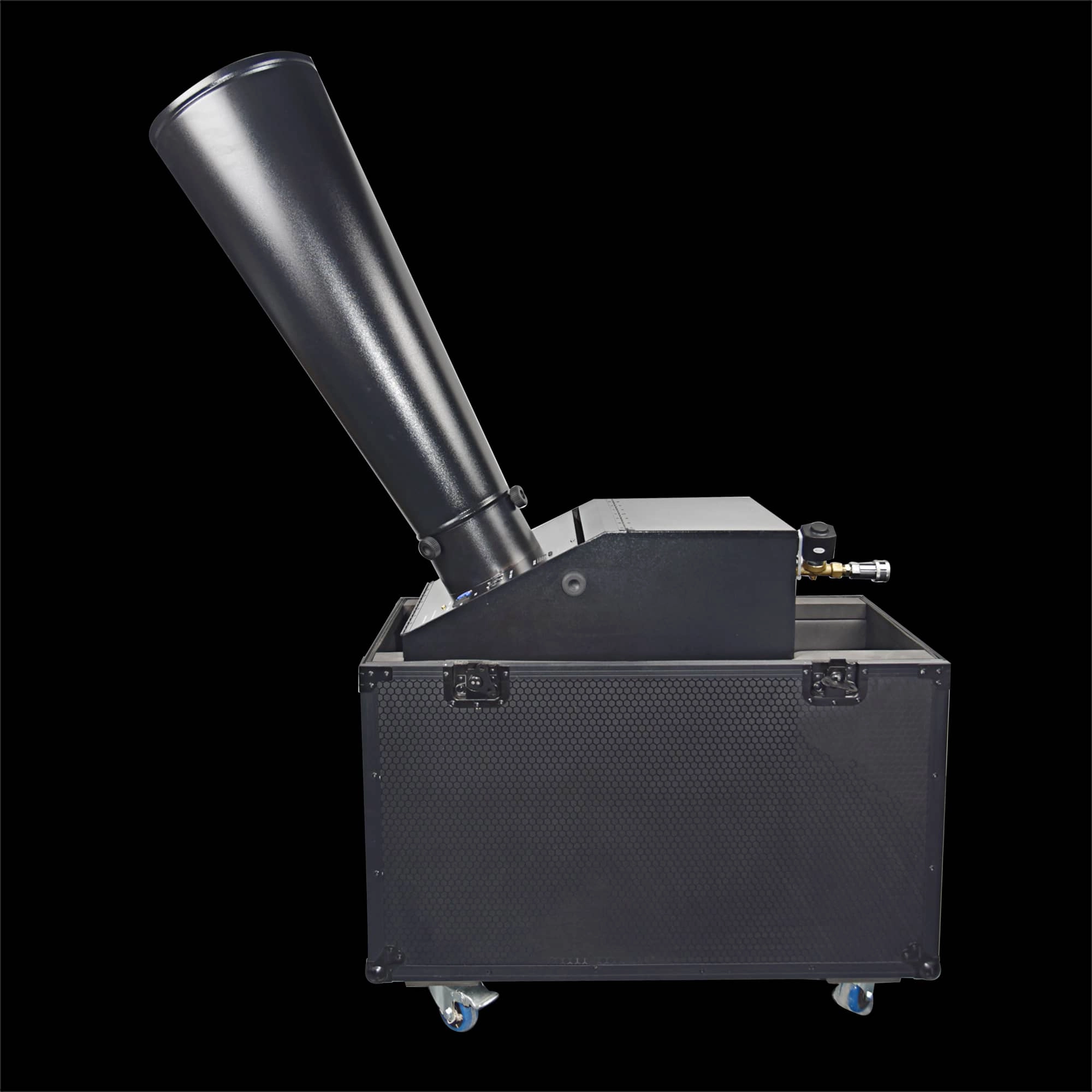
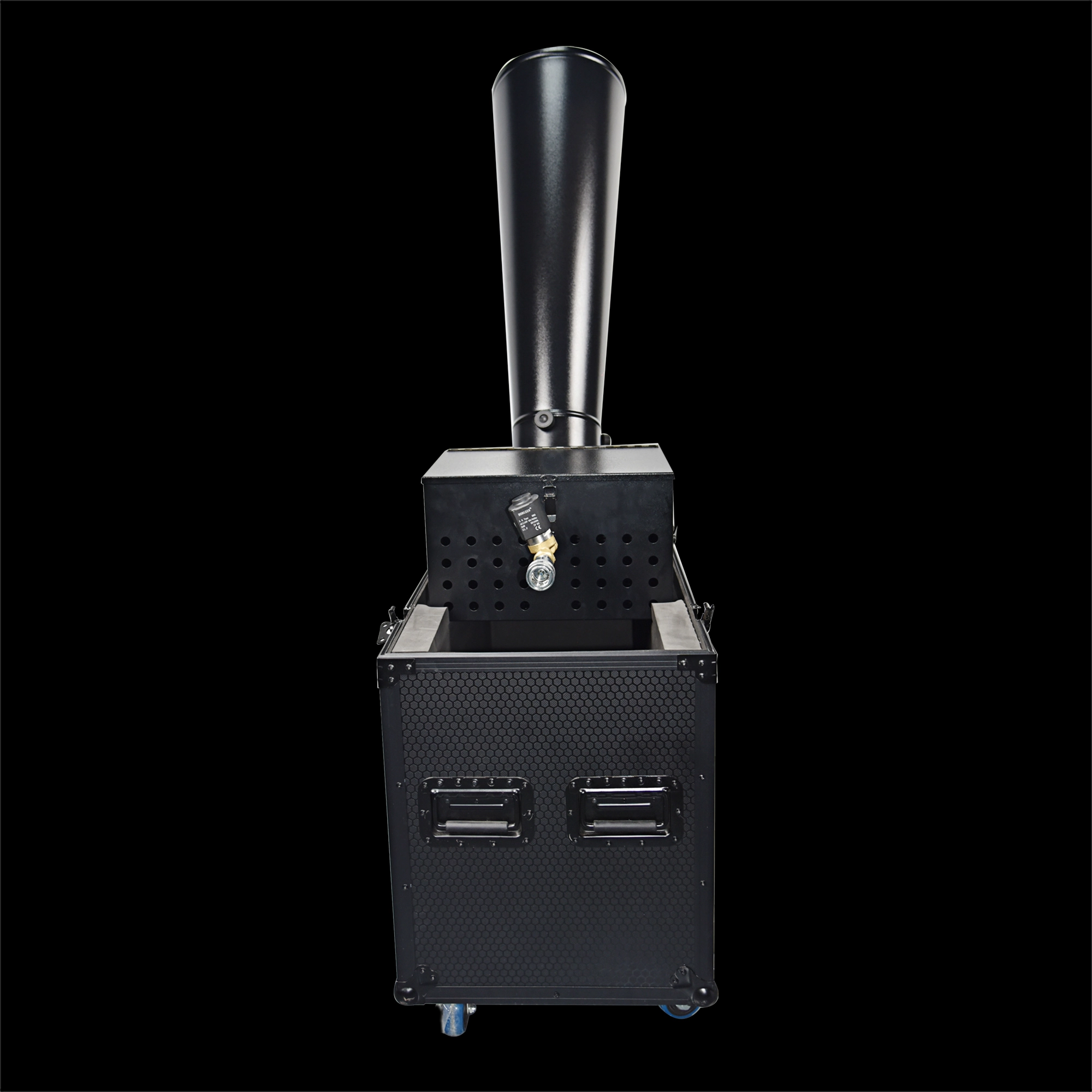
| CO₂ burst jets | Cryogenic gas bursts producing cold fog pockets | High during bursts—ventilation critical | None | Often DMX-controlled burst channels | Special effects for sudden ground-hugging bursts and stings |
Maintenance, commissioning, and emergency procedures
Commissioning and acceptance testing
Commissioning should include a scripted test matrix under DMX control demonstrating channel mapping, fail-safe activation, and alarm responses. Run acceptance tests with representative loads and with the venue’s HVAC returns operating to confirm the effect clears as designed. Maintain test logs and sign-off sheets as part of project closeout documentation.
Routine service intervals and consumable management
Establish a preventive maintenance schedule capturing pump flushing, heater cleaning, DMX connector inspection, and firmware updates. For glycol-based systems, flush tanks quarterly when in high-use environments. Keep a maintained inventory of filters, pump seals, and fuses to reduce downtime during events.
Emergency response and medical considerations
Create emergency procedures for suspected CO₂ or oxygen-displacement incidents and ensure first responders have access to manufacturer documentation on the specific technology used. Training should include evacuation routes, how to isolate effects power, and how to ventilate the stage area rapidly. For medical guidance on aerosol exposure limits and occupational health, consult national workplace safety agencies such as OSHA and product MSDS instructions.
Siterui SFX: Manufacturer capabilities, customization, and support
Engineering quality and compliance
Siterui SFX is a professional manufacturer engaged in research and development, production, sales, and service of stage special effects equipment. Our engineering process integrates electrical safety, fail-safe firmware design, and documentation required for venue commissioning. Buyers receive compliance dossiers, factory test reports, and service plans to support local authority sign-off and ongoing operational assurance.
Customization, system integration, and DMX-ready solutions
We offer tailored adaptations including custom casing and branding, wireless control modules, RDM-enabled address management, and synchronized multi-device networks. For complex installations, our engineering team delivers channel-mapped control schemes and FAT support so integrators can validate sequence timing and safety interlocks under DMX control prior to site delivery.
Product range and lifecycle services
Our product portfolio spans spark systems, atmospheric haze generators, CO₂ jet modules, bubble and snow units, foam and confetti setups, fog systems, fire-effect devices, and dry ice low-fog machines. We provide spare-parts kits, extended warranties, on-site commissioning, and scheduled maintenance packages to reduce total cost of ownership and maintain performance consistency across touring and fixed installations. Clients can request MSDS, MTBF data, and service-level agreements during procurement to support procurement evaluation and risk modelling.
Operational recommendation: include Siterui SFX in vendor evaluations where safety documentation, DMX/RDM compatibility, and post-sale service are procurement priorities; request a site-specific integration plan and a formal FAT to ensure risk mitigation and compliance with venue authorities.
For design inquiries, technical datasheets, or to request a quotation for spark machines, haze units, CO₂ jets, bubble machines, snow systems, foam and confetti solutions, fog machines, fire-effect devices, and dry ice low fog equipment, contact our sales team listed below.
Contact: sales01@strlighting.com | Website: https://www.siteruisfx.com/
Frequently Asked Questions
What ventilation requirements should be specified for low-lying fog systems?
Venue operators should ensure adequate air exchanges and strategize HVAC return placement to prevent stagnation. A short CFD assessment or simple smoke test during commissioning identifies stagnation zones. For machines using sublimating CO₂, install oxygen or CO₂ monitors and follow site-specific evacuation protocols if concentrations approach occupational exposure limits.
How to choose between dry ice, chilled-fluid, and CO₂ jet low-fog solutions?
Selection depends on application needs: dry-ice units create authentic, dense floor fog but carry CO₂ displacement risk; chilled-fluid systems offer sustained low fog with higher DMX integration and potential surface residue; CO₂ jets deliver instantaneous bursts suited for stings. Include lifecycle costs, residue management, and venue constraints when evaluating options.
What DMX and electrical safety features should be required in specifications?
Require DMX512/RDM compatibility, surge protection, circuit soft-start features, and segregated control/power wiring. Demand firmware rollback capability, locked control profiles to prevent accidental activation, and integration points for building management systems and alarm contacts.
What maintenance schedule minimizes operational downtime?
Implement regular preventive maintenance: visual and connector inspections before each event, pump and heater cleaning monthly in high-use environments, and full system flushes quarterly for chilled-fluid units. Maintain a stock of common spares and log all service actions for warranty compliance and lifecycle tracking.
How do regulatory bodies affect deployment of theatrical low-fog effects?
Deployments must coordinate with local fire marshals and follow electrical and workplace-safety regulations. NFPA guidance and OSHA resources should inform the safety case presented to authorities. Deliverables for approval typically include MSDS, FAT reports, alarm integration plans, and a documented emergency response procedure.

Email: sales01@strlighting.com
WhatsApp: +86 189 2232 4800
© 2025 Siterui SFX All Rights Reserved.
 Scan QR Code
Whatsapp: +8618922324800
siteruisfx_stage_equipment
Siterui
SITERUI-SFX
STRlighting
@siterui.sfx