
Top 10 SFX Haze Machines with Digital Displays in 2026
High-performance haze solutions for professional productions in 2026 require accurate on-device control, predictable aerosol output, and integration-ready interfaces; this guide evaluates the leading digital-display haze units—covering control types, fluid tech, output metrics, safety and procurement criteria—so technical buyers, rental houses, and venue operators can shortlist devices that maximize uptime, compliance and ROI while simplifying DMX/RDM, wireless, and touchscreen workflows.
- Selecting professional haze units with integrated control panels
- Key control features procurement teams must prioritize
- Display types and human‑machine interaction
- Connectivity and protocol compatibility
- Hardware, performance and safety attributes for 2026 pro hazers
- Aerosol output, fluid consumption and warm‑up metrics
- Mechanical design, serviceability and duty cycle
- Health, safety and regulatory considerations
- Top 10 professional haze unit categories and procurement shortlist (2026)
- Models 1–5: compact to mid‑size controlled hazers
- Models 6–10: heavy‑duty, high‑integration platforms
- Selection matrix and procurement checklist
- Why Siterui SFX is a trusted partner for display‑driven haze solutions
- R&D, manufacturing capability and customization services
- Product portfolio: complementary machines for integrated SFX systems
- After‑sales support, QA and fleet management
- Frequently Asked Questions
High-performance haze solutions for professional productions in 2026 require accurate on-device control, predictable aerosol output, and integration-ready interfaces; this guide evaluates the leading digital-display haze units—covering control types, fluid tech, output metrics, safety and procurement criteria—so technical buyers, rental houses, and venue operators can shortlist devices that maximize uptime, compliance and ROI while simplifying DMX/RDM, wireless, and touchscreen workflows.
Selecting professional haze units with integrated control panels
Key control features procurement teams must prioritize
Buyers should prioritize readable displays that present operational parameters (output level, fan speed, fluid level, duty cycle) and an intuitive menu for rapid configuration during load‑in. Devices that combine local touchscreen readouts with physical buttons reduce operator error during fast turnarounds and provide fallback control if a networked console is unavailable.
Display types and human‑machine interaction
Modern units use LCD or capacitive touchscreens with backlight dimming for dark environments. Look for parameter presets, lockable admin menus, and multi‑language support. HMI design influences training time and reduces on‑site mistakes—critical for rental fleets and venues with rotating crews.
Connectivity and protocol compatibility
Integration readiness requires native support for industry control protocols. DMX512 remains the baseline for console control (DMX512 (Wikipedia)), while RDM provides remote addressing and diagnostics. Wireless control, Art-Net/sACN node compatibility, and Ethernet management enhance multi‑device synchronization and reduce cabling on complex rigs.
Hardware, performance and safety attributes for 2026 pro hazers
Aerosol output, fluid consumption and warm‑up metrics
Operational performance metrics impact venue HVAC loads and runtime planning. Evaluate continuous output range in cubic meters per minute, fluid use in millilitres per hour at defined output settings, and warm‑up time—professional units typically reach stable output within 3–10 minutes depending on heat exchanger architecture and fluid viscosity.
Mechanical design, serviceability and duty cycle
Rack‑mountable and roadworthy casings, modular pump assemblies, and accessible fluid tanks reduce downtime. Machines rated for continuous operation (100% duty cycle) are required for long events; others specify intermittent duty. Check for replaceable wear components (heaters, pumps, fans) and clear service manuals for rental operations to estimate lifecycle costs.
Health, safety and regulatory considerations
Compliance with workplace safety and fire codes is non‑negotiable. Operators should consult OSHA guidelines for indoor air quality and ventilation impacts, and reference national fire authority guidance from NFPA when planning special effects. Choosing water‑glycol or oil‑based fluids influences particle size and residue—confirm product MSDS and venue acceptance before deployment.
Top 10 professional haze unit categories and procurement shortlist (2026)
Models 1–5: compact to mid‑size controlled hazers
1) Compact touchscreen hazers for AV companies—small footprint, rapid warm‑up, simple menu-driven displays for corporate events.2) Road‑case mid-power units with physical toggles and LCD readout for repeatable concert setups.3) Rackable 19 digital hazers with multi‑zone output presets for theatre fly-towers.4) Dual‑pump systems with redundancy and panel readouts for critical broadcast and film studios.5) Low‑residue water‑based hazers with advanced fluid level sensors and dosing readouts for indoor museums and installations.
Models 6–10: heavy‑duty, high‑integration platforms
6) High-output hazers with advanced touchscreen, sACN node and built-in scheduling for stadium touring.7) Networked fog/haze hybrid units with synchronized displays for multi-effect rigs.8) Haze towers with remote touchscreen pods for distributed stage effects management.9) Rental‑grade fleets featuring lockable control menus, RFID asset tags and service counters on the display for maintenance tracking.10) Environmentally optimised hazers with low fluid consumption readouts and analytics export for sustainability reporting.
Selection matrix and procurement checklist
Technical buyers should rank candidates using: (1) projected lifetime fluid cost, (2) display usability score, (3) control protocol coverage (DMX/RDM/Art‑Net/sACN), (4) duty cycle rating, (5) serviceability index and (6) warranty/part availability. Include HVAC impact assessments and written venue approvals for residue‑sensitive environments.
| Attribute | Traditional oil‑based hazers | Modern digital‑control water/glycol units |
|---|---|---|
| Control interface | Basic knobs or limited LCD | Full colour displays, touch, DMX/RDM, Ethernet |
| Residue and housekeeping | Higher potential residue; more cleaning | Low‑residue fluids; sensor warnings |
| Warm‑up time | Typically 5–15 minutes | 3–10 minutes with preheat modes |
| Fluid consumption predictability | Less granular metering | Precise dosing metrics on display |
| Serviceability | Fewer diagnostics on‑panel | Onboard diagnostics and error logs via UI |
Why Siterui SFX is a trusted partner for display‑driven haze solutions
R&D, manufacturing capability and customization services
We are a professional manufacturer engaged in research and development, production, sales, and service of professional stage special effects equipment. Our engineering team focuses on integrating high‑resolution displays, secure admin menus and open protocol stacks (DMX/RDM, sACN/Art‑Net) to meet large‑scale production demands. Customization options include bespoke casing, branded panels, and tailored control mappings to match venue SOPs and festival workflows.
Product portfolio: complementary machines for integrated SFX systems
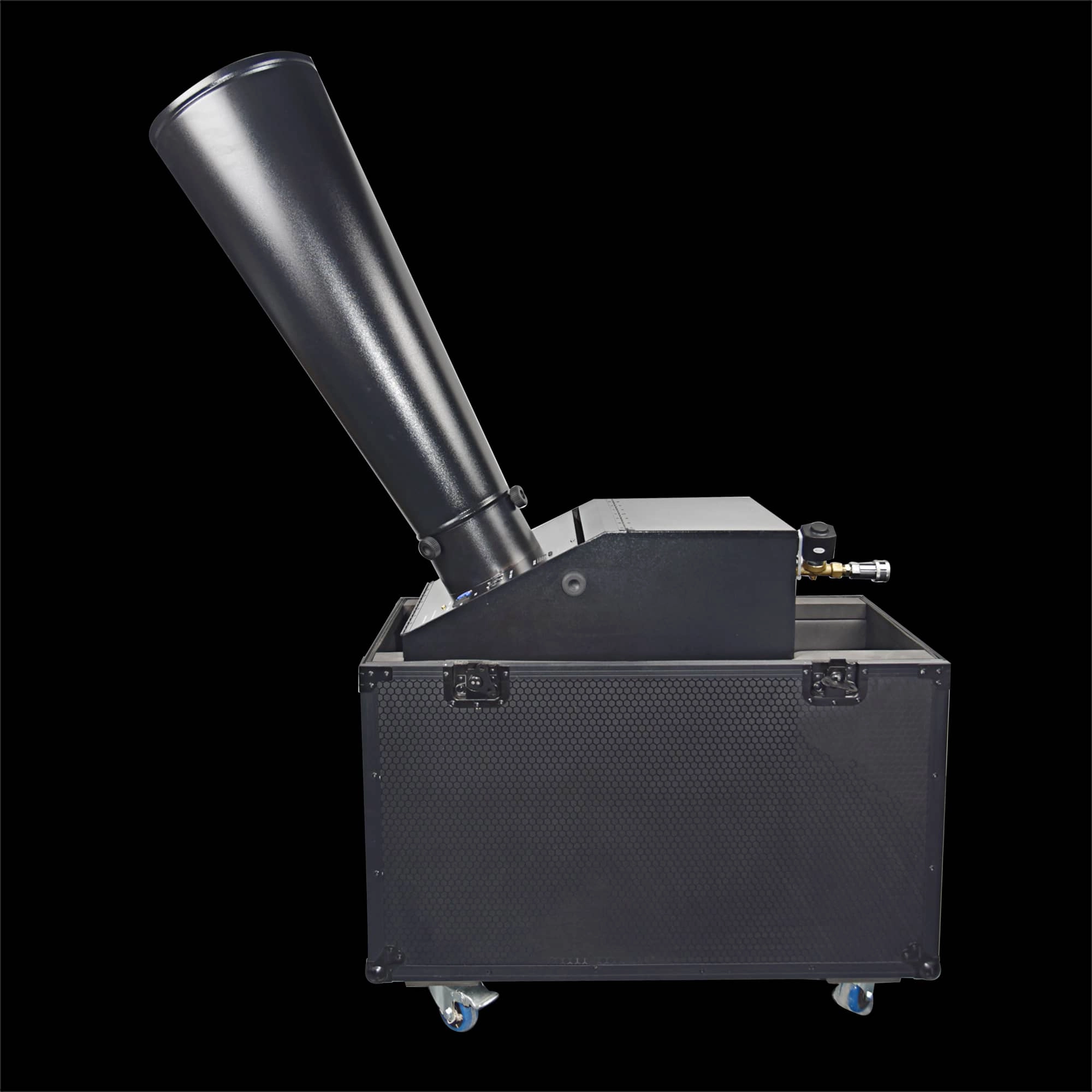
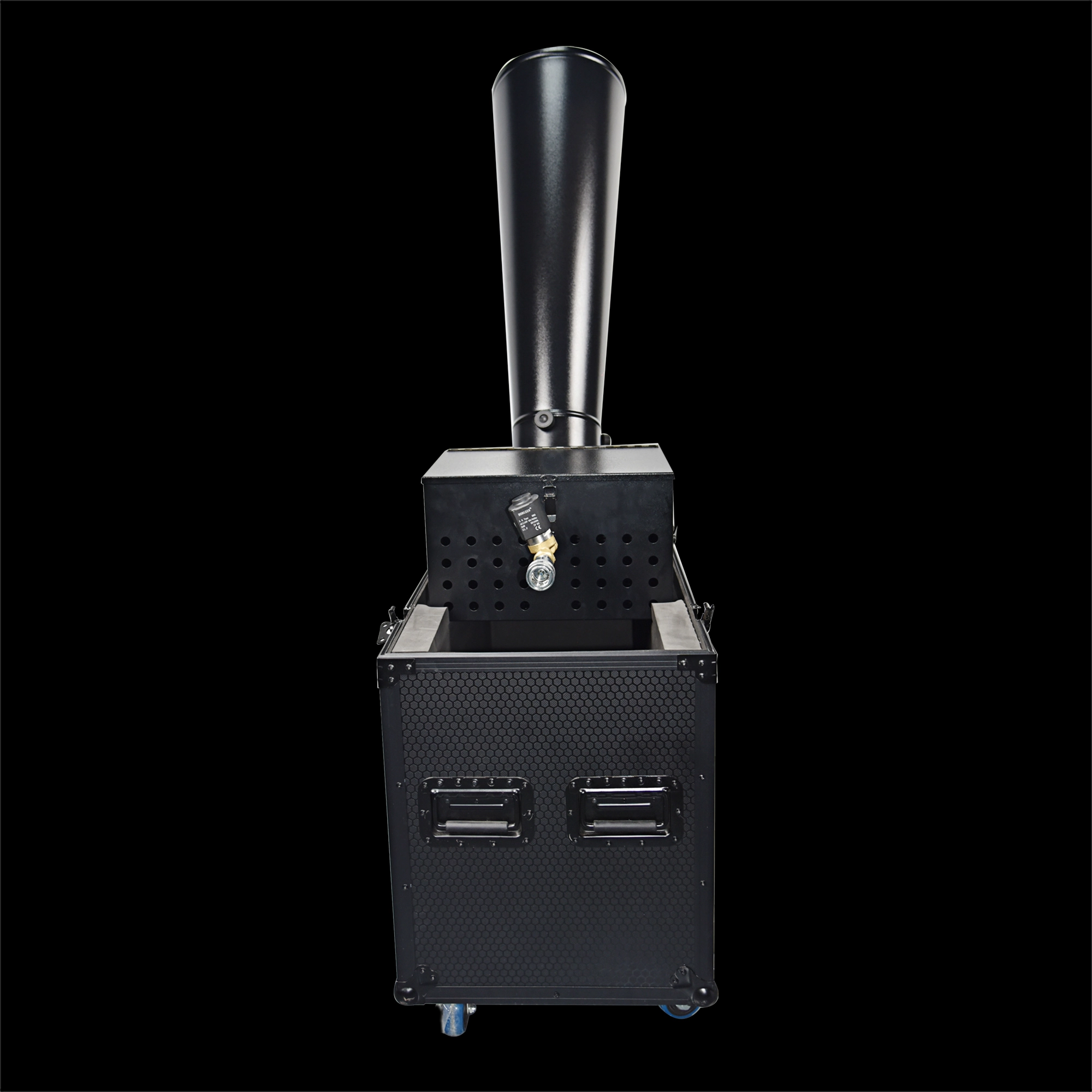
Our product range includes spark machines, haze units, CO₂ jet platforms, bubble and snow machines, foam systems, confetti launchers, fog devices, fire effect machines, and dry ice machines. Combining these devices with consistent digital control schemes and synchronized display feedback reduces operator training requirements and simplifies large multi‑device deployments.
After‑sales support, QA and fleet management
We provide warranty packages, spare‑parts availability, and technical training for rental houses and venue engineers. Our service plans include preventive maintenance schedules and remote diagnostic support through RDM and networked telemetry to keep fleets operational during touring seasons and high‑use windows.
Technical teams and procurement leads considering advanced haze systems should request fluid compatibility charts, duty cycle certificates, and sample control profiles to validate integration with existing lighting consoles and HVAC plans; Siterui SFX can supply these documents and coordinate factory acceptance testing.
References for industry best practices and control standards include Fog machine (Wikipedia) for mechanism basics, the DMX512 protocol overview at DMX512 (Wikipedia), workplace safety guidance from OSHA, and general standardisation resources at ISO. For fire and venue compliance consult NFPA.
For technical specifications, fleet quotes, or to discuss custom integration and project timelines please contact sales01@strlighting.com for tailored proposals and factory lead times.
Frequently Asked Questions
What is the difference between oil‑based and water/glycol haze fluids regarding residue and venue acceptance?
Oil‑based fluids tend to leave slightly more residue on surfaces and lighting fixtures; water/glycol formulations are lower residue and are often preferred for museums, theatres and broadcast studios. Always consult the material safety data sheet (MSDS) and obtain venue approval before use.
Which control protocols are essential for integrating haze units into modern lighting rigs?
DMX512 is the baseline for console control; RDM adds remote device management and diagnostics. Ethernet protocols like Art‑Net and sACN enable large networks and scheduling. Purchasing units with multiple protocol options future‑proofs installations.
How should buyers evaluate fluid consumption and runtime for continuous shows?
Request documented fluid consumption metrics at defined output settings (e.g., mL/hour at 25/50/75/100%). Compare duty cycle ratings and warm‑up times to estimate total fluid demand and HVAC impact for the event duration.
What maintenance practices minimize downtime for rental fleets of haze devices?
Implement preventive maintenance schedules with periodic pump and heater checks, calibration of sensors, cleaning of air inlets and filters, and inventory of replaceable parts. Devices with onboard diagnostics and service counters on the display reduce troubleshooting time.
Are there safety or regulatory standards that affect haze machine deployment?
Yes. Consult national and venue fire codes (e.g., NFPA) and occupational safety guidance (e.g., OSHA) for indoor air quality and emergency egress considerations. Provide MSDS documentation and coordinate with HVAC engineers to manage aerosol concentration and ventilation.

Email: sales01@strlighting.com
WhatsApp: +86 189 2232 4800
© 2025 Siterui SFX All Rights Reserved.
 Scan QR Code
Whatsapp: +8618922324800
siteruisfx_stage_equipment
Siterui
SITERUI-SFX
STRlighting
@siterui.sfx