
Top Low Fog Machines for Concerts and Live Events
Comprehensive procurement and technical guidance for specifying low-lying fog systems and atmospheric ground-effect generators for live performances, focusing on operational safety, integration with lighting, environmental impacts, and ROI for venues and production companies; includes comparative performance data, standards references, and a practical vendor brief from Siterui SFX for customization and system supply.
- Selecting the Right Atmospheric Haze and Ground-Fog Systems for Live Productions
- Performance attributes buyers must prioritize
- Integration with lighting and stage automation
- Operational safety and regulatory considerations
- Comparing Low-lying Fog Technologies and Use Cases
- Dry ice (solid CO₂) systems vs. refrigerated glycol foggers
- Water-based haze and theatrical foggers
- Mobile ground-fog units vs. integrated stage systems
- Procurement Checklist: Specifying Equipment, Service, and Compliance
- Technical specification template
- Maintenance, spares, and uptime guarantees
- Health, environmental, and insurance implications
- Vendor Selection: Why Manufacturer Capabilities Matter
- Customized engineering for unique stage requirements
- Quality assurance, testing, and certification
- Logistics, training, and after-sales support
- Siterui SFX: Manufacturing Strength and Custom Solutions for Live Events
- Integrated R&D and production capabilities
- Customization and system integration services
- Product portfolio and supply reliability
- Compliance, support, and global delivery
- Frequently Asked Questions
Comprehensive procurement and technical guidance for specifying low-lying fog systems and atmospheric ground-effect generators for live performances, focusing on operational safety, integration with lighting, environmental impacts, and ROI for venues and production companies; includes comparative performance data, standards references, and a practical vendor brief from Siterui SFX for customization and system supply.
Selecting the Right Atmospheric Haze and Ground-Fog Systems for Live Productions
Performance attributes buyers must prioritize
Production managers and rental houses should evaluate output density control, warm-up time, continuous duty ratings, and fluid consumption when specifying low-lying haze or fog systems. Units that offer variable output (measured in cubic meters per minute or grams per minute of aerosolized fluid) enable precise light beam sculpting and minimal stage floor accumulation, which matters for repeated cues and tight changeovers. For ground-hugging effects, assess whether the solution uses chilled vapor (dry ice) or refrigerated glycol-based generators, because each approach drives different logistics for storage, handling, and venue ventilation.
Integration with lighting and stage automation
Design teams must ensure fluid aerosol particles and low-lying vapor interact predictably with uplighting, moving-head beams, and LED wash fixtures. Fog particle size distribution (micron range) and thermal profile affect light scattering and beam edge definition; choose devices that offer consistent particulate output to reduce real-time lighting recalibration. Compatibility with DMX, Art-Net, or wireless control protocols reduces operator workload and allows synchronized multi-device cues during complex setlists.
Operational safety and regulatory considerations
Ground-effect fog can introduce slip hazards, CO₂ concentration changes, or contaminate smoke detectors; therefore, facility owners should require conformity to local fire codes and consult relevant guidance such as ISO standards and workplace safety resources provided by OSHA. For pyrotechnic-adjacent productions, coordination with local fire marshals and reference to industry norms from the NFPA help ensure permits and suppression systems are handled proactively. Manufacturers should provide MSDS sheets for fluids and clear operational limits for device placement relative to performers and audience lines.
Comparing Low-lying Fog Technologies and Use Cases
Dry ice (solid CO₂) systems vs. refrigerated glycol foggers
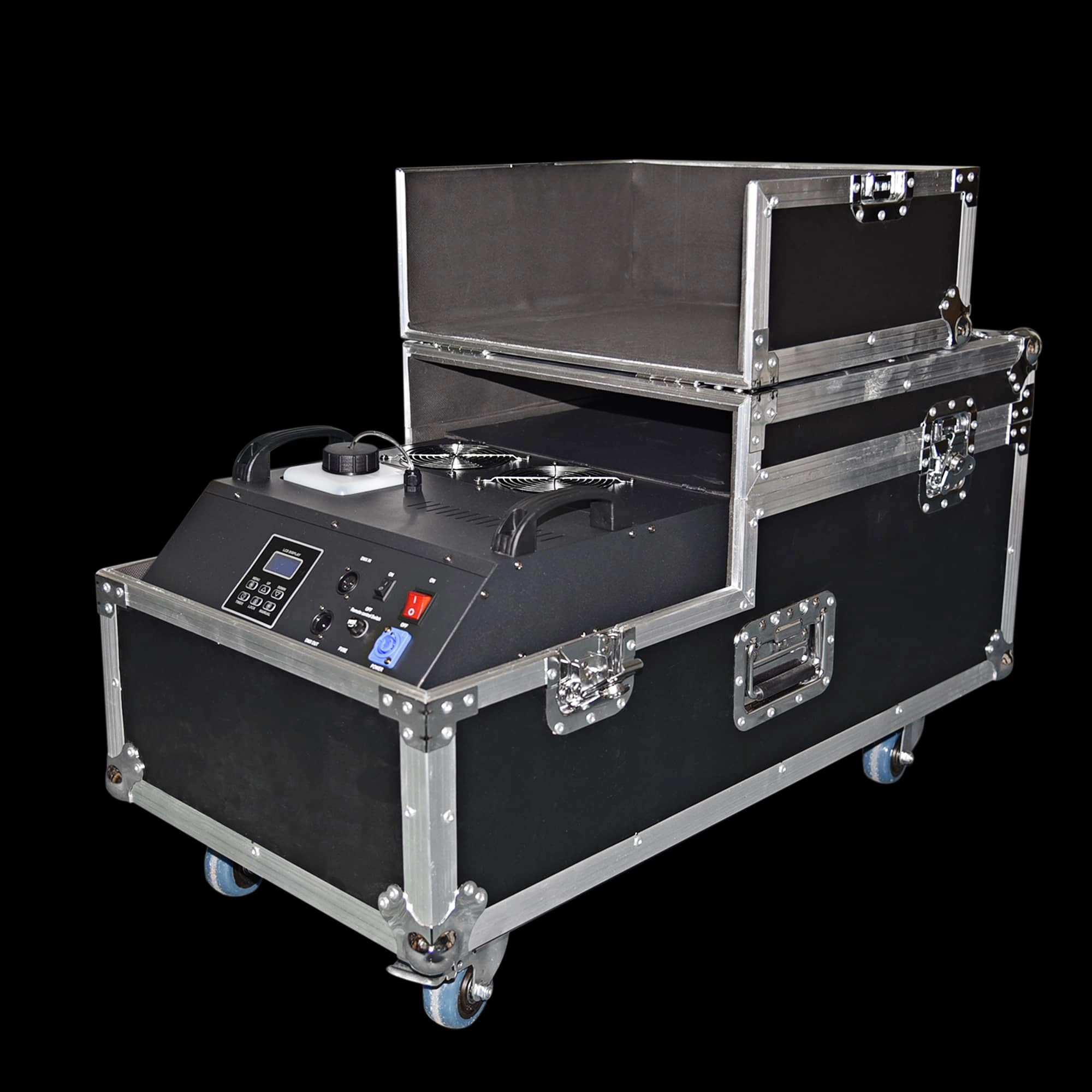
Dry ice foggers create dense, close-to-floor vapor by combining sublimating CO₂ with warm water to produce a heavy ground layer that stays low due to temperature and density differences. This method requires on-site dry ice supply, insulated handling procedures, and CO₂ monitoring for enclosed spaces. Refrigerated glycol or liquid nitrogen chilled machines circulate cooled vapor or use heat-exchange refrigeration to sustain a low fog layer with continuous control and less onsite cryogen handling, which can be preferable for multi-show residencies.
Water-based haze and theatrical foggers
Water-glycol or mineral-oil aerosol machines used for haze produce long-lasting atmospheric scattering for lighting without the concentrated floor-layering effect. For concerts that rely on strong beam definition throughout a large auditorium, water-based hazers are effective and generally consume less maintenance time than chilled ground-fog units, but they do not replicate the ponding visual of dry ice or refrigerated low-lying solutions.
Mobile ground-fog units vs. integrated stage systems
Rental operations often favor portable ground-effect generators for one-off shows due to lower capital investment and faster deployment. Conversely, fixed installations (theaters, club residencies) benefit from integrated systems with ducting, permanent control lines, and serviceable refrigerant circuits—this reduces daily setup time and improves uptime for high-frequency schedules. The buyer should run a total cost of ownership (TCO) analysis including consumables, service intervals, and operator training.
Procurement Checklist: Specifying Equipment, Service, and Compliance
Technical specification template
Include minimum performance metrics in requests for quote: output density range, warm-up time, continuous duty rating, particle size distribution, control interfaces (DMX/Art-Net/RDM), power draw (volts/amps), plumbing or cryogen needs, and recommended safe distances. Require vendor-provided data sheets, test reports, and proof of factory calibration for units more than 1 kW heating or refrigeration capacity.
Maintenance, spares, and uptime guarantees
For tours and high-use venues, require spare-parts provisioning and service-level agreements (SLAs) that define response times and mean-time-to-repair (MTTR). Ensure access to consumables—specialized fluids, refrigerant components, or dry ice supply chains—so that scheduled runs are not interrupted. A reliable supplier will provide documented preventative maintenance schedules to maximize device lifecycle and reduce unforeseen downtime.
Health, environmental, and insurance implications
Review the environmental profile of fluids and disposal procedures; glycol residues and oil-based aerosols can create surface residues that affect stage traction and cleaning regimes. Insurance underwriters and venue risk managers may require risk assessments for smoke, fog, and airborne particulate systems; include manufacturer compliance statements and MSDS documents in procurement packages to expedite approvals.
Vendor Selection: Why Manufacturer Capabilities Matter
Customized engineering for unique stage requirements
Buyers should prioritize manufacturers that offer modular design and system integration—custom casing, brand livery, wireless control, and synchronized multi-device orchestration reduce installation complexity. For large-scale productions, the ability to produce tailored enclosures and to tune thermal outputs for specific stage geometry ensures consistent aesthetic results across different venues.
Quality assurance, testing, and certification
Prefer suppliers with in-house R&D and structured quality control processes. Factory acceptance testing that documents output repeatability and safe operating envelopes provides procurement teams with confidence. Where applicable, request third-party test reports or certificates aligned with recognized bodies such as industry literature and occupational guidelines.
Logistics, training, and after-sales support
Comprehensive service packages should include operator training modules, stage-side setup checklists, and rapid spare-part shipping. For touring acts, coordinated logistics for global shipments and power configuration options (100–240V compatibility) are vital to reduce on-site configuration time and avoid incompatible equipment issues.
| Attribute | Dry Ice Ground-Fog | Refrigerated Low-Lying Fog | Water/Glycol Hazer |
|---|---|---|---|
| Visual Character | Very dense, hugs floor closely | Dense low layer with adjustable persistence | Even atmospheric haze, long persistence in air |
| Consumables | Dry ice (CO₂) — requires cryogen logistics | Glycol-based fluids, electricity for refrigeration | Water-glycol or oil-based theatrical fluid |
| Operational Complexity | High — handling, CO₂ monitoring required | Medium — refrigeration maintenance | Low — simpler service profile |
| Suitability for Touring | Moderate — logistics-heavy | High — continuous operation where installed | High — low maintenance and lightweight |
| Common Hazards | CO₂ enrichment, cold handling | Refrigerant leaks; electrical load | Residue on surfaces (if oil-based) |
Siterui SFX: Manufacturing Strength and Custom Solutions for Live Events
Integrated R&D and production capabilities
Siterui SFX is a professional manufacturer engaged in the research and development, production, sales, and service of professional stage special effects equipment. Our engineering team develops systems with emphasis on repeatable visual output, robust control interfaces, and serviceability for high-use touring and resident shows. Buyers benefit from documented test protocols and factory calibration, which reduce variability between devices and support consistent lighting interaction across venues.
Customization and system integration services
We understand that every stage, event, and creative concept is unique. That’s why we offer flexible customization services to meet specific needs—branding, special functions, size adjustments, or full system integration. From custom casing and logo printing to wireless control systems and synchronized multi-device setups, our manufacturing process supports tailored solutions that align with production design and operational workflows.
Product portfolio and supply reliability
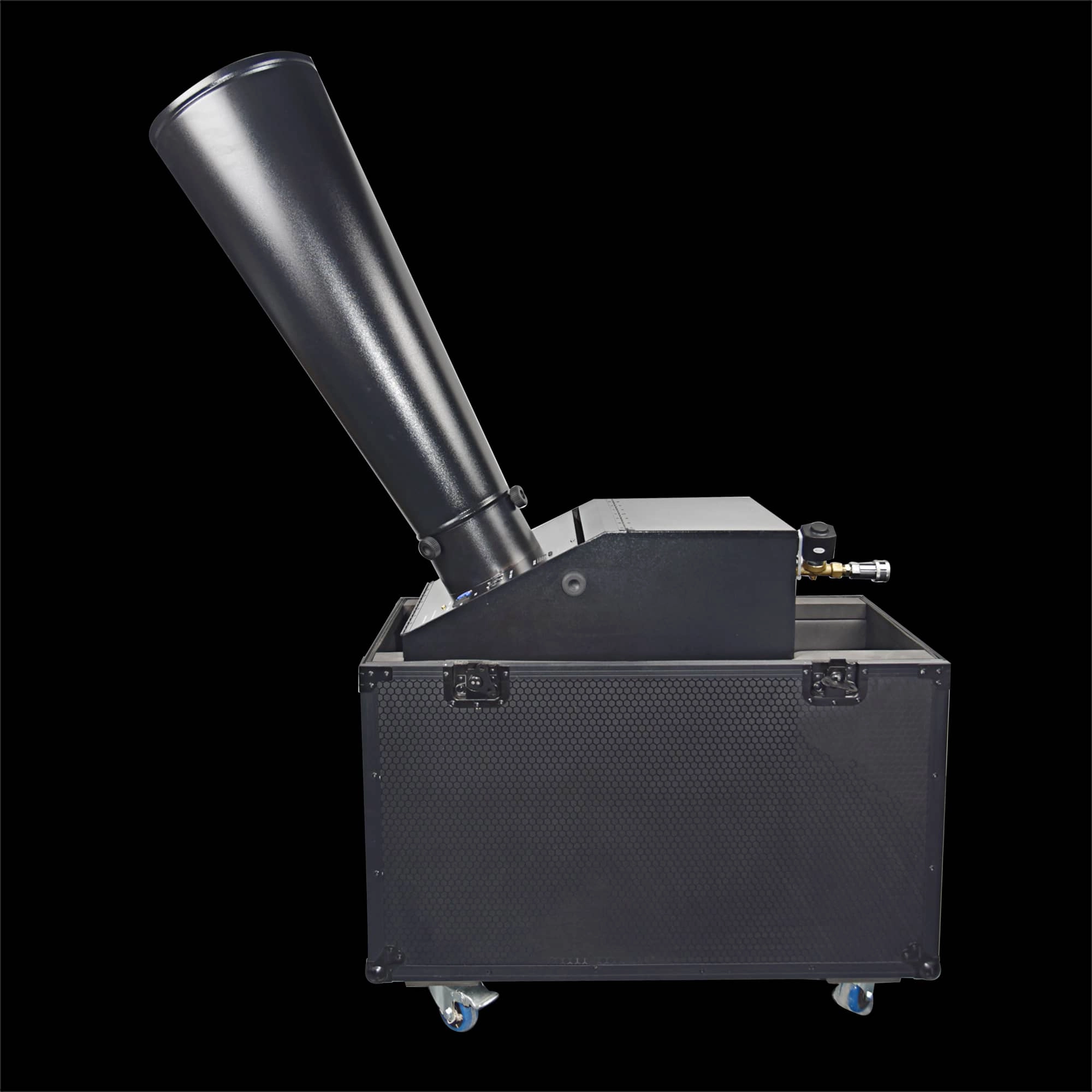
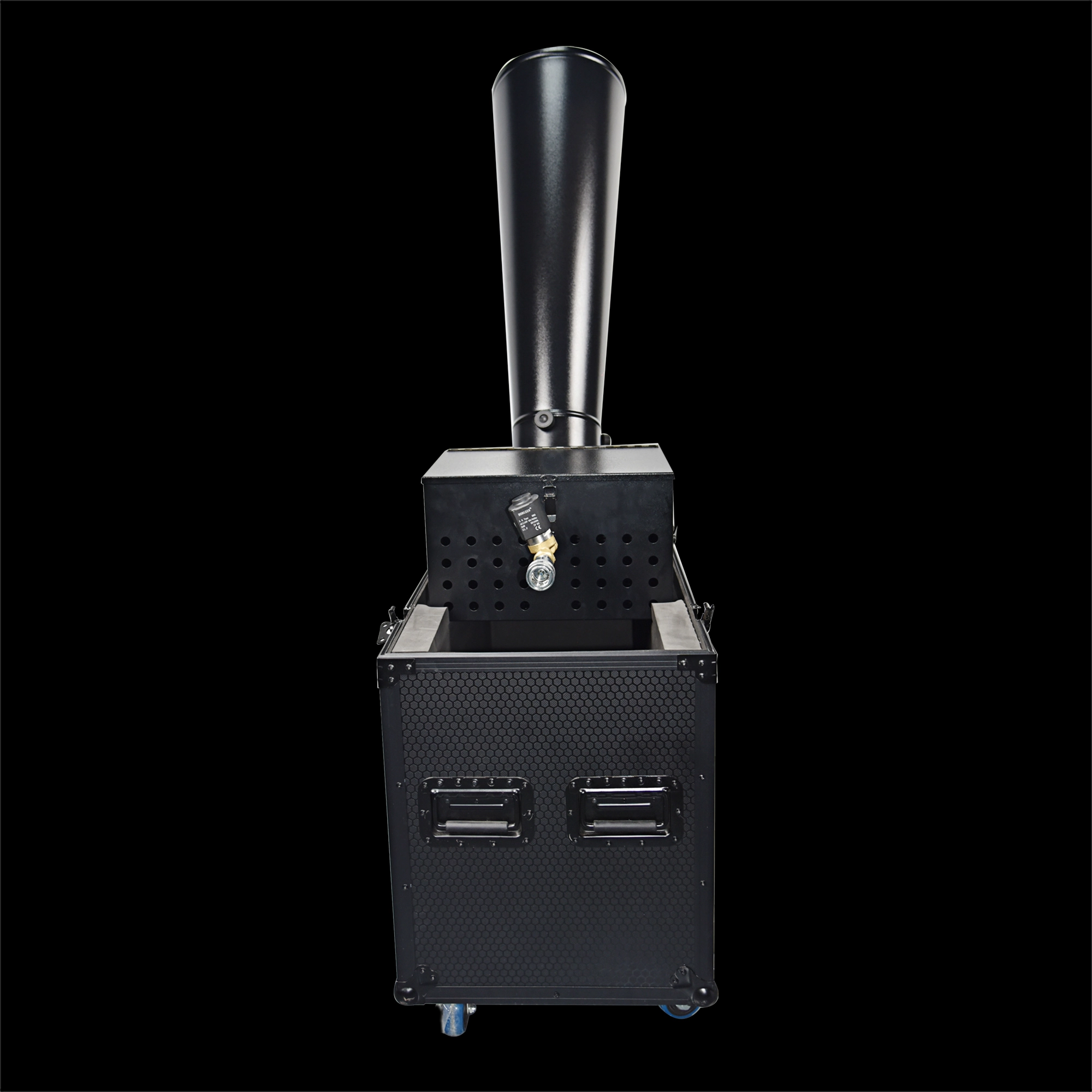
Our main product range includes spark machines, haze machines, CO₂ jet machines, bubble machines, snow machines, foam machines, confetti machines, fog machines, fire machines, and dry ice machines. For venues and promoters that require complete stage effects suites, Siterui SFX can provide matched-system procurement packages that include consumables sourcing, operator training, and SLAs to ensure uptime across extended runs or tours.
Compliance, support, and global delivery
We provide MSDS documentation for fluids, operational safety guidance, and maintenance schedules with every delivery to help venues meet insurance and fire code requirements. Our after-sales network supports spare parts, global logistics, and technical training for production crews. For more detailed product specifications and customization inquiries, visit https://www.siteruisfx.com/ or contact our sales team at sales01@strlighting.com.
Contact Siterui SFX for product datasheets, factory acceptance test reports, and to discuss custom low-lying atmospheric packages for upcoming tours and residencies.
Frequently Asked Questions
What are the main types of low-lying fog systems used for concerts?
Common systems are dry ice (CO₂) ground-foggers, refrigerated low-lying fog generators that use chilled vapor, and water/glycol hazers; each offers different visual characteristics, logistics, and maintenance profiles.
How should a venue manage safety and regulatory compliance for ground-hugging fog?
Which control protocols are standard for synchronizing fog with lighting and automation?
Manufacturers typically support DMX512, Art-Net, or wireless control for cue synchronization; ensure devices expose an interface compatible with the venue’s lighting control console to allow precise timing and intensity control.
What are the operating cost drivers for low-lying fog solutions?
Key cost drivers include consumables (dry ice or theatrical fluid), energy consumption for refrigeration, maintenance and service intervals, spare-part provisioning, and operator training and insurance compliance.
Can Siterui SFX customize equipment for long-term installations or touring productions?
Yes; Siterui SFX provides bespoke casing, branded finishes, tailored control systems, and synchronized multi-device designs, plus SLAs and global logistics support to meet touring and resident production requirements.

Email: sales01@strlighting.com
WhatsApp: +86 189 2232 4800
© 2025 Siterui SFX All Rights Reserved.
 Scan QR Code
Whatsapp: +8618922324800
siteruisfx_stage_equipment
Siterui
SITERUI-SFX
STRlighting
@siterui.sfx