
Why Choose Dual Oil Heating Fog Machines for Concerts and Tours
- Operational Advantages of Twin-Oil Heated Fog Systems
- Consistent density and long-range projection
- Rapid duty cycles and high duty ratings
- Fine-grain control over effect character
- Safety, Compliance, and Venue Acceptance Considerations
- Regulatory risk management and documentation
- Flammability, ventilation, and sensor interaction
- Handling, storage, and transport protocols
- Cost of Ownership: Procurement, Maintenance, and Lifecycle ROI
- Upfront procurement versus system consolidation
- Maintenance cadence and spare parts strategy
- Energy consumption and operating efficiency
- Integration and Technical Specifications for Production Environments
- Control compatibility and networked deployments
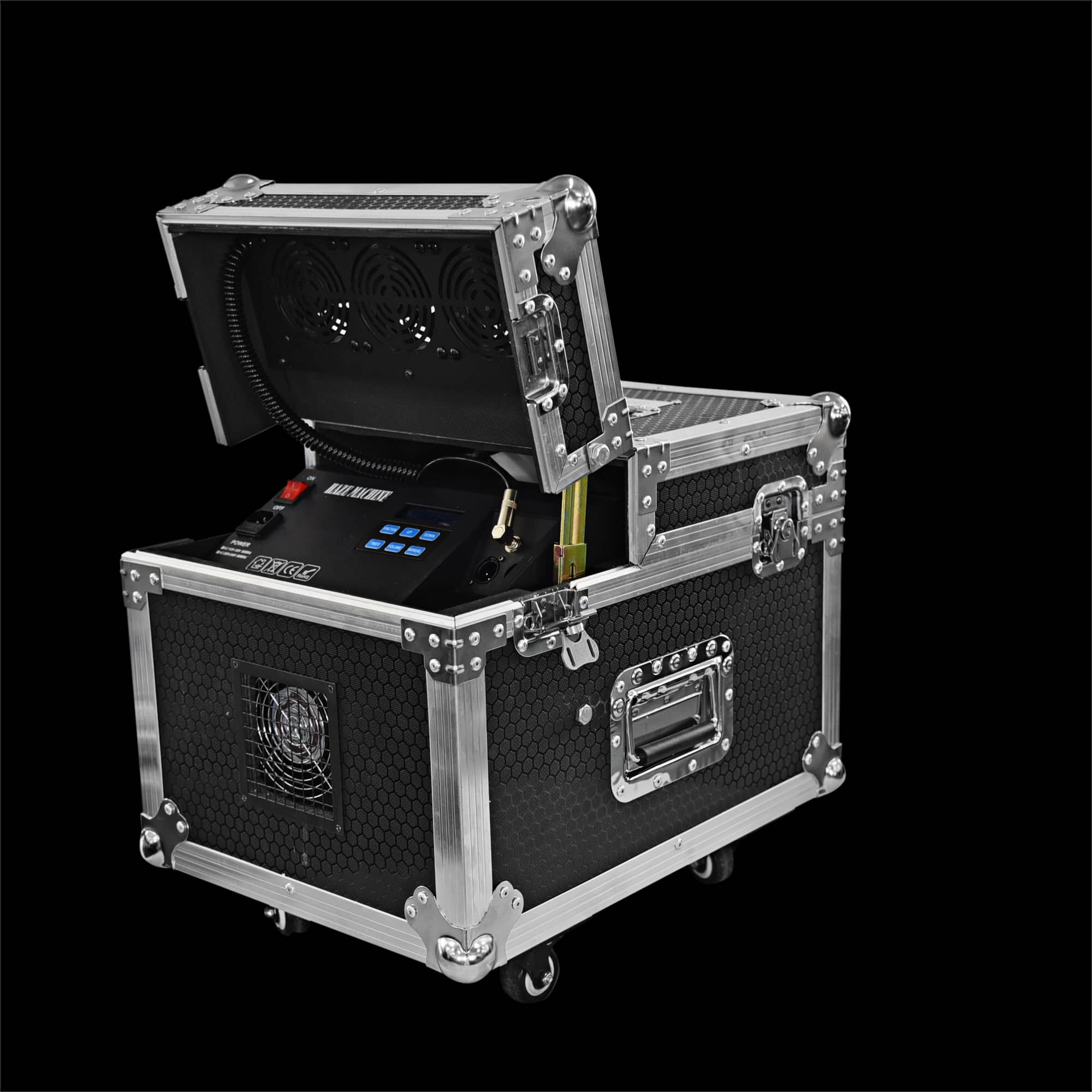
- Rack and flight-case engineering for tours
- Environmental profiling and smoke mapping
- How Manufacturer Support and Customization Reduce Tour Risk
- Customized hardware and branded solutions
- On-site training and technical service agreements
- Global logistics and spare unit provisioning
- Why Partnering with a Specialized Manufacturer Matters
- Engineering depth and production-grade testing
- Flexible customization to match production requirements
- Comprehensive product portfolio and after-sales care
- Frequently Asked Questions
High-output twin-oil heat fogers deliver consistent atmospheric effects, scalable output, and lower operational variation for large-scale touring productions and concert rigs; this article synthesizes technical comparisons, safety and maintenance considerations, procurement metrics, and integration strategies so production managers, AV suppliers, and venue operators can make informed buying and specification decisions.
Operational Advantages of Twin-Oil Heated Fog Systems
Consistent density and long-range projection
For arena and stadium tours, effect uniformity across long throw distances is critical. Dual-source oil-heated fog units typically produce a warmer, better-dispersing aerosol plume that retains particle suspension longer than water-based haze at equivalent output settings. This results in improved light interaction across rigged truss spans and fewer units required to achieve a cohesive visual field, reducing total system complexity and rig weight.
Rapid duty cycles and high duty ratings
High-capacity, twin-heat-element devices are engineered to support extended show runs with shorter refill and cooldown requirements. Designs with duplicated heating loops and redundant pumps allow continuous duty profiles suitable for multi-set concerts and festival back-to-backs, lowering downtime between cues and minimizing technician intervention during tours.
Fine-grain control over effect character
Modern dual-oil aerosol generators provide variable output modulation, from dense bursts to sustained atmospheric layers. Integrated DMX/RDM and wireless control schemes offer production designers precise cueing and synchronization with lighting and pyro systems, ensuring timed visual assets match creative intent without sacrificing reliability.
Safety, Compliance, and Venue Acceptance Considerations
Regulatory risk management and documentation
Buyers should request full compliance documentation, including material safety data sheets (MSDS), UL/CE listings, and fire-safety integration documentation. Venue fire marshals often require written assurances and testing data to validate effecting agents meet venue air-quality and fire-detection tolerances; presenting ISO-aligned procedures and supplier test data expedites permitting. See guidance on equipment safety and standards from ISO.
Flammability, ventilation, and sensor interaction
Oil-based aerosols affect smoke detectors and HVAC systems differently than water-based haze or CO₂ plumes. Risk mitigation includes calibrated nozzle selection, timed output windows, and sensor masking strategies as documented by industry safety bodies. Referencing fire-protection resources such as NFPA and workplace safety frameworks like OSHA helps define acceptable operational envelopes for touring environments.
Handling, storage, and transport protocols
Dual-reservoir fog fluids require secure containment, spill-prevention packaging for air and road freight, and temperature-controlled storage during transit to festivals and international tours. Procurement should specify shipping-class compliant containers and vendor-provided logistics sheets to minimize customs delays and on-site hazards.
Cost of Ownership: Procurement, Maintenance, and Lifecycle ROI
Upfront procurement versus system consolidation
Although initial investment for twin-element oil heaters may be higher than smaller single-element or water-based machines, system consolidation (fewer units to cover the same venue footprint) results in lower rig labor, fewer dimmer and power tie-ins, and reduced transport volume over the tour life. Buyers should model total landed costs across a typical tour schedule rather than unit price alone.
Maintenance cadence and spare parts strategy
Planned preventive maintenance—pump seals, oil filters, and element calibration—keeps availability high on long tours. Manufacturers that offer modular field-replaceable components simplify on-the-road repairs and reduce mean-time-to-repair (MTTR). Establishing a spare-parts kit scaled to the tour length is a critical procurement task for production managers.
Energy consumption and operating efficiency
Dual heating designs can deliver higher thermal efficiency per output unit when engineered with closed-loop thermostats and rapid-recovery elements. Operational energy savings compound over years of touring; energy benchmarking against venue power profiles enables more accurate generator or distro planning.
Integration and Technical Specifications for Production Environments
Control compatibility and networked deployments
For synchronized multi-device setups, prioritize equipment supporting industry-standard control protocols and network addressing. Wireless-enabled control options reduce cabling overhead on rotating rigs; look for units that support both wired DMX and contemporary wireless show-control systems to ensure interoperability across supplier inventories.
Rack and flight-case engineering for tours
Robust mounting, vibration isolation, and impact-resistant housings are essential for road-worthiness. Request flight-case compatible dimensions and certified shock-testing data to avoid unforeseen rack-space conflicts and to ensure safe road handling between venues.
Environmental profiling and smoke mapping
Pre-tour modeling of airflow and audience sightlines—using venue CAD and smoke-mapping tools—optimizes device placement and output curves. This reduces the number of effects units needed while achieving consistent atmospheric coverage and ensuring compliance with local air quality guidelines; see scientific background on fog generation technology at Wikipedia.
| Metric | Twin-oil heat aerosol system | Single-element oil fog unit | Water-based haze generator | CO₂ jet |
|---|---|---|---|---|
| Typical output persistence | High (longer particle suspension) | Moderate | Moderate to High (fine particles) | Very short (plume dissipation in seconds) |
| Warm-up/recovery time | Medium (redundant elements reduce delay) | Longer single-point recovery | Short (continuous operation) | Instant burst |
| Suitability for large venues | Excellent | Good | Good | Best for discrete cues, not ambient coverage |
| Maintenance frequency | Moderate (element and pump upkeep) | Higher (single element stress) | Low to moderate (pump/filter) | Low (CO₂ supply logistics) |
| Typical procurement risk | Medium (requires ventilation consideration) | High (single-point failure risk) | Low | Operationally constrained by gas supply |
How Manufacturer Support and Customization Reduce Tour Risk
Customized hardware and branded solutions
Trusted suppliers provide bespoke casing, connector layouts, and branded skins to integrate units into a touring aesthetic and logistics plan. Request vendor CAD and flight-case drawings early in the specification phase to prevent compatibility issues with existing stage systems and transport constraints.
On-site training and technical service agreements
Vendors that include on-site commissioning, tech training, and extended warranty options reduce operational risk. Service-level agreements (SLAs) covering response times and replacement unit logistics are essential clauses for long tours and festival circuits.
Global logistics and spare unit provisioning
Manufacturers with international distribution and depot stock help mitigate cross-border repair delays, customs holdups, and part shortages. Buyers should evaluate supplier depot locations against tour routing and request export-ready documentation to streamline movement across borders.
Why Partnering with a Specialized Manufacturer Matters
Engineering depth and production-grade testing
Siterui SFX is a manufacturer focused on research, production, sales, and service for professional stage effects. Our engineering team applies rigorous testing protocols—thermal cycling, vibration endurance, and electrical safety checks—to ensure devices perform reliably under touring conditions. Selecting a supplier with a dedicated R&D and QA organization minimizes field failures and supports predictable show outcomes.
Flexible customization to match production requirements
Our manufacturing process supports custom casing, logo printing, and functional modifications such as wireless control packs, advanced thermostat algorithms, and multi-device synchronization. This flexibility allows production owners to specify units that meet rigging, branding, and control-system needs without compromising technical performance.
Comprehensive product portfolio and after-sales care
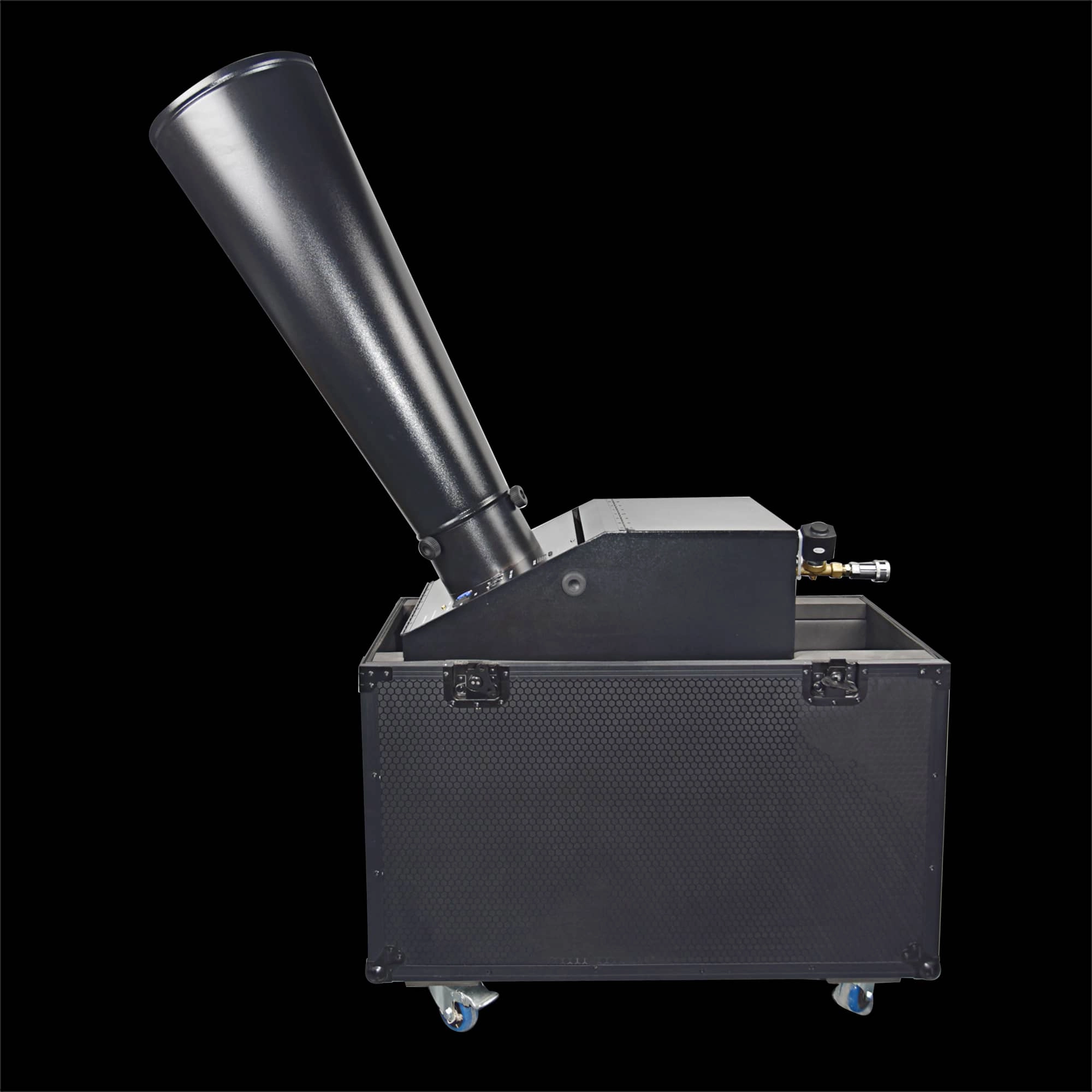
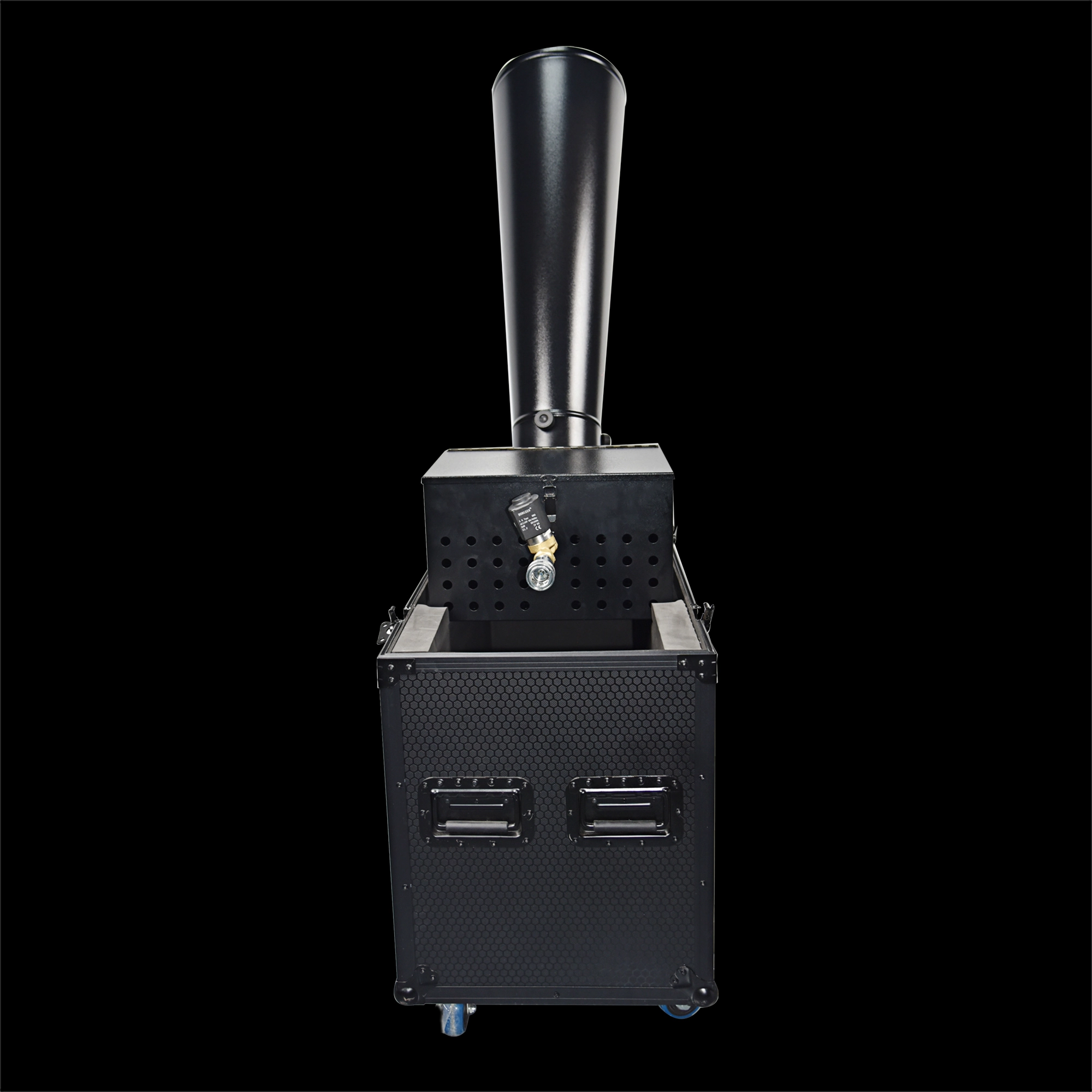
In addition to high-performance oil-heated fog units, our product range includes spark devices, long-throw haze generators, CO₂ jets, bubble and confetti systems, snow and foam units, flame effect modules, and dry ice solutions. Buyers benefit from centralized procurement, unified control integration, and consolidated spare-part inventories. For support or quotations, contact sales01@strlighting.com and request a tailored technical pack and logistics plan.
Production planners and procurement teams should evaluate suppliers on technical transparency, safety documentation, and recorded field performance; partnering with a manufacturer that offers both product sophistication and logistical support reduces operational complexity across tours and major concert runs.
All technical statements and safety guidance should be cross-checked with venue authorities and applicable standards. For background on fog generation technology and safety implications, consult Wikipedia: Fog machine, workplace safety guidance at OSHA, and international standards information at ISO.
For procurement inquiries, custom specifications, or to request CAD and test reports for touring deployments, reach out to our sales team at sales01@strlighting.com.
Frequently Asked Questions
What are the main performance differences between twin-element oil heaters and water-based haze machines?
Twin-element oil-heated systems typically produce longer-lasting particulate plumes with stronger light scattering over long distances, making them more suitable for arena coverage; water-based haze offers fine particles for even ambient haze but often requires more units to cover very large venues.
How should a touring production manage safety approvals and venue fire marshal sign-off?
Suppliers should provide MSDS, UL/CE listings, fire-safety integration data, and test reports. Production teams must coordinate with venue safety officers early, present vendor test data, and comply with local fire code guidance; referencing NFPA and presenting documented operational procedures helps expedite approval.
What maintenance and spare-part strategy is recommended for multi-week tours?
Establish a spare-parts kit (seals, filters, pumps, heating elements), schedule preventive maintenance between legs, and secure SLA terms with the manufacturer for rapid replacement. Field-replaceable modular components reduce MTTR and keep availability high.
Are oil-based fog fluids safe for performers and audiences when used correctly?
When using industry-approved fluids and following vendor ventilation, dosage, and handling guidelines, oil-based aerosols are widely used in professional entertainment; however, buyers should review fluid MSDS, verify compliance with venue air-quality requirements, and consult occupational health references such as OSHA for additional guidance.
How does energy consumption and operational cost compare over a tour lifecycle?
Although initial capital cost can be higher for dual-element oil units, system consolidation (fewer units, reduced rig labor) and higher thermal efficiency of well-engineered systems can lower total cost of ownership when modeled over a typical multi-year touring schedule.

Email: sales01@strlighting.com
WhatsApp: +86 189 2232 4800
© 2025 Siterui SFX All Rights Reserved.
 Scan QR Code
Whatsapp: +8618922324800
siteruisfx_stage_equipment
Siterui
SITERUI-SFX
STRlighting
@siterui.sfx