
Why Choose a Dual Outlet Snow Machine for Large Events
- Advantages of twin-output snowfall systems for large venues
- Broader area coverage and faster effect deployment
- Built-in redundancy and continuous operation
- Creative flexibility via independent output control
- Operational considerations and compliance for high-capacity snow effects
- Fluid consumption, reservoir planning, and refill logistics
- Power, mounting, and environmental control
- Safety protocols, ventilation, and standards
- Procurement metrics and total cost of ownership for heavy-duty snowfall equipment
- Key specification checklist for buyers
- Maintenance planning and lifecycle costing
- Integration with show control and multi-device synchronization
- Risk mitigation and best practices for deployment
- Venue surveys and pre-rig checks
- Operator training and procedural documentation
- Environmental considerations and cleanup protocols
- Siterui SFX: Delivering scalable snowfall solutions for enterprise events
- Engineering depth and manufacturing capabilities
- Customization and system integration services
- After-sales support, spares, and global service
- Implementation checklist for technical buyers
- Pre-purchase validation items
- Deployment planning
- Scorecard for final acceptance
- Frequently Asked Questions
High-capacity artificial snowfall solutions with two discharge points deliver measurable advantages for large venues and touring productions: expanded horizontal coverage, faster scene transitions, fault tolerance, and flexible nozzle-level control that reduce labor costs, minimize downtime risk, and improve audience sightlines. This briefing synthesizes operational metrics, compliance checkpoints, and procurement logic for technical buyers evaluating twin-output snowfall equipment for concerts, stadium spectacles, theatrical runs, and corporate activations.
Advantages of twin-output snowfall systems for large venues
Broader area coverage and faster effect deployment
Using a two-nozzle snow generator enables a single unit to blanket a wider horizontal axis than single-emitter devices. For event designers, this reduces the number of devices required for uniform snowfall, lowers cable and mounting complexity, and decreases setup time. A single dual-emitter machine can replace two separate single-output units in many staging layouts, simplifying rigging points and reducing the total load on truss structures.
Built-in redundancy and continuous operation
Large-scale activations demand high uptime. Units with paired outlets provide operational resilience: if one nozzle requires cleaning or servicing mid-run, the second outlet can maintain partial effect output while a technician addresses the fault, preventing a complete loss of the snow moment. This architecture supports planned failover strategies during long performances and multi-act festival lineups.
Creative flexibility via independent output control
Modern dual-emitter systems frequently include per-nozzle intensity and dispersion controls, allowing scene designers to create asymmetrical or directional snowfall effects without repositioning equipment. Independent outlets support layered choreography—one nozzle can generate dense flurries for a focal zone while the other produces light drift across the audience bowl—expanding creative possibilities without increasing hardware count.
Operational considerations and compliance for high-capacity snow effects
Fluid consumption, reservoir planning, and refill logistics
Higher throughput from multi-outlet generators increases consumable usage. Procurement teams should model fluid consumption per show, factoring in peak effect periods and expected run counts per day. Centralized refill stations, quick-connect fluid lines, and staged spare tanks reduce turnaround time between cues. For touring applications, carrying modular spare reservoirs and calculating weight for transport ensures logistics are predictable and costed into bids.
Power, mounting, and environmental control
Dual-discharge machines typically draw more electrical power and generate greater thermal load than single-nozzle counterparts. Electrical engineers must verify available circuits, consider distribution panels, and plan for balanced loads on dimmer racks and power distro. Mounting solutions should account for increased torque and vibration from twin-output heads; specify rated clamps and safety cabling according to venue guidelines.
Safety protocols, ventilation, and standards
Event managers and safety officers must validate that artificial snow fluids and dispersal mechanisms comply with local fire codes and venue rules. Refer to recognized authorities for guidance on airborne particulate control and electrical safety: OSHA offers workplace safety guidance relevant to rigging and operator training, while the NFPA provides fire protection standards for performance venues. For broader context on theatrical effects and stagecraft, consult Special effects - Wikipedia and for quality management systems consider ISO standards when specifying supplier processes.
Procurement metrics and total cost of ownership for heavy-duty snowfall equipment
Key specification checklist for buyers
When evaluating high-capacity snowfall machines, procurement teams should request: per-nozzle output (m2/min or comparable dispersion metric), fluid consumption rate, electrical power draw, duty cycle rating, serviceability features (tool-free nozzle removal, filtration access), and available control interfaces (DMX, wireless, Art-Net). Warranty terms, spare parts availability, and factory support SLAs are also decisive for enterprise buyers.
Maintenance planning and lifecycle costing
Dual-emitter hardware can reduce the number of field devices but may increase per-unit maintenance complexity. Include scheduled nozzle cleaning, filter replacement intervals, and recommended service packs in maintenance contracts. Lifecycle cost models should compare the capital expenditure of multiple single-output units versus fewer twin-outlet systems, modeling technician labor hours for installation, inspection, and troubleshooting across a typical tour or seasonal run.
Integration with show control and multi-device synchronization
Large productions often require synchronized cues across multiple effect types. Select snowfall units with robust integration—support for standard control protocols, timecode triggering, and centralized dashboards simplifies synchronization with lighting consoles, pyro controllers, and atmospheric machines. Devices that accept per-nozzle DMX channels or networked API commands enable granular sequencing without additional translator hardware.
| Attribute | Single-emitter unit (typical) | Twin-emitter unit (typical) |
|---|---|---|
| Coverage footprint | Narrow to medium; good for focused zones | Broad horizontal sweep; suitable for large stages and audience fills |
| Device count required | Higher for uniform coverage | Lower; one unit can replace two in many setups |
| Electrical draw (typical) | 800–1,500 W | 1,500–3,000 W |
| Operational redundancy | None unless paired | Partial output maintained if one nozzle needs servicing |
| Maintenance complexity | Lower per unit, more units overall | Higher per unit; fewer units overall—service access critical |
| Cost-efficiency for large events | Lower upfront but higher installation and labor | Higher unit cost but reduced rigging and deployment labor |
Risk mitigation and best practices for deployment
Venue surveys and pre-rig checks
Before committing to a snow-effect solution, perform a technical site survey: verify truss load capacities, sightlines, HVAC intake positions, and stage-floor finish tolerances. Coordinate with venue engineering to ensure that snowfall residue is compatible with cleaning crews and does not interfere with slip-resistance specifications or equipment cooling in the wings.
Operator training and procedural documentation
Deliverables for enterprise purchases should include operator manuals, preventive maintenance schedules, and on-site training. Certified operator programs and documented SOPs reduce the risk of misuse and support consistent effect quality across touring personnel. Where applicable, request documentation demonstrating compliance with electrical and emissions testing.
Environmental considerations and cleanup protocols
Select snow fluids and dispersal materials that meet environmental safety expectations for indoor public spaces and outdoor venues. Confirm biodegradability and non-toxicity claims in supplier datasheets, and specify post-event cleanup procedures to prevent residue buildup in drains or HVAC intakes.
Siterui SFX: Delivering scalable snowfall solutions for enterprise events
Engineering depth and manufacturing capabilities
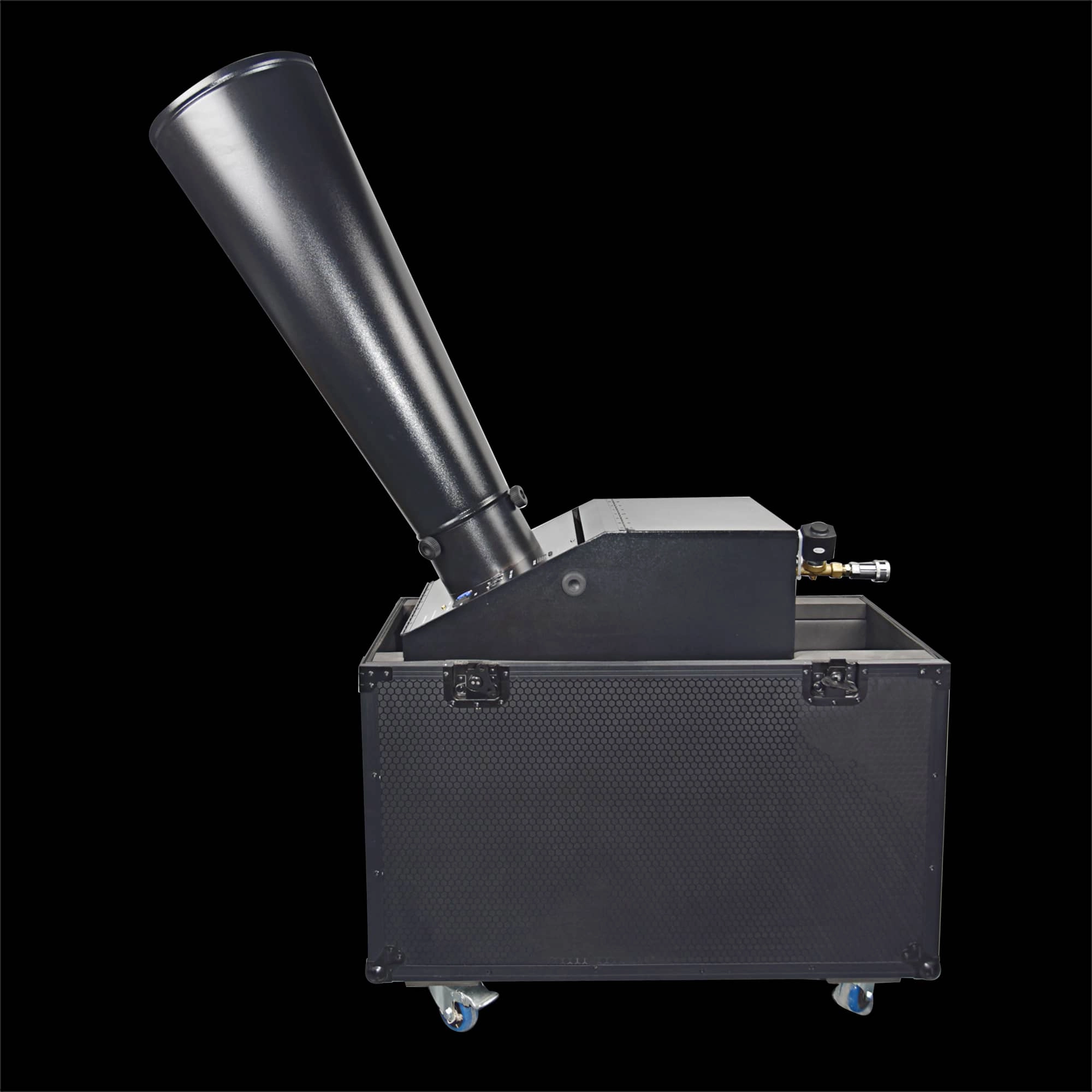
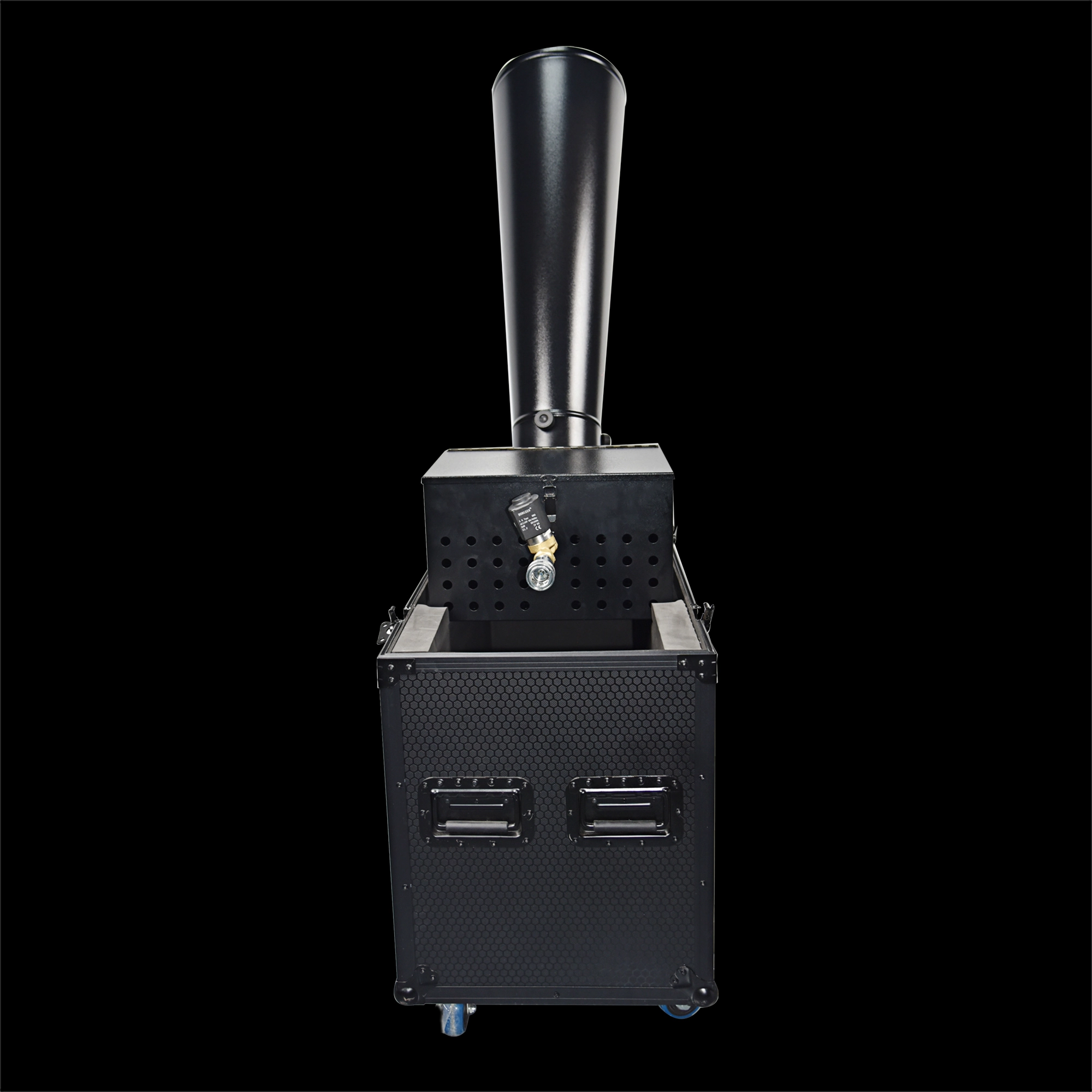
As a professional manufacturer engaged in research and development, production, sales, and service of stage special effects equipment, Siterui SFX provides high-capacity snow generators engineered for reliability and repeatable performance. Our engineering team designs dual-discharge assemblies with modular nozzle housings, service-friendly access panels, and industrial-grade pumps that balance flow, pressure, and droplet size for visually authentic snowfall without excessive moisture.
Customization and system integration services
Large-scale productions require tailored solutions. Our manufacturing process supports custom casing, actuator placement, logo printing, wireless control add-ons, and synchronized multi-device setups. Buyers can specify per-outlet control channels, custom output curves for cue-based choreography, and pre-integrated control nodes compatible with major show control protocols to ensure seamless operation across lighting, audio, and pyro cues.
After-sales support, spares, and global service
We provide structured spare-parts kits, maintenance training packages, and global service agreements to minimize downtime on tours and extended seasonal runs. Warranty terms, regional service centers, and expedited parts shipping are part of our enterprise offering. For project discussions, our contact details are: https://www.siteruisfx.com/ and sales01@strlighting.com.
Complementary products in our portfolio that often integrate with snow installations include spark machine, Haze Machine, CO₂ Jet Machine, Bubble Machine, Snow Machine, Foam Machine, Confetti Machine, fog machine, fire machine, and dry ice machine—allowing holistic stagecraft solutions from a single supplier.
Implementation checklist for technical buyers
Pre-purchase validation items
Confirm per-nozzle output metrics and request live demonstrations under comparable venue conditions. Verify electrical specs, duty cycle limits, and venue power availability. Request references from recent projects of similar scale and request sample maintenance logs or service histories for comparable models.
Deployment planning
Create a runbook that details expected fluid consumption, refill intervals, power distribution maps, and on-stage safety zones. Assign an operator and a backup technician for each performance day, and document step-by-step emergency shutdown procedures tied into the venue's safety systems.
Scorecard for final acceptance
Require factory acceptance tests (FAT) and a site acceptance test (SAT) that validate coverage, synchronization, and cleanup. Include predefined acceptance criteria for nozzle output parity, cue timing accuracy, and residue levels post-deployment.
Buyers and project owners who follow structured procurement and testing protocols realize the cost efficiencies and operational resilience offered by twin-output artificial snow systems while maintaining compliance with venue and safety standards.
For technical specifications, white papers, and project consultations, contact Siterui SFX at sales01@strlighting.com or visit https://www.siteruisfx.com/.
Frequently Asked Questions
What are the main operational benefits of using a twin-nozzle snow generator instead of single-output units?
Twin-nozzle machines expand horizontal coverage from a single rigging point, reduce the number of devices required for even snowfall, provide partial output redundancy if one nozzle is offline, and enable independent per-nozzle control for creative sequencing—leading to lower rigging labor and faster setup times for large events.
How should procurement teams model fluid consumption for high-capacity snowfall effects?
Procurement teams should estimate peak-output run times per show, multiply by the number of performances per day, and add contingency for rehearsals. Plan for centralized refill stations, quick-connect lines, and carry spare reservoirs for touring to avoid production delays; include fluid shipping weight and storage in logistics planning.
What safety standards and authorities should event operators consult when deploying artificial snow effects?
Event operators should consult venue fire codes and recognized authorities such as OSHA for workplace safety guidance, NFPA for fire protection and performance venue standards, and applicable ISO quality management guidelines when validating supplier processes. These sources assist in ensuring compliance with electrical, rigging, and airborne particulate controls.
How does total cost of ownership compare between multiple single-output machines and fewer twin-output units?
Fewer twin-output units typically have higher per-unit capital cost but reduce installation time, rigging points, and on-site labor. Lifecycle costing should include technician hours for setup and maintenance, spare parts inventory, and transportation. For many large events, twin-output systems deliver lower overall deployment and labor costs despite higher single-unit expense.
What integration features should buyers require for synchronized show control?
Buyers should require per-nozzle control channels, support for standard protocols (DMX, Art-Net, sACN), timecode triggering, and network APIs for centralized dashboards. These features ensure precise synchronization with lighting, audio, pyro cues, and simplify multi-device choreography across large productions.

Email: sales01@strlighting.com
WhatsApp: +86 189 2232 4800
© 2025 Siterui SFX All Rights Reserved.
 Scan QR Code
Whatsapp: +8618922324800
siteruisfx_stage_equipment
Siterui
SITERUI-SFX
STRlighting
@siterui.sfx