
DMX Control and Automation for Professional Haze Machines
- Integrating Control Systems for Reliable Atmospheric Effects
- Why automate a haze machine: production value and operational needs
- DMX512 basics and what it means for a haze machine
- DMX channel mapping example for a professional haze machine
- Art‑Net and sACN: scaling haze machine control over Ethernet
- Automation strategies: cues, preheat timing and fluid management
- Manual vs DMX-automated haze machine comparison
- RDM, sensors and remote status reporting
- Safety, venue compliance and best practices for haze machine operation
- Wireless, latency and control reliability considerations for haze machines
- Practical integration examples: synchronizing haze with lighting and pyro
- Siterui SFX: tailored solutions for professional haze machine automation
- Siterui SFX product strengths and main product lines
- Deployment checklist: planning a DMX-automated haze system
- FAQ — Frequently Asked Questions about DMX control and haze machines
- 1. Can all haze machines be controlled via DMX?
- 2. What's the difference between haze and fog in terms of control?
- 3. How do I avoid false fire alarms when using a haze machine?
- 4. Can I use wireless DMX for haze machines on tour?
- 5. How does RDM help with haze machine automation?
- 6. What should be included in routine maintenance for haze machines?
- 7. Which protocol should I choose: Art‑Net or sACN?
- References
Integrating Control Systems for Reliable Atmospheric Effects
Professional productions rely on consistent, repeatable haze effects to shape light, add depth, and create atmosphere. Modern haze machine automation—driven by DMX and Ethernet-based protocols like Art-Net and sACN—lets designers script haze intensity, fan speed, and timed cues with the same precision as fixtures and moving lights. This article explains the technical foundations, practical setups, and safety considerations for implementing DMX control and automation for haze machines in professional environments.
Why automate a haze machine: production value and operational needs
Automating a haze machine improves consistency across rehearsals and performances, reduces operator workload, and allows tight sync with lighting cues and pyrotechnics. For touring shows, corporate events, and broadcast studios, automated haze control helps maintain uniform haze density, conserve fluid, and ensure compliance with venue ventilation and safety requirements. When readers search for haze machine and control solutions, they typically look for reliability, integration with lighting rigs, and safety features—this guide addresses those needs.
DMX512 basics and what it means for a haze machine
DMX512 (commonly called DMX) is the industry-standard serial protocol used to control stage equipment. A single DMX universe carries up to 512 channels of 8-bit data. Many professional haze machines accept DMX input to control functions such as haze output level, fan speed, fan direction, heater power, and fault/reset commands.
Key practical points:
- Typical DMX channels for a haze machine: output intensity (0–255), fan speed (0–255), delay/interval, and machine reset. Exact mapping varies by manufacturer—consult the product manual.
- DMX is point-to-point (daisy-chained) over XLR cabling by default; use signal boosters or splitters for long chains or many devices.
- RDM (Remote Device Management, E1.20) adds bidirectional communication for device discovery, status, and parameter readback (e.g., fluid level, temperature), which simplifies monitoring and preventive maintenance.
DMX channel mapping example for a professional haze machine
Below is a representative DMX mapping used by many professional haze machines. Always confirm with your machine's manual.
| Channel | Function | Notes |
|---|---|---|
| 1 | Haze Output | 0 = off, 1–255 = proportional output |
| 2 | Fan Speed | 0 = off, 255 = max; can shape haze throw |
| 3 | Preheat / Heater | On/off or proportional depending on model |
| 4 | Maintenance / Reset | Device-specific commands; used for remote resets |
| 5 | Status / Fault (RDM) | Read via RDM for warnings & fluid-level readback |
Art‑Net and sACN: scaling haze machine control over Ethernet
Art‑Net and sACN (Streaming ACN / E1.31) are protocols that transport DMX data across Ethernet networks. For large venues and touring rigs, using Art‑Net or sACN lets you run multiple DMX universes over a single network, integrate with lighting consoles, and manage devices remotely.
| Protocol | Transport | Pros | Cons |
|---|---|---|---|
| DMX512 | RS-485 over XLR | Simple, widely compatible, low latency | Limited to 512 channels per universe and cabling reach |
| Art‑Net | UDP over Ethernet | Supports many universes, widely supported by consoles | Less deterministic on congested networks; requires Art‑Net to DMX nodes |
| sACN (E1.31) | UDP over Ethernet | Standardized by ESTA, scalable, multicast support | Requires careful multicast configuration for reliability |
Best practice: separate lighting/SFX traffic from venue general IT on VLANs and use managed switches. Use Art‑Net/sACN nodes (Ethernet-to-DMX gateways) close to haze machines to convert to physical DMX. For redundancy, some consoles support dual-output strategies or sACN merging.
Automation strategies: cues, preheat timing and fluid management
Automation of haze machines should be designed around production cues and the machine's physical constraints. Common requirements include:
- Preheat scheduling: many hazers require a warm-up period (often several minutes) before consistent output. Automate preheat earlier in the cue stack to avoid late haze drops.
- Timed intensity cues: program intensity ramps rather than instantaneous jumps to avoid visible bursts and to conserve fluid.
- Fluid-level monitoring: use RDM-enabled machines or add level sensors to trigger maintenance alerts and avoid mid-show outages.
Manual vs DMX-automated haze machine comparison
| Metric | Manual Operation | DMX Automation |
|---|---|---|
| Repeatability | Variable (depends on operator) | High (pre-programmed cues) |
| Fluid Efficiency | Often less efficient | Optimized via ramping and precise output control |
| Operator Load | High (active monitoring) | Low (monitor & intervene when needed) |
| Integration with Lighting | Limited | Tight sync via console cues |
RDM, sensors and remote status reporting
RDM (Remote Device Management) allows two-way communication over the DMX cable. For haze machines, RDM enables:
- Discovery of devices on the DMX line
- Readback of fault states, fluid level, heater temperature, and run hours
- Remote parameter changes without manual access to the device
Where RDM is unavailable, add simple analog or digital sensors (fluid float switches, temperature probes, smoke/particle sensors) and integrate them into a control system (e.g., via Ethernet I/O modules) for monitoring and interlock logic.
Safety, venue compliance and best practices for haze machine operation
Deploying haze machines must consider local safety codes, fire detection systems, and audience health. Best practices include:
- Coordinate with venue fire safety teams: many venues require notification or approval when using aerosol-producing devices near smoke detectors.
- Use manufacturer-approved fluids and follow material safety data sheets (MSDS). Keep spare fluid in secure, labeled containers.
- Implement interlocks—hardware or software—that prevent haze output during pyro sequences or when temperature/fault thresholds are exceeded.
- Schedule maintenance checks (pump, heater, fan, nozzles) and log run hours. RDM or remote telemetry significantly aids preventive maintenance.
For health and compliance references consult local occupational health guidance. General control-of-substances guidance is provided by regulatory agencies (see References).
Wireless, latency and control reliability considerations for haze machines
Wireless DMX is convenient for installations where cabling is impractical, but it must be used with caution for haze machines in professional settings. Consider:
- Latency and dropouts: use wireless systems rated for professional touring and verify with range and multipath testing.
- Backup plan: always have a wired fallback or local manual control should wireless fail.
- Power and grounding: ensure reliable power delivery to prevent spikes that could stop the haze circulation pump or heater.
Practical integration examples: synchronizing haze with lighting and pyro
Example automated workflow for a concert intro cue:
- Preheat haze machine (DMX heater channel = ON) 5 minutes before the show evening begins.
- At show start, ramp fan speed to 70% over 6 seconds while haze output ramps to 30% to build a soft atmosphere.
- For a dramatic moment, over 2 seconds ramp haze output to 100% while lighting intensifies—with pyro interlocks preventing haze output 3 seconds prior to any pyrotechnic discharge.
- Monitor fluid level via RDM; if low, trigger a console alert and an automated soft-ramp-down to preserve machine health.
Automation sequences like this reduce human error and create consistent visual textures across venues.
Siterui SFX: tailored solutions for professional haze machine automation
Siterui SFX is a professional manufacturer engaged in the research and development, production, sales, and service of professional stage special effects (SFX) equipment. With a highly skilled team and cutting-edge technology, we are committed to providing innovative, reliable, and high-performance SFX solutions for live events, theaters, concerts, film production, and entertainment venues worldwide.
At Siterui SFX, we understand that every stage, event, and creative concept is unique. That’s why we offer flexible customization services to meet your specific needs—whether it's branding, special functions, size adjustments, or complete system integration.
From custom casing and logo printing to wireless control systems and synced multi-device setups, our expert team works closely with you to design SFX solutions that align perfectly with your needs. Our commitment to quality and innovation ensures that our clients receive cutting-edge effects that enhance the visual and sensory experience of every performance. We pride ourselves on exceptional customer service and continuous advancement, positioning Siterui as a trusted partner in the professional special effects industry.
Siterui SFX product strengths and main product lines
Siterui SFX offers a comprehensive range of SFX devices including:
- Spark machine
- Haze Machine
- CO₂ Jet Machine
- Bubble Machine
- Snow Machine
- Foam Machine
- Confetti Machine
- Fog machine
- Fire machine
- Dry ice machine
Competitive advantages and differentiators:
- Custom engineering: options for custom casings, footprint, and control interfaces to match rigging and branding needs.
- Integration expertise: prebuilt DMX/Art‑Net/sACN profiles and bespoke integration packages for consoles and media servers.
- R&D and reliability: designed for touring durability with robust thermal and fluid management systems.
- Support and service: global after-sales support, spare parts provisioning, and preventive maintenance plans.
Deployment checklist: planning a DMX-automated haze system
Before installing or touring with automated haze machines, follow this checklist:
- Confirm DMX/Art‑Net/sACN compatibility and channel maps with the haze machine manufacturer.
- Decide on RDM support or analog sensors for telemetry and monitoring.
- Design network architecture with VLANs, managed switches, and Art‑Net/sACN nodes close to devices.
- Coordinate with venue fire and safety teams and obtain approvals for aerosol use.
- Create cue-based preheat and ramp profiles to match lighting design and conserve fluid.
- Test redundancy: wireless fallback, local manual controls, and spare fluid provisioning.
FAQ — Frequently Asked Questions about DMX control and haze machines
1. Can all haze machines be controlled via DMX?
Not all haze machines have native DMX support. Many professional models do, and some entry-level units do not. If a machine lacks DMX, you can often retrofit an external DMX-controlled relay or use Art‑Net/DMX nodes with relay outputs, but native DMX or RDM support is preferred for reliability and status feedback.
2. What's the difference between haze and fog in terms of control?
Haze produces a fine, long-lasting aerosol to enhance lighting beams, while fog often produces denser, short-lived plumes. Control-wise, haze machines typically use proportional output and fan-speed channels for subtle continuous effects; fog machines often use burst outputs. Automating haze requires precise low-output control and ramping.
3. How do I avoid false fire alarms when using a haze machine?
Coordinate with venue safety personnel before use. Use approved fluid types, position machines away from detectors when possible, test with detectors during load-in, and implement controls or masking zones in the fire system if the venue allows. Always follow venue and local regulations.
4. Can I use wireless DMX for haze machines on tour?
Wireless DMX can be used but should be validated by range and reliability tests before performances. Have wired backups or local manual controls available. Use professional-grade wireless systems designed for touring to minimize interference and latency.
5. How does RDM help with haze machine automation?
RDM provides two-way communication over the DMX cable, enabling device discovery and readback of operational parameters (e.g., fluid level, temp, error states). This enables console-based alerts and remote parameter tuning, reducing manual checks and minimizing downtime.
6. What should be included in routine maintenance for haze machines?
Regular maintenance includes checking and cleaning nozzles, inspecting and changing fluid filters, testing heaters and fans, validating DMX/RDM connectivity, and verifying software/firmware versions. Log run hours and fluid consumption to anticipate servicing intervals.
7. Which protocol should I choose: Art‑Net or sACN?
Both are widely used. Art‑Net is very common and supported by many controllers; sACN (E1.31) is an ESTA-recognized standard often favored for large-scale networks and multicast efficiency. Choose based on console compatibility and your network architecture; mixed environments are common with nodes supporting both.
If you would like help selecting, customizing, or integrating haze machines into your DMX/Art‑Net/sACN ecosystem, contact Siterui SFX for tailored solutions and system design.
Contact & Product Inquiry: To request a quote, custom integration, or technical consultation for haze machine automation, email sales@siteruisfx.com or visit https://www.siteruisfx.com/products. Our team can provide product specs, DMX channel maps, and integration plans tailored to your venue or tour.
References
- DMX512 — Wikipedia. Available: https://en.wikipedia.org/wiki/DMX512 (accessed 2025-11-20)
- Art‑Net (Artistic Licence). Available: https://artisticlicence.com/ (accessed 2025-11-20)
- sACN (E1.31) — ESTA. Available: https://tsp.esta.org/tsp/documents/published_docs.php (accessed 2025-11-20)
- RDM (Remote Device Management / E1.20) — Wikipedia. Available: https://en.wikipedia.org/wiki/Remote_Device_Management (accessed 2025-11-20)
- Control of Substances Hazardous to Health (COSHH) — Health & Safety Executive (HSE). Available: https://www.hse.gov.uk/coshh/ (accessed 2025-11-20)
- Manufacturer product manuals and DMX charts (representative): Chauvet Professional manuals and datasheets. Available: https://www.chauvetprofessional.com (accessed 2025-11-20)
Portable Fog Machines for Mobile DJs and Events
Hazer fluid types: compatibility and safety
Creating Layered Fog Effects for Concerts
Hazer safety: ventilation and legal guidelines
2100W Morning Haze Machine
Is the haze machine suitable for outdoor use?
Yes, but avoid direct exposure to rain or extreme weather conditions.
large 300W Silver Iron Case Bubble Machine
Is this machine suitable for outdoor use?
Yes, the iron case is weather-resistant, but avoid direct rain exposure.
1500W Haze Machine
What’s the warranty period?
1 year for parts and labor (excludes fluid-related issues).
600W High-Quality Stainless Steel
How is quality ensured?
Each unit undergoes rigorous testing, including spark consistency and safety checks.
Single-Head CO2 Jet Machine
How could l get a sample
If you can not buy our product in your local area, we will ship a sample to you.You will be charged a sample price plus all related shipping costs.Express delivery charge depends on the quantity of the samples.
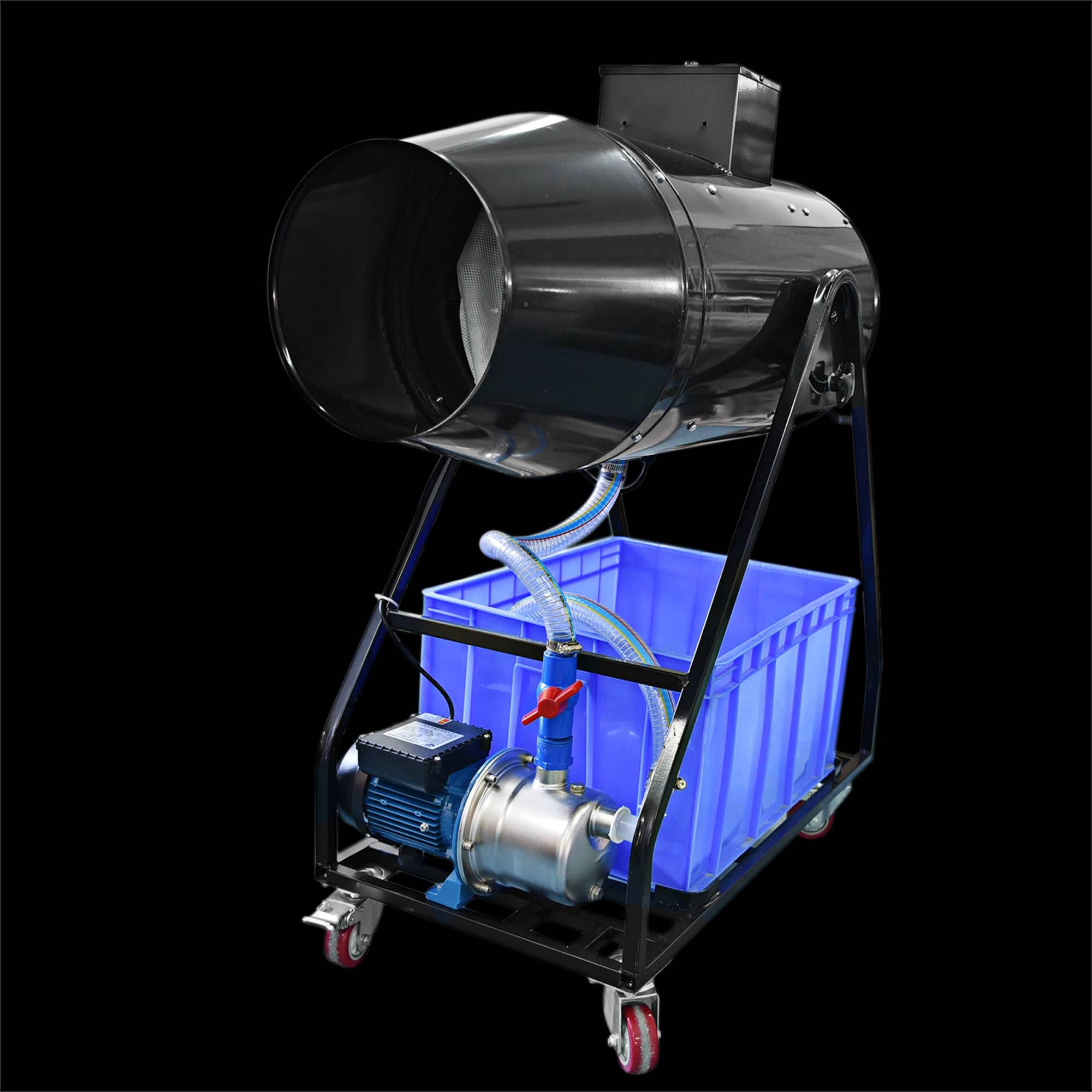
Siterui SFX 1800W Spraing foam machine High Power Professional Foam Party Maker
Elevate your event with the Siterui SFX 1800W Spraing Foam Machine. This high-power, professional foam party maker creates dense, vibrant bubbles—perfect for weddings and celebrations. Reliable and easy to use, it’s the foam and bubble machine for unforgettable moments.
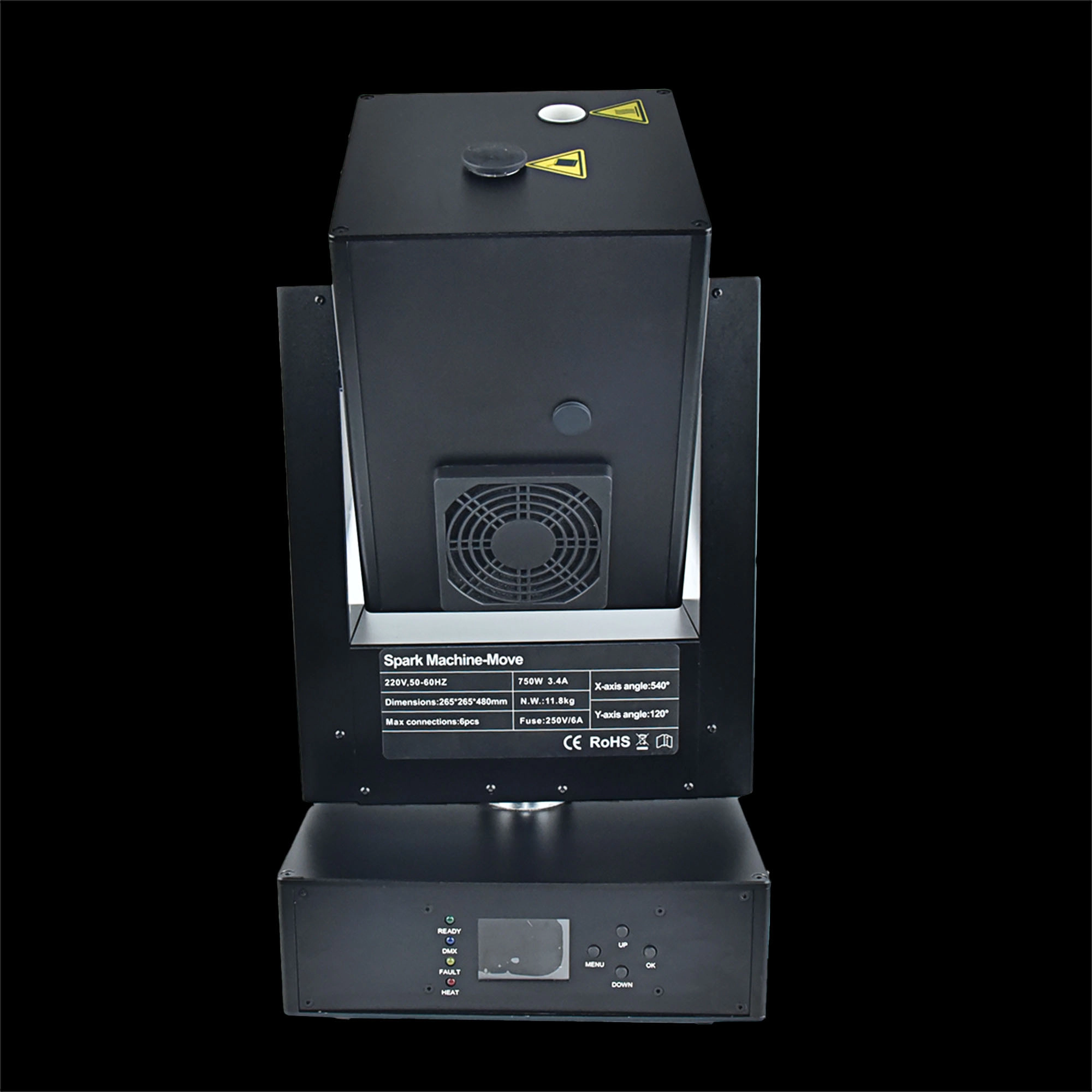
750w moving head spark machine
Siterui SFX 750w moving head spark machine delivers high-impact cold-spark effects with 360° moving head, DMX control, adjustable output and safe, long-lasting performance - perfect for concerts, weddings and stage shows.
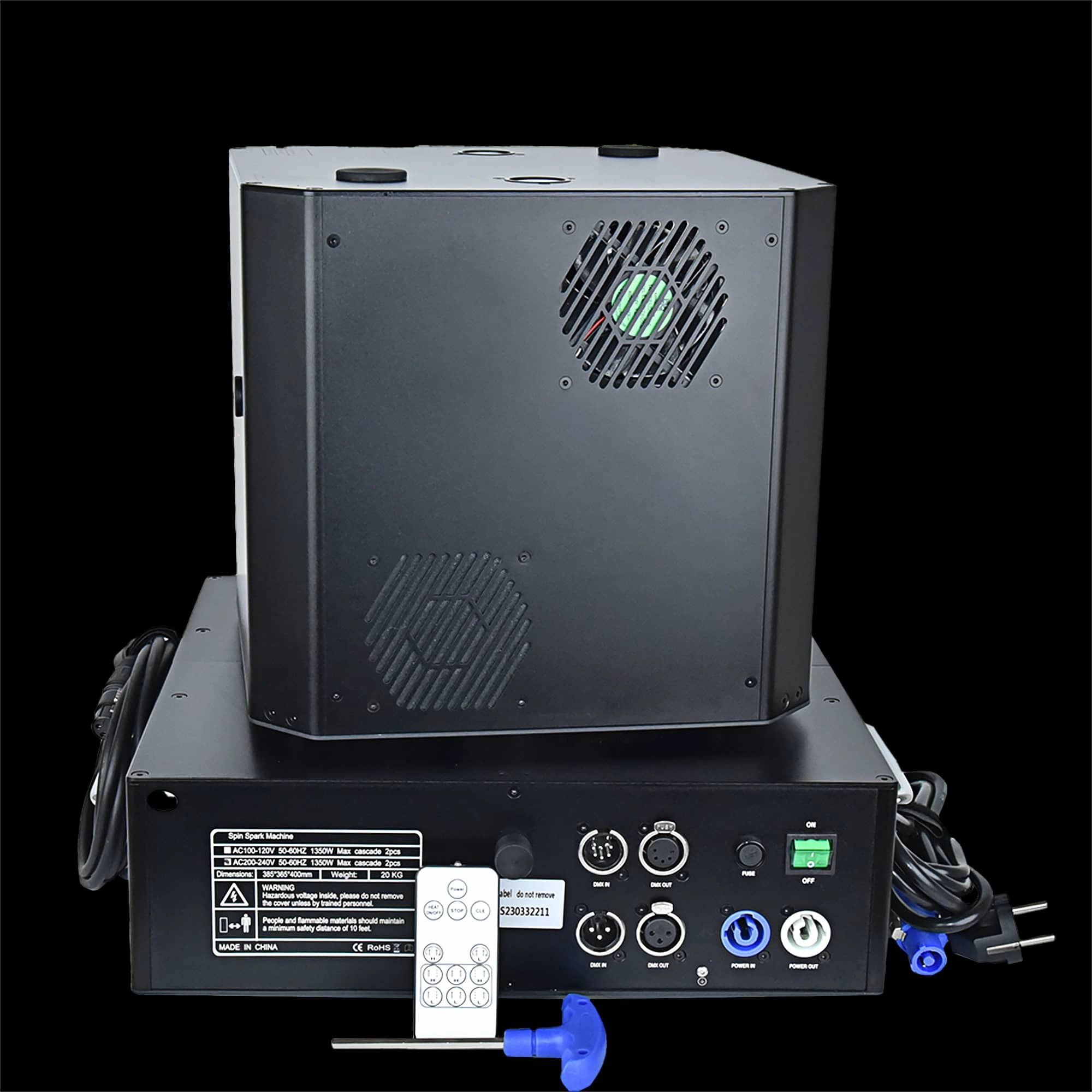
Double head 1300W Spin Spark machine DMX+Remote control
Double head 1300W Spin Spark machine -powerful dual-head 1300W spin spark effect with DMX + remote control for precise timing. Durable, professional-grade pyrotechnic effect ideal for concerts, clubs and events.
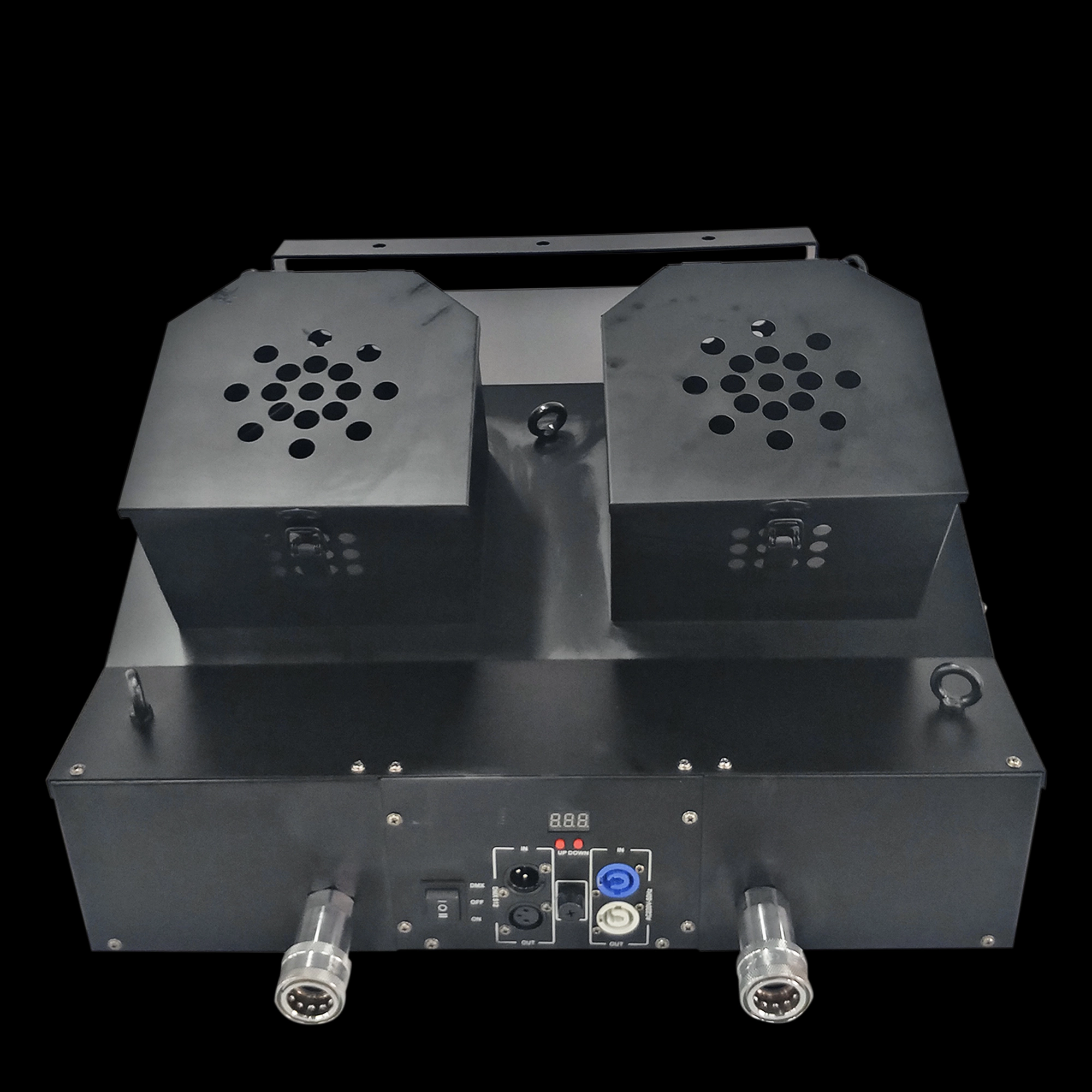
Snowstorm Paper Machine Double outlet sprayer snowstorm paper machine dual nozzle sprayer
Email: sales01@strlighting.com
WhatsApp: +86 189 2232 4800
© 2025 Siterui SFX All Rights Reserved.
 Scan QR Code
Whatsapp: +8618922324800
siteruisfx_stage_equipment
Siterui
SITERUI-SFX
STRlighting
@siterui.sfx