
How to Calculate Haze Output for Different Stage Sizes
- Choosing the Right Atmosphere: Practical Haze Calculations for Event Designers
- Understanding the role of a haze machine
- Key metrics and terminology
- How to Calculate Required Haze Output
- Step 1 — Measure stage volume
- Step 2 — Choose target haze density and persistence
- Step 3 — Include ventilation and decay (ACH)
- Worked Examples and Sizing Table
- Worked calculation examples
- Sizing table (guidance)
- Choosing Equipment, Controls and Operations
- Selecting haze machine types and outputs
- Placement, zoned operation and syncing multiple units
- Safety, Fluid Choice, and Maintenance
- Health and venue safety considerations
- Operational best practices and maintenance
- Siterui SFX: Professional Haze Solutions and Customization
- Who we are
- Customization and product strengths
- Siterui product overview and advantages
- Quick Checklist for Tech Rehearsal — Getting it Right on Show Day
- Pre-show checklist
- On show day
- Frequently Asked Questions (FAQ)
- 1. How do I find my haze machine’s output in m3/min?
- 2. How many haze machines do I need for a 1,500 m3 theatre?
- 3. Can haze trigger smoke detectors?
- 4. Are haze fluids safe for audiences and performers?
- 5. What’s the difference between fog and haze machines?
- 6. How do I account for outdoor venues or open-arena events?
- References and Further Reading
Choosing the Right Atmosphere: Practical Haze Calculations for Event Designers
Understanding the role of a haze machine
Haze machines create a fine aerosol that enhances lighting beams and creates atmosphere without the dense cloud of traditional fog. For lighting designers, event producers, and venue managers, the right haze output is a balance between visual effect and air quality, persistence, and safety. This article shows how to calculate haze machine requirements across stage sizes and operating conditions.
Key metrics and terminology
Before doing calculations, you need to understand the common metrics used in the industry: stage volume (m3), machine output rate (m3/min or CFM), desired haze density/visual coverage, and ventilation or dilution rate (air changes per hour - ACH). Most haze machine datasheets list an output flow rate (often in m3/min or CFM) and recommended coverage; use those numbers as input to the formulas below.
How to Calculate Required Haze Output
Step 1 — Measure stage volume
Calculate the usable stage volume: width × depth × effective ceiling height (in meters for m3). For prosceniums include the stage house; for arena stages, consider the full audience bowl height if haze will fill the audience area. Example: a 10 m wide × 8 m deep × 5 m high stage = 400 m3.
Step 2 — Choose target haze density and persistence
There is no single international unit for “visual haze density.” Practical approaches use three operating scenarios:
- Low/subtle (lighting enhancement only) — target quick visual response, low particulate concentration; suitable for television and close-up work.
- Medium/standard (concert/theatre) — visible beams, steady ambience without obscuration.
- High/thick (special effects) — heavier beams and atmosphere; may require higher ventilation and safety checks.
For calculations we work with the conceptual goal of replacing a fraction of the stage air with haze per minute. This fraction is chosen to reach the perceived density within a target fill time (for example, 1–3 minutes to reach working density) while offsetting ventilation losses.
Step 3 — Include ventilation and decay (ACH)
Room ventilation greatly affects haze persistence. Use air changes per hour (ACH) to estimate dilution. Express ACH as air exchanges per minute (ACH/60). If a venue has 6 ACH, then 10% of the air is exchanged each minute (6/60 = 0.1). Haze input must overcome this dilution to maintain density.
Formula overview (simple steady-state approach):
Required input rate (m3/min) = Stage volume (m3) × Target replacement fraction per minute + Stage volume (m3) × (ACH / 60)
Interpretation:
- Target replacement fraction per minute is how much of the stage air you want replaced by haze-containing air to reach working density. For subtle haze use 0.02–0.05 (2–5%/min). For medium 0.05–0.15. For thick haze 0.15–0.30. Choose conservatively and adjust during tech rehearsals.
- ACH/60 accounts for the loss of haze due to ventilation. If ACH is zero (sealed), this term is zero, but in real venues ventilation will often be 1–10 ACH.
Worked Examples and Sizing Table
Worked calculation examples
Example 1 — Small stage (drama studio): volume = 400 m3, ACH = 3, target = medium (0.08 replacement/min)
Required input = 400 × 0.08 + 400 × (3/60) = 32 + 20 = 52 m3/min.
If a haze machine model A is specified at 26 m3/min, you would need 2 machines (52 / 26 = 2).
Example 2 — Medium theatre: volume = 2,000 m3, ACH = 4, target = medium (0.08)
Required input = 2000 × 0.08 + 2000 × (4/60) = 160 + 133.3 = 293.3 m3/min. If a single high-output hazer is 150 m3/min, you would need 2 (300 m3/min) to meet the target.
Example 3 — Large concert stage (arena): volume = 15,000 m3, ACH = 6, target = low (0.04)
Required input = 15000 × 0.04 + 15000 × (6/60) = 600 + 1500 = 2100 m3/min. Large arenas usually require multiple high-output haze units and zoned control.
Sizing table (guidance)
| Stage Type | Typical Volume (m3) | Typical ACH | Target | Estimated Required Input (m3/min) | Suggested Number of 50 m3/min Hazers |
|---|---|---|---|---|---|
| Small blackbox / studio | 200–600 | 2–4 | Medium | 20–80 | 1–2 |
| Regional theatre | 1,000–3,000 | 3–6 | Medium | 120–360 | 3–8 |
| Arena / large concert | 8,000–30,000 | 4–8 | Low–Medium | 800–3,000+ | 16–60+ |
Note: The table uses illustrative machine size of 50 m3/min. Use your chosen hazer’s rated output to compute accurate device counts. Always allow capacity margin (20–30%) for system responsiveness and to avoid overworking units.
Choosing Equipment, Controls and Operations
Selecting haze machine types and outputs
There are several haze technologies: fluid-based heated fluid hazers (glycol/glycerin), ultrasonic hazers, and oil-based fog systems (less common for fine haze). For sustained, even coverage, professional electric hazers with rated m3/min output and DMX/wireless control are preferred. When comparing models, confirm:
- Rated volumetric output (m3/min or CFM)
- Fluid consumption at continuous output
- Warm-up time, maintenance schedule, and duty cycle
- Control protocols (DMX, wireless, RDM, Ethernet)
- Mounting and placement options for even dispersion
Placement, zoned operation and syncing multiple units
For even haze distribution: mount units elevated and toward the rear or wings, avoid placing many units in a cluster where local density spikes. Use zoned control when covering very large volumes — divide the stage/venue into logical zones and assign machines to zones. Synchronize output levels and timing with lighting cues via DMX/RDM or wireless protocols to maintain consistent visual density without unnecessary fluid consumption.
Safety, Fluid Choice, and Maintenance
Health and venue safety considerations
Choice of haze fluid matters. Reputable manufacturers use proprietary, low-toxicity water/glycol or glycerin-based fluids formulated for theatrical use. Verify Material Safety Data Sheets (MSDS) and consult venue health and safety teams. For audiences with respiratory sensitivities, use lower target densities and perform site tests. Ensure CO2 and combustion-related SFX are coordinated with haze usage for accurate sensor behavior and safety system integration.
Operational best practices and maintenance
- Schedule preventive maintenance: clean heaters, nozzles, and fluid lines per manufacturer recommendations.
- Keep spare nozzles, pumps, and fluid supply on hand to avoid show interruptions.
- Log usage and operating hours to plan service intervals and predict fluid consumption.
Siterui SFX: Professional Haze Solutions and Customization
Who we are
Siterui SFX is a professional manufacturer engaged in the research and development, production, sales, and service of professional stage special effects (SFX) equipment. With a highly skilled team and cutting-edge technology, we are committed to providing innovative, reliable, and high-performance SFX solutions for live events, theaters, concerts, film production, and entertainment venues worldwide.
Customization and product strengths
At Siterui SFX, we understand that every stage, event, and creative concept is unique. That’s why we offer flexible customization services to meet your specific needs—whether it's branding, special functions, size adjustments, or complete system integration.
From custom casing and logo printing to wireless control systems and synced multi-device setups, our expert team works closely with you to design SFX solutions that align perfectly with your needs. Our commitment to quality and innovation ensures that our clients receive cutting-edge effects that enhance the visual and sensory experience of every performance. We pride ourselves on exceptional customer service and continuous advancement, positioning Siterui as a trusted partner in the professional special effects industry.
Siterui product overview and advantages
Siterui offers a full range of SFX equipment including:
- Spark Machine
- Haze Machine
- CO₂ Jet Machine
- Bubble Machine
- Snow Machine
- Foam Machine
- Confetti Machine
- Fog Machine
- Fire Machine
- Dry Ice Machine
Competitive differentiators:
- R&D-driven designs with validated longevity and duty cycles
- Flexible customization (branding, casings, special functions)
- Advanced control options (DMX/RDM, wireless, time-synced multi-device control)
- Global service network and spare-parts availability
- Transparent technical documentation and MSDS for fluids
Quick Checklist for Tech Rehearsal — Getting it Right on Show Day
Pre-show checklist
- Measure and record stage volume and venue ACH.
- Decide target density per cue list and audience sensitivity.
- Calculate required input using the formula above and confirm machine counts.
- Map machine placement and zone assignments; configure DMX/wireless control.
- Run full-duration tests with lighting to verify look and persistence; adjust output rates and timing.
On show day
- Warm up hazers per manufacturer specs; verify fluid levels and spare cans available.
- Monitor haze look during the show and adjust DMX levels as needed.
- Record any deviations for post-show tuning and maintenance planning.
Frequently Asked Questions (FAQ)
1. How do I find my haze machine’s output in m3/min?
Check the manufacturer’s technical datasheet—the output is often listed as m3/min or CFM. If you only have CFM, convert to m3/min by multiplying CFM by 0.0283168 (1 CFM = 0.0283168 m3/min).
2. How many haze machines do I need for a 1,500 m3 theatre?
Using the worksheet: choose a target replacement fraction (e.g., 0.08 for medium), confirm venue ACH (e.g., 4), then compute required input. Example: 1500×0.08 + 1500×(4/60) ≈ 120 + 100 = 220 m3/min. Divide by your hazer’s rated output to find the number of units (e.g., 220 / 50 m3/min ≈ 4–5 machines).
3. Can haze trigger smoke detectors?
Haze is a fine aerosol and is less likely to trigger many optical detectors than dense fog, but detector response varies. Always coordinate with venue safety staff and test with installed detection systems. Some effects may require temporarily adjusting detector thresholds under supervised procedures.
4. Are haze fluids safe for audiences and performers?
Reputable haze fluids are formulated for theatrical use and accompanied by MSDS. Use manufacturer-recommended fluids, follow dilution and operation guidelines, and consult venue medical or occupational health advisors for concerns. Consider reduced density settings for sensitive populations.
5. What’s the difference between fog and haze machines?
Fog machines create thicker, short-lived clouds (denser particulate), while haze machines produce a fine, long-lasting aerosol designed to uniformly enhance light beams without obscuring visibility. Haze typically requires lower fluid consumption and provides steadier visuals for lighting.
6. How do I account for outdoor venues or open-arena events?
Outdoors, wind and open-air dilution dominate; haze won’t persist. Use higher-output units, localize haze near lighting fixtures, or rely on narrow-beam atmospheric effects. For partially covered arenas, use zoned and directional haze placement and higher capacity to overcome dilution.
If you need a personalized calculation for your stage — including recommended models, mounting plans, and control setups — contact us for a free consultation. View our haze machines and full SFX range at Siterui SFX or request a custom quote tailored to your venue.
References and Further Reading
- Theatrical smoke and fog — Wikipedia. https://en.wikipedia.org/wiki/Theatrical_smoke_and_fog (accessed 2026-01-10)
- Fog and Haze product pages and specifications — Chauvet Professional. https://www.chauvetprofessional.com (accessed 2026-01-10)
- Stage and Venue Ventilation — ASHRAE. https://www.ashrae.org/technical-resources (accessed 2026-01-10)
- Manufacturer technical datasheets — Martin Professional (Examples of hazer specs). https://www.martin.com (accessed 2026-01-10)
- Guidance on theatrical aerosols and health — relevant MSDS and product literature from major manufacturers and occupational safety resources (consult individual product MSDS for fluid composition and safety data).
Contact Siterui SFX for product catalogs, custom solutions, and professional advice: sales@siteruisfx.example (or visit our products page for spark machines, haze machines, CO₂ jets, and full SFX lineup).
Mounting and rigging smoke machines safely
Top haze bubble machine Manufacturers and Suppliers in us
How Moving Head Lights Work: Functions and Tips
How to Maintain and Service a Dry Ice Machine
1500W Haze Machine
What’s the warranty period?
1 year for parts and labor (excludes fluid-related issues).
large 300W Silver Iron Case Bubble Machine
What’s the warranty coverage?
1-year warranty for manufacturing defects.
2100W Morning Haze Machine
How often should I clean the machine?
Regular cleaning every 3-6 months (depending on usage) is recommended.
1500W 24x3W LED fog machine
What is the warranty period?
The standard warranty is 1 year, covering manufacturing defects.
Single-Head CO2 Jet Machine
What is the price of shipping?
Depending upon the port of delivery, prices varies.
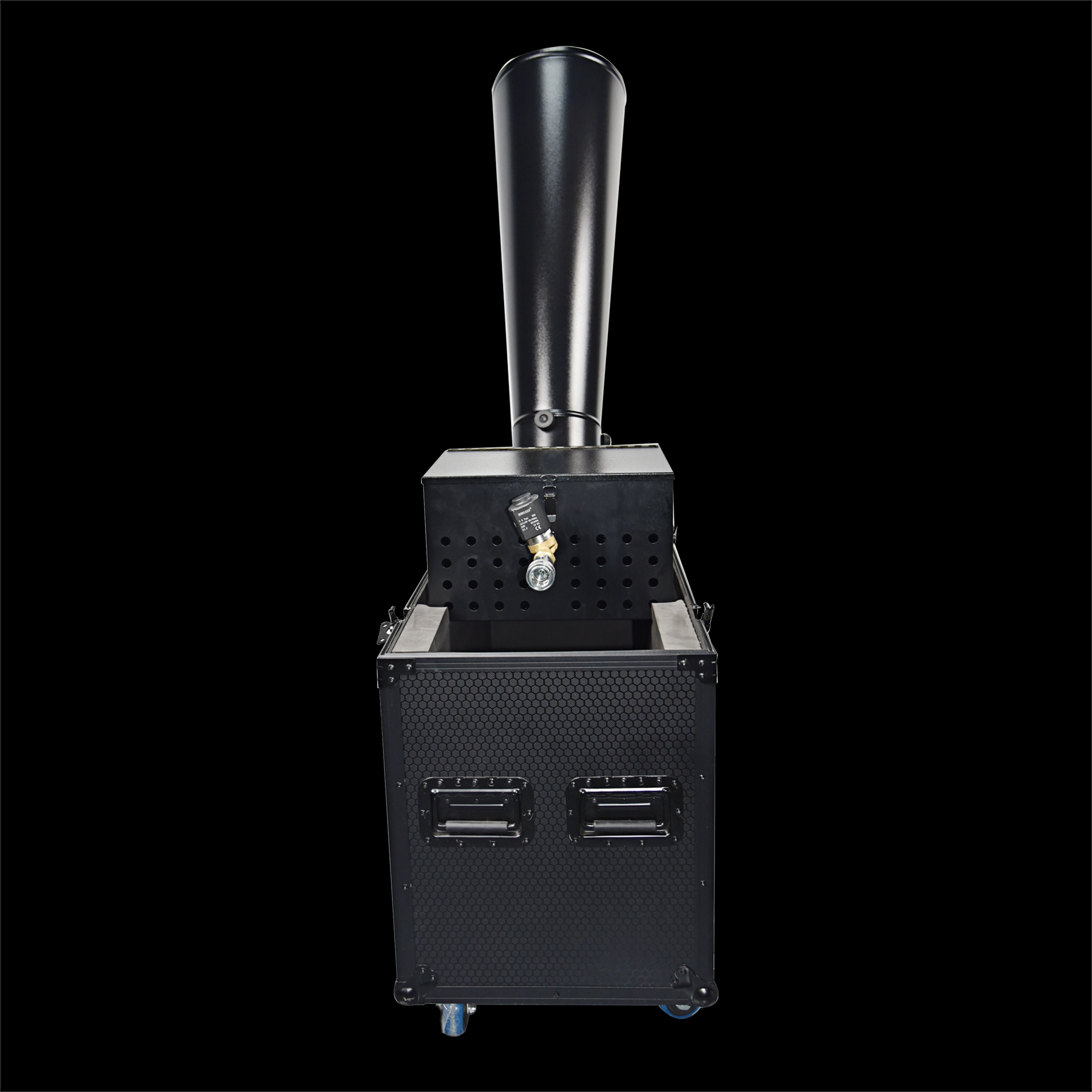
CO₂ Mini Rainbow Confetti Machine Manual Control with Durable Black Wheeled Flight Case
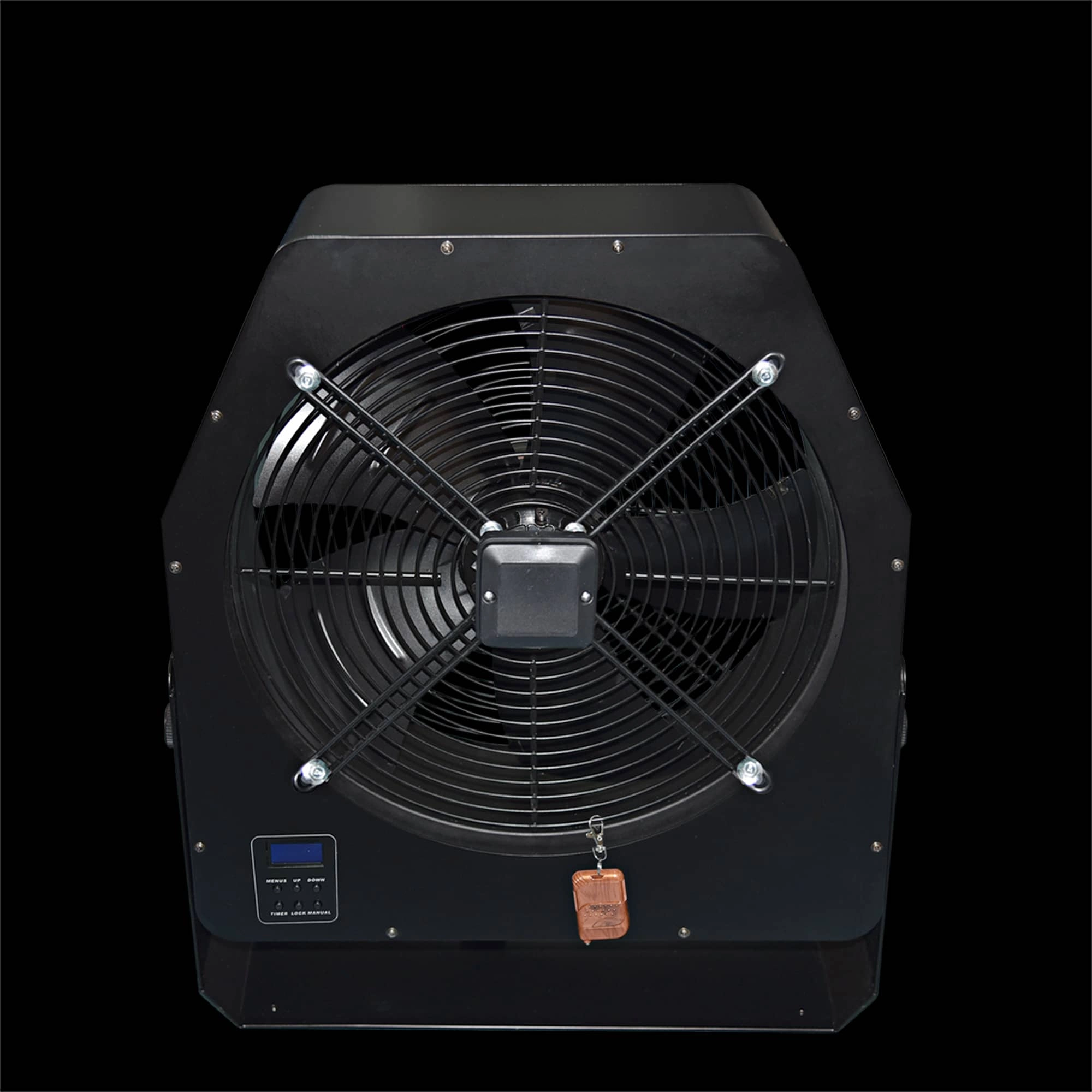
Professional Stage Big DMX Fan | High-Power Event Fan for Stage Shows & Celebrations
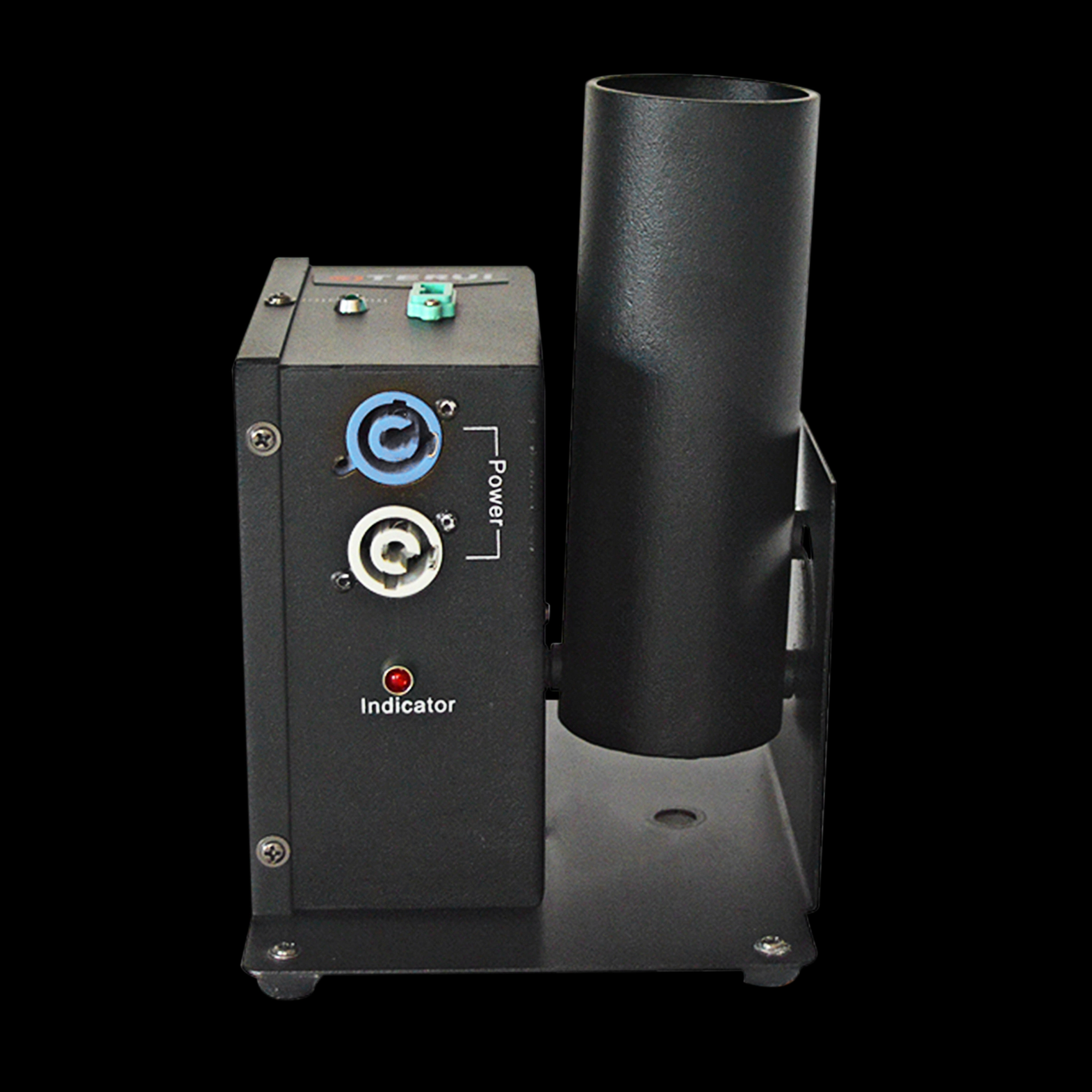
Single Shot Confetti Machine - Premium Confetti Launcher for Weddings & Stage Celebrations
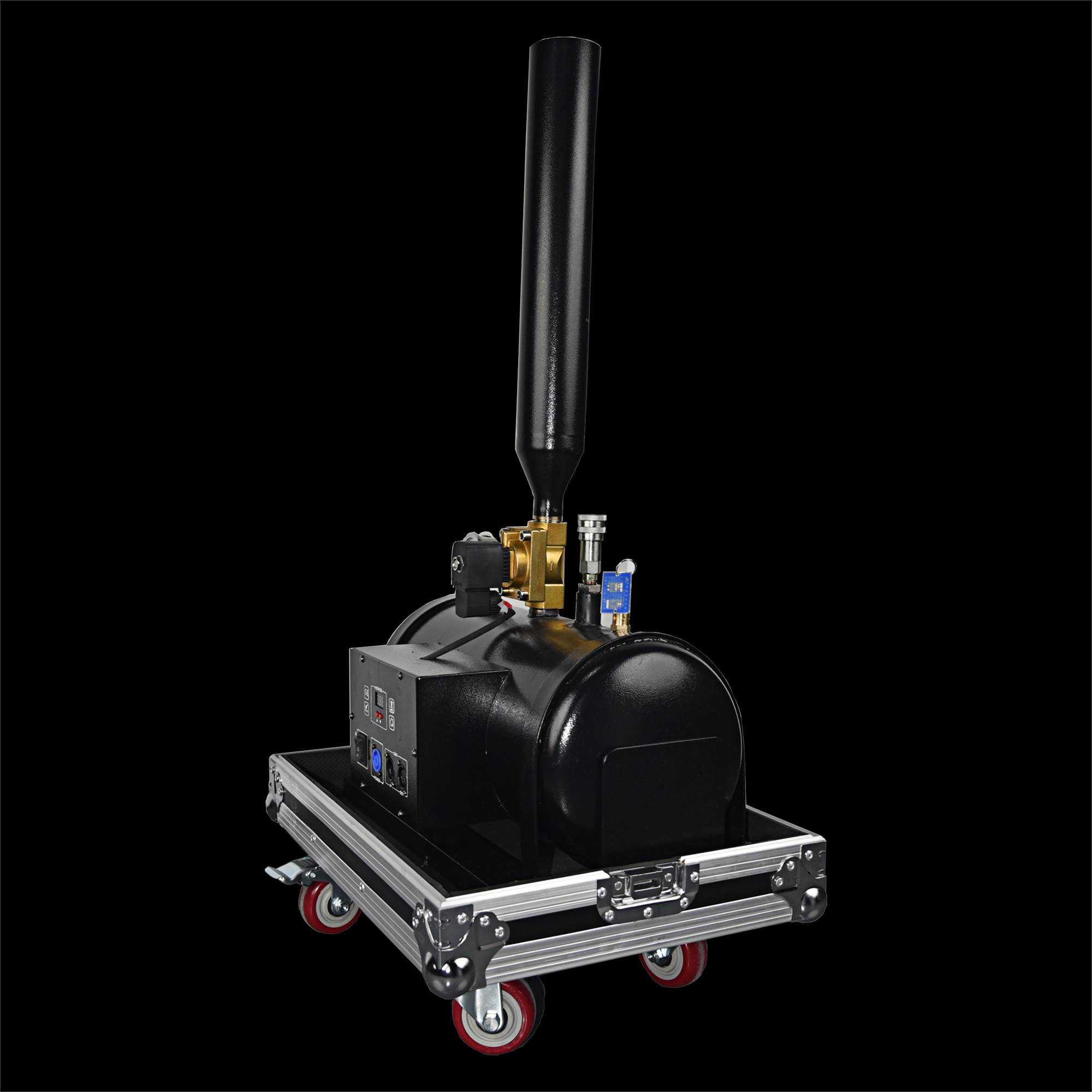
High-Altitude Confetti Cannon - Professional Confetti Blaster for Stage, Party & Celebration Events
Email: sales01@strlighting.com
WhatsApp: +86 189 2232 4800
© 2025 Siterui SFX All Rights Reserved.
 Scan QR Code
Whatsapp: +8618922324800
siteruisfx_stage_equipment
Siterui
SITERUI-SFX
STRlighting
@siterui.sfx