
Choosing the right hazer size for venue capacity
- How to size haze output for any venue
- Why hazer size matters for venue capacity (keyword: hazer)
- Step 1 — Convert venue capacity to room volume (keyword: hazer)
- Step 2 — Choose target fill time and target haze density (keyword: hazer)
- Step 3 — Calculate baseline output (keyword: hazer)
- Recommended hazer classes by venue capacity (keyword: hazer)
- Comparing hazer technologies and fluid types (keyword: hazer)
- Ventilation, air-change rates and how they affect haze sizing (keyword: hazer)
- Control, distribution and placement strategies (keyword: hazer)
- Safety, maintenance and venue policies (keyword: hazer)
- Example calculation and equipment selection (keyword: hazer)
- Siting Siterui SFX solutions — customization and integration (keyword: hazer)
- Siterui SFX product strengths and typical offerings (keyword: hazer)
- Procurement checklist when selecting hazers (keyword: hazer)
- Cost and operational considerations (keyword: hazer)
- Frequently Asked Questions (FAQ)
- 1. How do I calculate the exact hazer output my venue needs?
- 2. Can I use one big hazer instead of multiple smaller ones?
- 3. Are oil-based hazers safe for indoor venues?
- 4. How does ventilation affect hazer performance?
- 5. How many hazers do I need for a 3,000-capacity venue?
- 6. What maintenance and fluid-handling best practices should I follow?
- Contact and product enquiry
- References
How to size haze output for any venue
Choosing the right hazer starts with a repeatable calculation: determine the room volume, decide how quickly you want an even haze distributed (fill time), then select a machine whose continuous output — increased to allow for ventilation loss and desired density — meets or exceeds that requirement. This article gives a step-by-step method, sample sizing tables for different venue capacities, comparisons between hazer classes and fluids, and practical considerations for safety, control, and multi-unit setups.
Why hazer size matters for venue capacity (keyword: hazer)
Haze is used to make light beams visible, enhance atmosphere, and improve the impact of lighting design. Under-sizing a hazer produces uneven beams, long ramp-up times and frustrated designers. Over-sizing increases fluid consumption, may create excessive haze and trigger venue ventilation or health concerns. Correctly sizing a hazer tied to venue capacity ensures reliable performance, efficient operation, and compliance with venue ventilation and safety requirements.
Step 1 — Convert venue capacity to room volume (keyword: hazer)
Most promoters and venue managers know seating or standing capacity, not cubic volume. Convert capacity to approximate floor area and then to volume:
- Estimate floor area: use 0.5–1.0 m² per standing spectator (dense) or 1.0–1.5 m² per seated person. For general guidance use venue plans when available.
- Multiply area by average ceiling height to get room volume (m³). Typical heights: clubs 3–6 m, mid-size theatres 6–10 m, arenas 12–30 m.
Example: a 1,500-person music venue with seated/standing area ~1,000 m² and average ceiling height 8 m → volume ≈ 8,000 m³.
Step 2 — Choose target fill time and target haze density (keyword: hazer)
Two practical design choices:
- Fill time: how quickly you want a visually even haze. Common targets: 3–5 minutes for live concerts when haze is required quickly; 8–15 minutes when haze can build slowly.
- Target haze density: measured visually and managed by control. Most entertainment applications use low, even haze (sub-visibility to slightly visible beams) rather than dense fog. Manufacturer guidelines and venue policies define acceptable maximum densities.
Faster fill time requires higher output. For predictable designs, choose a fill time and control strategy up front.
Step 3 — Calculate baseline output (keyword: hazer)
Use a baseline formula to size required volumetric output (V_out):
V_out (m³/min) = Room Volume (m³) / Fill Time (min)
This gives the theoretical airflow to move one room volume per fill time. Because haze disperses and ventilation removes particulates, apply a safety factor (typical 2.0–3.0 for venues with normal ventilation; higher if heavy HVAC turnover or open doors are expected):
Design Output = V_out × Safety Factor
Example: 8,000 m³ venue, 5-minute fill time → V_out = 1,600 m³/min. With safety factor 2 → Design Output ≈ 3,200 m³/min.
Important note: many hazer manufacturers quote fluid output (ml/min) or a volumetric plume specification rather than full-room m³/min. Use the calculation to compare classes (compact vs mid-power vs high-power) and plan multi-unit arrays rather than relying on a single-part spec alone.
Recommended hazer classes by venue capacity (keyword: hazer)
Below is a practical mapping based on the calculation method above, assuming average ceiling heights and a 5-minute target fill time with safety factor 2. These categories are for planning and should be validated with on-site volume, ventilation data, and desired visual effect.
| Venue Capacity (approx.) | Typical Volume (m³) | Design Output (m³/min)* | Hazer Class / Example setup | Notes |
|---|---|---|---|---|
| <200 (clubs, small theatres) | 200–1,000 | 40–400 | Compact hazer (1 unit) or 2 small units | Compact, low fluid consumption; good for intimate shows |
| 200–1,000 (small theatres, ballrooms) | 1,000–5,000 | 200–2,000 | Mid-power hazer (1–3 units) or distributed small units | Consider multiple units to avoid dead zones |
| 1,000–5,000 (mid-size arenas, theatres) | 5,000–25,000 | 1,000–5,000 | High-power hazers (2–6 units) or banked mid-power machines | HVAC will significantly affect run-time and density |
| >5,000 (large arenas, stadia) | >25,000 | >5,000 | Industrial/high-capacity hazer arrays; consult manufacturer | Customized multi-device systems with synchronized control |
*Assumptions: 5-minute fill time and safety factor 2. Use the baseline formula with your actual room volume and preferred fill time for precise results.
Comparing hazer technologies and fluid types (keyword: hazer)
Two common haze technologies are oil-based (thermal/fan) and water-glycol (ultrasonic or loop) systems. Key differences:
- Oil-based hazers (heat + pump + fan): produce long-lasting, very fine particles; excellent for sustained beam visibility; often higher output per unit and widely used in touring.
- Water-glycol and water-based hazers: use glycol or glycerin solutions; generally considered safer for indoor use where low residue is required and for venues with electronic equipment sensitive to oil residues; output characteristics vary by model.
Manufacturer safety and material data sheets, venue policies, and local regulations should guide fluid selection. Authoritative guidance from manufacturers such as Rosco and Chauvet provides fluid safety information and usage recommendations (see references).
Ventilation, air-change rates and how they affect haze sizing (keyword: hazer)
Ventilation — measured in air changes per hour (ACH) — removes particulates and affects haze persistence. High ACH requires more output or more frequent bursts to maintain density. For design:
- Ask venue engineers for ACH/VAV data or use ASHRAE default ventilation rates as a reference.
- If ACH is unknown, use a higher safety factor (2.5–3.0) and plan for additional units or on-the-fly boosts during show cues.
Reference standards such as ASHRAE 62.1 define ventilation requirements for different occupancies and are useful when working with venue HVAC teams (see references).
Control, distribution and placement strategies (keyword: hazer)
Evenly distributed haze is as important as total output. Consider these best practices:
- Use multiple mid-power machines distributed around the stage and audience area rather than a single central high-power unit to avoid dead zones and layering.
- Integrate DMX/RDM or wireless control to fine-tune output, synchronize with lighting cues, and automatically adjust for changes in HVAC or open doors.
- Place units elevated and unobstructed so the plume disperses into the occupied volume; avoid pointing directly at performers or sensitive equipment.
Safety, maintenance and venue policies (keyword: hazer)
Health and safety considerations are critical. Key points:
- Use only manufacturer-approved haze fluids and follow MSDS/PDS guidelines.
- Check venue policies — some sites ban oil-based hazers because of residue concerns on lighting fixtures and rigging.
- Be mindful of smoke detectors and work with venue engineers to set detection thresholds or use detector-covering protocols approved by fire officials.
- Refer to occupational health guidance on aerosolized glycols and propylene glycol from NIOSH/CDC for safety limits and controls (see references).
Example calculation and equipment selection (keyword: hazer)
Scenario: 2,000-capacity theatre with 1,200 m² floor area and 8 m ceiling → volume = 9,600 m³. Target fill time = 5 minutes.
Baseline V_out = 9,600 / 5 = 1,920 m³/min. Apply safety factor 2 → Design Output ≈ 3,840 m³/min.
Selection approach:
- One extremely high-power hazer rated ≥3,800 m³/min (rare, expensive) or
- Distributed array: 4 mid-power hazers each delivering ~1,000 m³/min (combined ~4,000 m³/min). This is often preferred for redundancy and better distribution.
Always verify manufacturer plume/output specs; when specs are in fluid ml/min or grams/min, work with the manufacturer to translate fluid output into effective room coverage under your ventilation conditions.
Siting Siterui SFX solutions — customization and integration (keyword: hazer)
Siterui SFX is a professional manufacturer engaged in the research and development, production, sales, and service of professional stage special effects (SFX) equipment. With a highly skilled team and cutting-edge technology, we are committed to providing innovative, reliable, and high-performance SFX solutions for live events, theaters, concerts, film production, and entertainment venues worldwide.
At Siterui SFX, we understand that every stage, event, and creative concept is unique. That’s why we offer flexible customization services to meet your specific needs—whether it's branding, special functions, size adjustments, or complete system integration. From custom casing and logo printing to wireless control systems and synced multi-device setups, our expert team works closely with you to design SFX solutions that align perfectly with your needs.
For haze applications, Siterui SFX provides:
- Compact and mid-power haze machines optimized for clubs and theatres.
- High-capacity haze units and modular arrays for arenas and touring productions.
- Integrated DMX/wireless control packages with synchronized multi-unit control and fluid monitoring.
- Customization options: bespoke casing, fluid delivery plumbing for long run-times, and noise reduction measures for quiet venues.
Our commitment to quality and innovation ensures that our clients receive cutting-edge effects that enhance the visual and sensory experience of every performance. We pride ourselves on exceptional customer service and continuous advancement, positioning Siterui as a trusted partner in the professional special effects industry.
Siterui SFX product strengths and typical offerings (keyword: hazer)
Siterui SFX advantages include engineering-driven design, responsive R&D, and global service support. Our main product categories relevant to atmospheric and special effects include:
- Spark Machine
- Haze Machine
- CO₂ Jet Machine
- Bubble Machine
- Snow Machine
- Foam Machine
- Confetti Machine
- Fog Machine
- Fire Machine
- Dry Ice Machine
Competitive differentiators:
- Technical customization — from internal pump curves to matched fluid delivery for consistent output.
- System-level integration — synchronized arrays, wireless DMX, and custom control macros mapped to lighting desks.
- Service network — spare parts, factory calibration, and on-site technical support for events and tours.
Procurement checklist when selecting hazers (keyword: hazer)
Before purchase, confirm:
- Room volume and HVAC/ACH numbers from venue engineering.
- Desired fill time and acceptable visual density.
- Fluid compatibility and venue residue policies.
- Control protocol (DMX/RDM, Art-Net, wireless) and integration needs.
- Redundancy plan — buying at least one extra unit or distributing multiple machines.
- Manufacturer data sheets, MSDS for haze fluids, and local fire/safety approvals.
Cost and operational considerations (keyword: hazer)
Operational costs include fluid consumption (ml/hour), electricity, maintenance, and spare parts. Mid-power hazers distributed across a venue can lower audible noise and reduce the risk of single-point failure compared to a single, extremely high-output machine. Talk to manufacturers like Siterui SFX for fluid consumption calculators tailored to your planned cues and run times.
Frequently Asked Questions (FAQ)
1. How do I calculate the exact hazer output my venue needs?
Calculate room volume (area × height), choose a target fill time (e.g., 5 minutes), compute baseline V_out = volume / fill time, then multiply by a safety factor (2–3) to account for ventilation and dispersion. Validate the result with manufacturer plume/output data and on-site testing.
2. Can I use one big hazer instead of multiple smaller ones?
While one large hazer can meet total output, multiple distributed units provide better coverage, redundancy, and more even haze distribution. For most theatres and arenas, an array of machines is preferred.
3. Are oil-based hazers safe for indoor venues?
Oil-based hazers produce long-lasting haze but can leave residue on fixtures; many indoor venues prefer water-glycol fluids to avoid buildup. Always follow manufacturer MSDS guidance and venue policy.
4. How does ventilation affect hazer performance?
Higher ventilation (ACH) removes haze faster, requiring higher design output or more frequent haze bursts. Obtain HVAC data from the venue and include it in your sizing calculation (use a higher safety factor if ACH is unknown).
5. How many hazers do I need for a 3,000-capacity venue?
Estimate the room volume first. For typical mid-size arenas (volume 10,000–20,000 m³) you’ll likely need a bank of 3–6 mid-to-high-power hazers, distributed around the venue. Use the baseline formula to determine exact numbers and consult the manufacturer for array design.
6. What maintenance and fluid-handling best practices should I follow?
Use only recommended fluids, follow cleaning intervals in the manual, change filters where applicable, and store fluids per MSDS instructions. Schedule periodic smoke tests and fluid system checks before major events.
Contact and product enquiry
If you’d like help sizing a hazer system for a specific venue, or want a custom SFX package (haze machine arrays, synchronized control, or branding), contact Siterui SFX for consultation and product options. View our product lines and request a quote for Spark Machine, Haze Machine, CO₂ Jet Machine, Bubble Machine, Snow Machine, Foam Machine, Confetti Machine, Fog Machine, Fire Machine, and Dry Ice Machine.
References
- Rosco Haze & Fog FAQs — Rosco Laboratories. Accessed 2025-12-21. https://www.rosco.com
- What is Haze? — Chauvet Professional Knowledge Center. Accessed 2025-12-21. https://www.chauvetprofessional.com/knowledge-center/what-is-haze/
- Fog machine — Wikipedia. Accessed 2025-12-21. https://en.wikipedia.org/wiki/Fog_machine
- NIOSH Pocket Guide to Chemical Hazards — Propylene Glycol. Centers for Disease Control and Prevention (CDC). Accessed 2025-12-21. https://www.cdc.gov/niosh/npg/npgd0511.
- ASHRAE Standards and Guidance — ASHRAE. Accessed 2025-12-21. https://www.ashrae.org
Data and recommendations in this article are based on manufacturer literature, industry practice, and standards referenced above. For an exact on-site calculation and fluid recommendation, consult your manufacturer or an SFX systems engineer.
Hazer vs fog machine: differences and uses
Fogging Machine Buying Guide: How to Choose for Stage Shows
Top Brands and Models: Fog Machine Comparison Chart
DMX-Controlled Fog Machines: Integration Guide
Solutions
Are your stage FX products compliant with international safety standards?
Yes, all our products comply with CE, RoHS and other international certifications. For special effect consumables like fog fluid and snow fluid, we can provide MSDS and test reports to ensure smooth customs clearance globally.
Single-Head CO2 Jet Machine
What is the price of shipping?
Depending upon the port of delivery, prices varies.
About us
What are the team members’ backgrounds?
Engineers (15+ years), production staff (4–12 years), designers (10+ years), IT specialists (CAD/PS), and sales professionals (8+ years).
3000W fog machine
How does your factory do regarding quality control?
All the products will be 100% checked before the shipment.
600W High-Quality Stainless Steel
How is quality ensured?
Each unit undergoes rigorous testing, including spark consistency and safety checks.
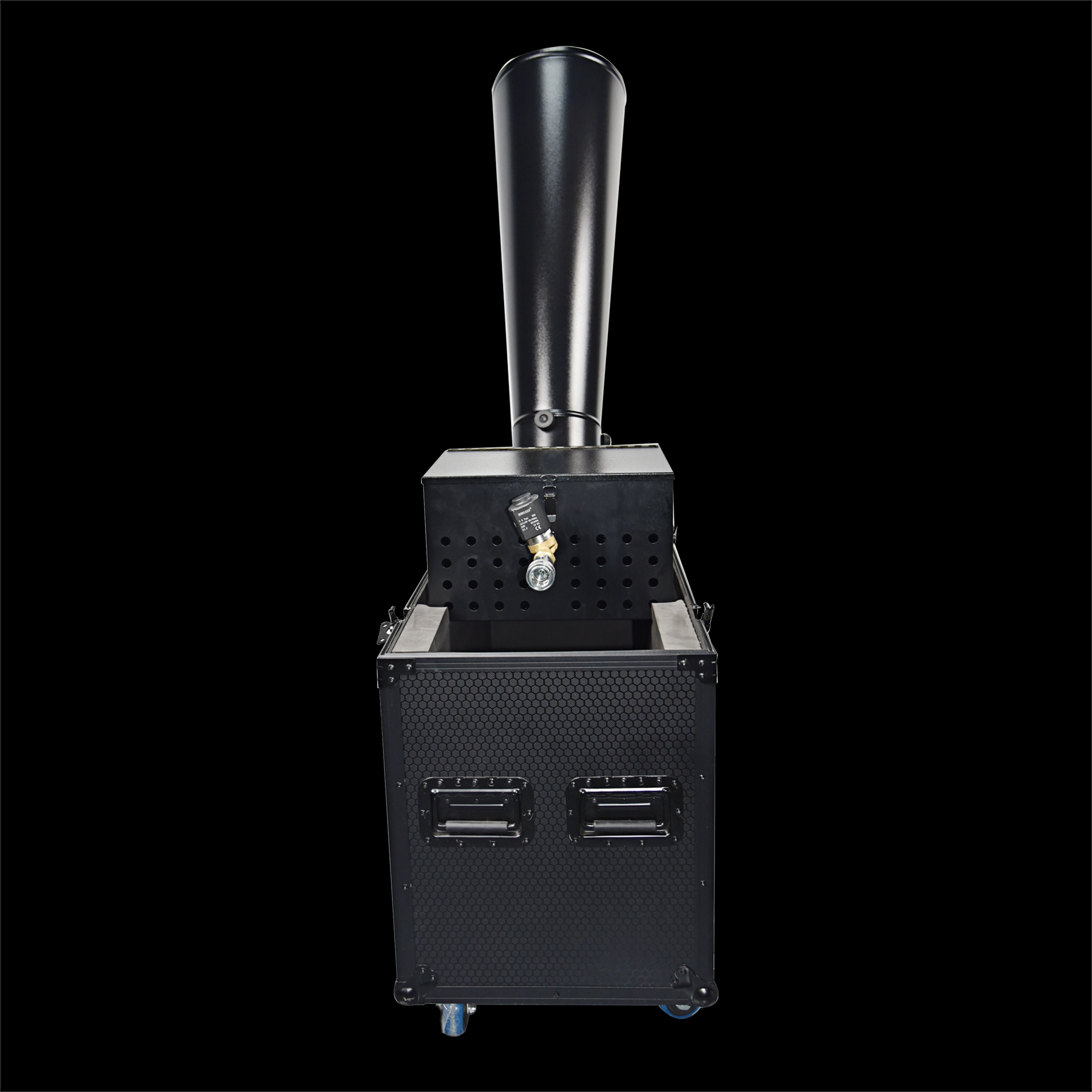
CO₂ Mini Rainbow Confetti Machine Manual Control with Durable Black Wheeled Flight Case
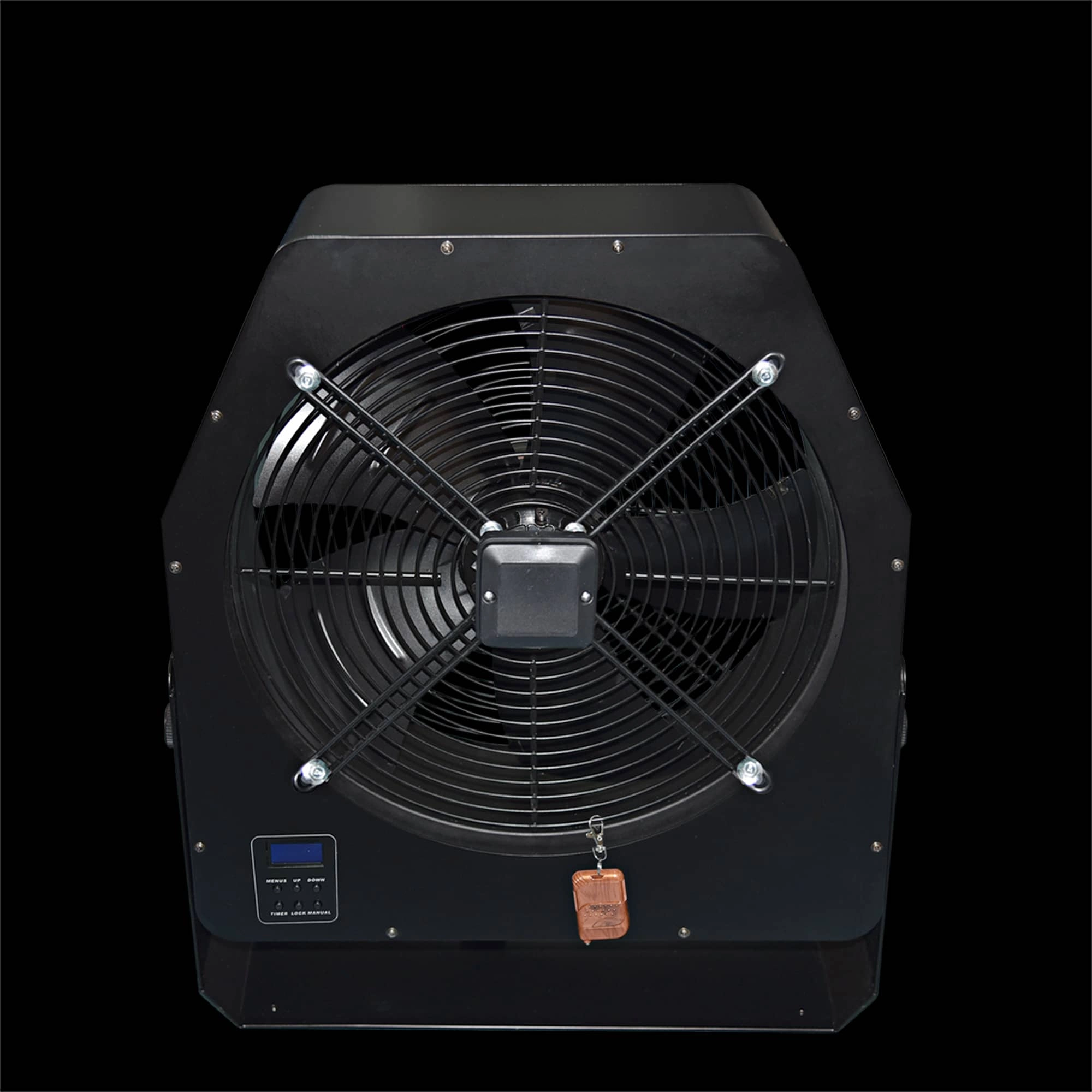
Professional Stage Big DMX Fan | High-Power Event Fan for Stage Shows & Celebrations
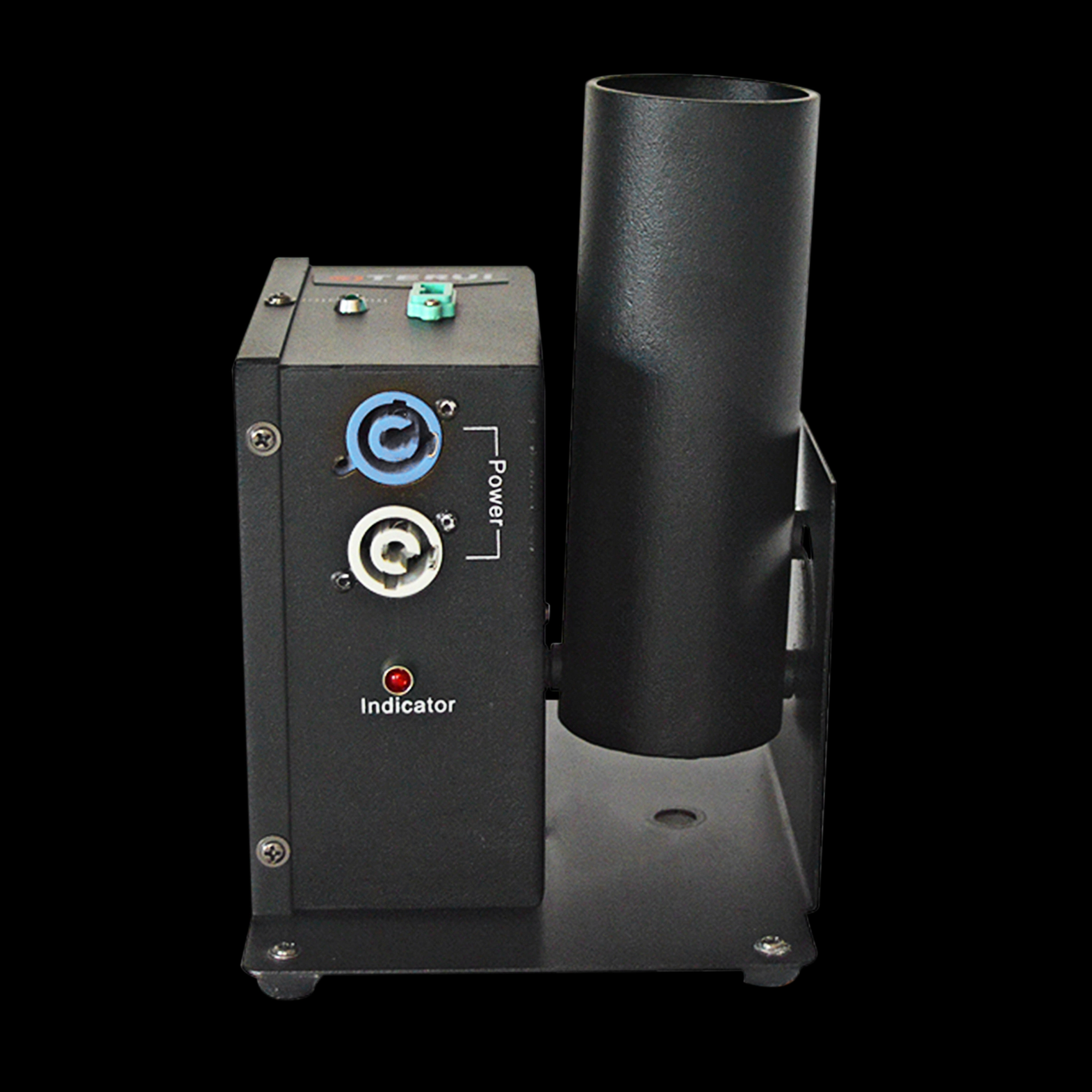
Single Shot Confetti Machine - Premium Confetti Launcher for Weddings & Stage Celebrations
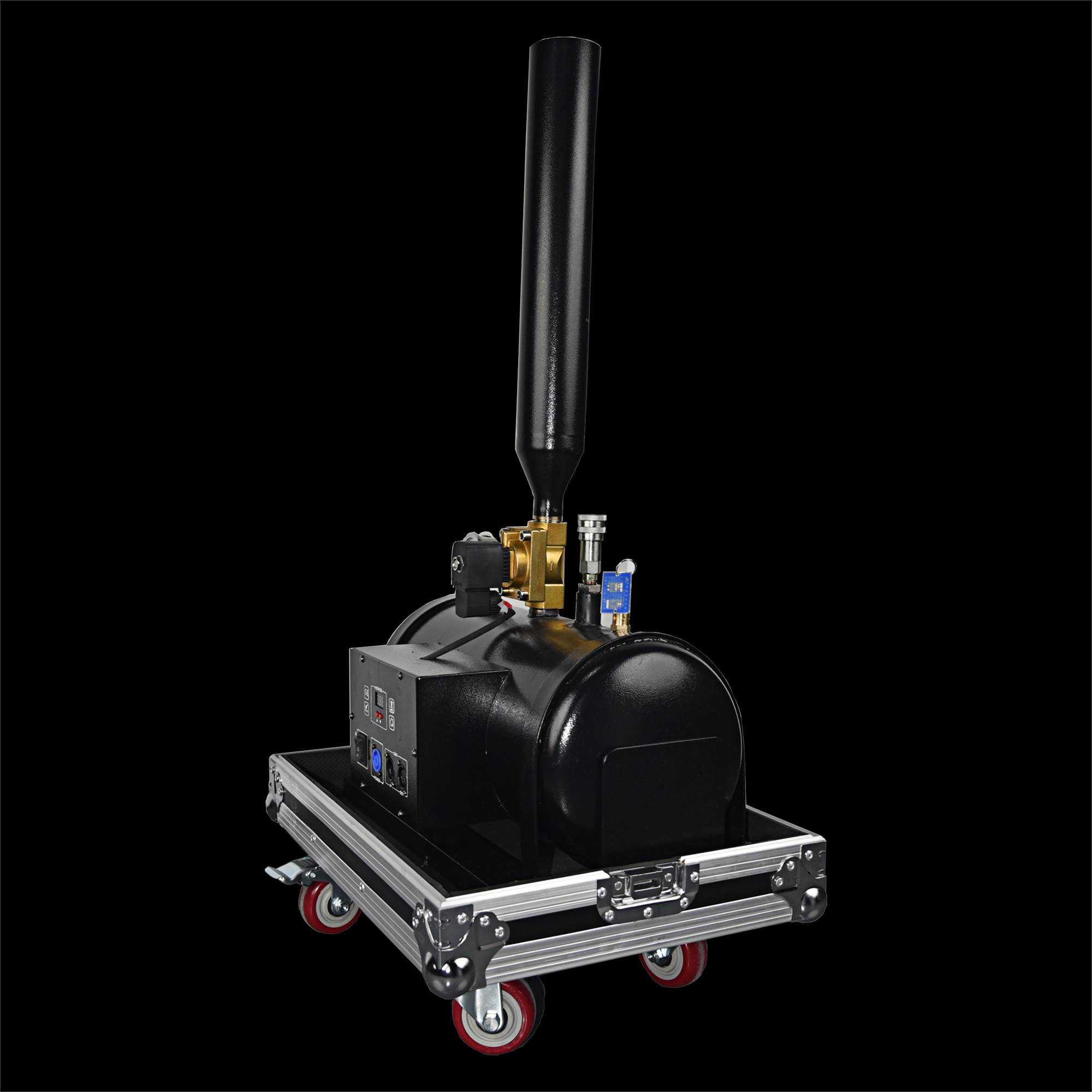
High-Altitude Confetti Cannon - Professional Confetti Blaster for Stage, Party & Celebration Events
Email: sales01@strlighting.com
WhatsApp: +86 189 2232 4800
© 2025 Siterui SFX All Rights Reserved.
 Scan QR Code
Whatsapp: +8618922324800
siteruisfx_stage_equipment
Siterui
SITERUI-SFX
STRlighting
@siterui.sfx