
Stage Haze Machine Buying Guide: Choosing the Right Model
- How to Select the Best Haze Machine for Your Production
- Why understanding the haze machine matters for buying decisions
- Haze machine vs. fog machine: distinct effects and use cases
- Types of haze machines and fluids — technical differences affecting performance
- Performance specifications to prioritize when buying a haze machine
- Safety, health, and venue compliance when using a haze machine
- Operational costs and maintenance: what affects total cost of ownership
- Comparative table: haze machine types and expected performance
- Practical buying checklist: questions to answer before ordering
- Model comparison example: light-duty vs. professional touring haze machines
- Why choose a professional supplier: support, customization, and reliability
- Siterui SFX: professional partner for haze machines and stage SFX
- How to test a haze machine before buying — practical evaluation steps
- Final decision guide — match features to your top priorities
- Frequently Asked Questions (FAQ)
- 1. Is haze safe for audiences and performers?
- 2. How long does haze typically stay in the air?
- 3. Do haze machines trigger fire alarms?
- 4. What controls should I require for integration into a lighting rig?
- 5. How do I minimize residue on lighting fixtures?
- 6. Can I use the same fluid across different haze machine brands?
- 7. What's the expected service life of a professional haze machine?
- Contact and next steps
- References
- Contact CTA
How to Select the Best Haze Machine for Your Production
Why understanding the haze machine matters for buying decisions
Choosing the right haze machine is about matching technical performance to real-world needs. Whether you run a concert production, theater company, corporate AV house, or nightclub, the right haze machine affects visual impact, crew workflow, audience safety, and operating cost. This guide explains the core technologies, key specifications, and buying trade-offs to help you select a haze machine that delivers consistent, controllable atmospheric effects without surprises.
Haze machine vs. fog machine: distinct effects and use cases
The terms haze machine and fog machine are often used interchangeably, but they produce different aerosols and visual results. A haze machine generates a fine, evenly dispersed aerosol that enhances lighting beams and creates subtle atmospheric depth. Fog machines produce thicker, denser clouds for dramatic scenes but settle more quickly.
- Primary use: haze for light enhancement (gobos, moving lights); fog for theatrical concealment and dramatic clouds.
- Particle size: haze typically produces submicron to low-micron particles that stay suspended longer; fog yields larger droplets that fall faster.
Understanding this difference is essential when specifying a system for concerts, television, or stage work where continuous light-haze is preferred over intermittent fog bursts.
Types of haze machines and fluids — technical differences affecting performance
There are two main haze fluid technologies and several distribution mechanisms:
- Water-based (glycol/propylene glycol) hazers: Use water-glycol or water-glycerin blends. They are common, produce fine particle sizes, and are easier to clean than oil-based systems. Good for long-duration haze in theaters.
- Oil-based (mineral oil) hazers: Use a light oil fluid; historically popular for film/TV due to very long hang time, but can leave residues on surfaces and optics.
- Ultrasonic and cold-haze technologies: Create aerosols without heating. These can reduce warm-up time and energy use but require specific fluids and may differ in particle size distribution.
Key technical attributes to evaluate:
- Particle size distribution: Controls beam definition and how long haze remains airborne. Typical haze particle range is approximately 0.5–2 micrometers; fog often exceeds that range. Smaller particles produce a smoother, persistent haze.
- Output rate and coverage (mL/min or m3/h): Determines how much fluid is aerosolized per minute and how quickly a space reaches desired haze density.
- Fluid consumption and tank capacity: Affects runtime and refill cadence during events.
- Warm-up time and continuous operation capability: Some units are designed for continuous multi-hour use; others are duty-cycled.
Performance specifications to prioritize when buying a haze machine
When evaluating models, prioritize these measurable specifications:
- Output density range and adjustable control: Look for units with variable output or adjustable fan speed to tune haze density from subtle to medium.
- Runtime and fluid tank size: For concerts or extended shows, larger tanks (2–10 liters) reduce refills.
- Warm-up time: Shorter warm-up is valuable for flexible operation and quick scene changes.
- Control options: DMX512, Art-Net, wireless remote, standalone timer, or LAN control. For integrated shows, DMX/RDM and software-compatible protocols are critical.
- Noise and fan design: Low-noise units are required for theaters and acoustic performances.
- IP rating and portability: For touring rigs, rugged flight-case-friendly designs and ingress protection matter.
Safety, health, and venue compliance when using a haze machine
Health and regulatory concerns are central to selecting a haze machine. Key points:
- Fluid safety: Use manufacturer-recommended fluids and review Safety Data Sheets (SDS) for inhalation and surface residue guidance.
- Ventilation and exposure limits: Ensure venue HVAC and air exchange rates maintain acceptable aerosol concentrations. For prolonged use, consult venue engineers and local health guidelines.
- Audience and performer considerations: Disclose aerosol use in advance for audiences and performers with respiratory sensitivities. Provide alternatives or reduced-density cues when needed.
- Fire detection and suppression: Haze can interact with smoke detectors differently than fog. Coordinate with venue fire safety officers to disable or adapt detection zones if legitimately necessary and approved.
Selecting a haze system that supports low-consumption, fine-particle aerosol reduces potential respiratory irritation and minimizes detector nuisance triggers.
Operational costs and maintenance: what affects total cost of ownership
Total cost goes beyond purchase price. Consider:
- Fluid cost per liter and consumption rate: More efficient machines lower ongoing expense.
- Serviceability and spare parts: Modular designs (replaceable pumps, heaters, fans) reduce repair downtime.
- Warranty and manufacturer support: Professional shows need prompt service and global support options.
- Cleaning and residue management: Oil-based systems may require surface cleaning and more frequent lamp/fixture maintenance.
Budget realistic annual operating costs (fluids + routine maintenance) into the procurement decision—especially for rental houses and touring productions.
Comparative table: haze machine types and expected performance
| Haze Type | Typical Fluid | Particle Size (approx.) | Visibility / Hang Time | Best Use | Pros / Cons |
|---|---|---|---|---|---|
| Water-based glycol haze | Glycol / Propylene-glycol blends | 0.5–2 µm | Moderate hang time; uniform coverage | Theater, concerts, TV lighting | Good beam definition; easy cleanup; moderate consumption |
| Oil-based haze | Light mineral oil | 0.7–3 µm | Long hang time | Film, long-run installations | Excellent persistence; can leave residue; higher cleanup |
| Cold/ultrasonic haze | Special low-temp fluids | ~0.3–1.5 µm | Variable; energy efficient | Low-heat venues, TV | No heat; quick start; specific fluid requirement |
| Fog (for contrast) | Glycol or oil fog fluids | 2–10+ µm | Shorter hang time; dense clouds | Special effects, dramatic moments | Strong visual effect; quickly obscures sightlines |
Sources for particle size and hang time vary by manufacturer and measurement, but the above ranges reflect measured distributions reported by producers and independent aerosol studies.
Practical buying checklist: questions to answer before ordering
Use this checklist to filter models and vendors:
- What is the primary application (concert touring, theater, TV, nightclub)?
- How large is the typical venue and what are the required coverage volumes?
- Do you need continuous haze for several hours or intermittent bursts?
- What control protocols and integration (DMX, Art-Net, wireless) are required?
- Are there noise constraints or mounting limitations (flyable weight, casing size)?
- What are acceptable warm-up times and heat outputs for the environment?
- Which fluids are compatible and what are their per-liter costs and SDS implications?
- What warranty, global support, and spare-part availability does the vendor provide?
Answering these clarifies whether a lightweight desktop hazer, a high-capacity touring system, or an integrated distributed rig best fits your needs.
Model comparison example: light-duty vs. professional touring haze machines
| Feature | Light-duty Hazer (example) | Professional Touring Hazer (example) |
|---|---|---|
| Output | 10–30 mL/min | 50–200 mL/min |
| Tank Capacity | 0.5–2 L | 5–10 L |
| Warm-up | 30–120 s | 20–60 s |
| Control | Manual / basic remote | DMX/RDM, Art-Net, wireless, timer |
| Duty Cycle | Intermittent | Continuous |
| Typical Use | Small venues, clubs, houses of worship | Concert tours, large theaters, rental houses |
This comparison helps align budget and operational needs with the right product class.
Why choose a professional supplier: support, customization, and reliability
For high-stakes live events and touring applications, vendor capabilities matter as much as product specs. Look for suppliers who offer:
- Engineering support for system integration and synchronized multi-device setups.
- Custom casing, branding, and flight-case options for touring rigs.
- Global service networks and spare-part availability.
- Rigorous QA, longevity testing, and clear SDS and operating manuals.
Buying from an experienced manufacturer reduces risk, shortens setup time, and ensures consistent effect quality across venues.
Siterui SFX: professional partner for haze machines and stage SFX
Siterui SFX is a professional manufacturer engaged in the research and development, production, sales, and service of professional stage special effects (SFX) equipment. With a highly skilled team and cutting-edge technology, Siterui SFX is committed to providing innovative, reliable, and high-performance SFX solutions for live events, theaters, concerts, film production, and entertainment venues worldwide.
At Siterui SFX, every stage, event, and creative concept is treated as unique. They offer flexible customization services to meet specific needs—whether branding, special functions, size adjustments, or complete system integration. From custom casing and logo printing to wireless control systems and synced multi-device setups, the team works closely with clients to design SFX solutions that align perfectly with their requirements.
Siterui SFX competitive strengths and product scope:
- Technical strength: Experienced R&D team and rigorous testing processes ensure reliability under touring conditions.
- Customization: Custom housings, logos, control variants, and integration-ready interfaces reduce onsite modifications.
- Product range: spark machine, Haze Machine, CO₂ Jet Machine, Bubble Machine, Snow Machine, Foam Machine, Confetti Machine, fog machine, fire machine, dry ice machine — all supported with customization and service.
- Service and support: Global sales and after-sales service with emphasis on fast spare-part supply and technical guidance.
For buyers who need both off-the-shelf performance and bespoke system design, Siterui SFX positions itself as a partner capable of delivering end-to-end solutions for professional events.
How to test a haze machine before buying — practical evaluation steps
If possible, request a live demo or rental trial. During a test, validate:
- Density control: Can you smoothly dial from thin haze to medium levels without pump surging?
- Beam definition: Evaluate how light beams look at different distances and angles.
- Start/stop response: Test warm-up, latency after activation, and how quickly haze dissipates when trimmed.
- Residue checks: After run-time, inspect lighting fixtures and nearby surfaces for residue.
- Noise and thermal output: Place the unit at intended mounting locations and measure audible noise and heat buildup.
A hands-on check avoids surprises and confirms that the unit fits your workflow and venue constraints.
Final decision guide — match features to your top priorities
- For continuous, subtle lighting enhancement in theaters or TV studios: prioritize water-based or ultrasonic hazers with fine particle output, DMX control, and low noise.
- For touring concerts demanding large coverage: choose high-output professional touring hazers with large tanks, continuous duty cycle, and robust control protocols.
- For film or long-term instillation with minimal staff intervention: oil-based low-consumption models may be appropriate, but plan for maintenance and cleaning.
Investing in a slightly higher-spec professional unit often pays off in reliability, support, and total cost of ownership.
Frequently Asked Questions (FAQ)
1. Is haze safe for audiences and performers?
When using manufacturer-recommended fluids and maintaining proper ventilation, modern haze systems are generally safe. Review SDS documents, monitor exposure, and communicate with performers and venue staff. Consider medical sensitivities and provide low-density alternatives if needed.
2. How long does haze typically stay in the air?
Haze created by professional hazers can remain airborne for minutes to tens of minutes depending on particle size, air currents, and HVAC. Fine particles produced by water-based or ultrasonic hazers generally stay suspended longer than fog droplets.
3. Do haze machines trigger fire alarms?
Haze is less likely to trigger photoelectric smoke detectors than dense fog, but interactions vary. Coordinate with venue fire safety officers; use detection zoning, directional airflow, or approved detector bypass procedures where permitted.
4. What controls should I require for integration into a lighting rig?
DMX512 with RDM, Art-Net, and wireless remote/timer are common. For synchronized multi-device setups, ensure network protocols and addressing options are supported.
5. How do I minimize residue on lighting fixtures?
Choose water-based fluid for easier cleanup, perform periodic cleaning of fixtures, and position hazers to avoid direct impingement on hot lamp housings. Regular maintenance schedules reduce residue buildup.
6. Can I use the same fluid across different haze machine brands?
Not always. Use fluids recommended by the hazer manufacturer. Some ultrasonic or cold-haze systems require specific low-temperature fluids; mixing incompatible fluids can damage pumps and heaters.
7. What's the expected service life of a professional haze machine?
With proper maintenance, touring-grade hazers can last many years. Serviceable parts (pumps, fans, heaters) and manufacturer support are key for long-term reliability.
Contact and next steps
If you need help selecting a haze machine for your venue or production, or want customized SFX solutions, contact Siterui SFX for consultation and product options. Their team can advise on model selection, custom branding, multi-device synchronization, and global service packages. Explore product pages and request a demo to validate performance in your environment.
References
- Fog machine. Wikipedia. https://en.wikipedia.org/wiki/Fog_machine (accessed 2025-11-30)
- How Fog Machines Work. HowStuffWorks (Entertainment). https://entertainment.howstuffworks.com/fog-machine.htm (accessed 2025-11-30)
- Indoor Air Quality (IAQ). OSHA. https://www.osha.gov/indoor-air-quality (accessed 2025-11-30)
- Performing Arts and COVID-19 Considerations. CDC. https://www.cdc.gov/coronavirus/2019-ncov/community/performing-arts. (accessed 2025-11-30)
- Product and fluid safety reference pages from leading hazer manufacturers (example brands): Chauvet, Martin, Rosco — consult specific product and SDS pages for fluid compatibility and safety (accessed 2025-11-30)
Contact CTA
For tailored recommendations, demo scheduling, or quote requests, contact Siterui SFX sales and technical team through their website or authorized distributors. Let an experienced SFX partner help you choose the haze machine and system that match your production goals and operational constraints.
Maintenance Checklist for Commercial Fog Machines
Pairing Snow Machines with Lighting and Fog Effects
Where to Buy ice fog machine
Safety, Ventilation and Regulations for Haze Machine Use
Single-Head CO2 Jet Machine
Can this machine be used outdoors?
Yes, but avoid extreme weather conditions to ensure longevity and performance.
How does your factory do regarding quality control
All the products will be 100% checked before the shipment
What safety precautions are required for operation?
Ensure the nozzle is never directed at people/animals, and always verify gas connections before powering on.
1500W Haze Machine
How often should I clean the nozzle?
Recommend cleaning every 20 hours of Use water spray for cleaning
1500W 24x3W LED fog machine
How could l get a sample
If you can not buy our product in your local area, we will ship a sample to you.You will be charged a sample price plus all related shipping costs.Express delivery charge depends on the quantity of the samples.
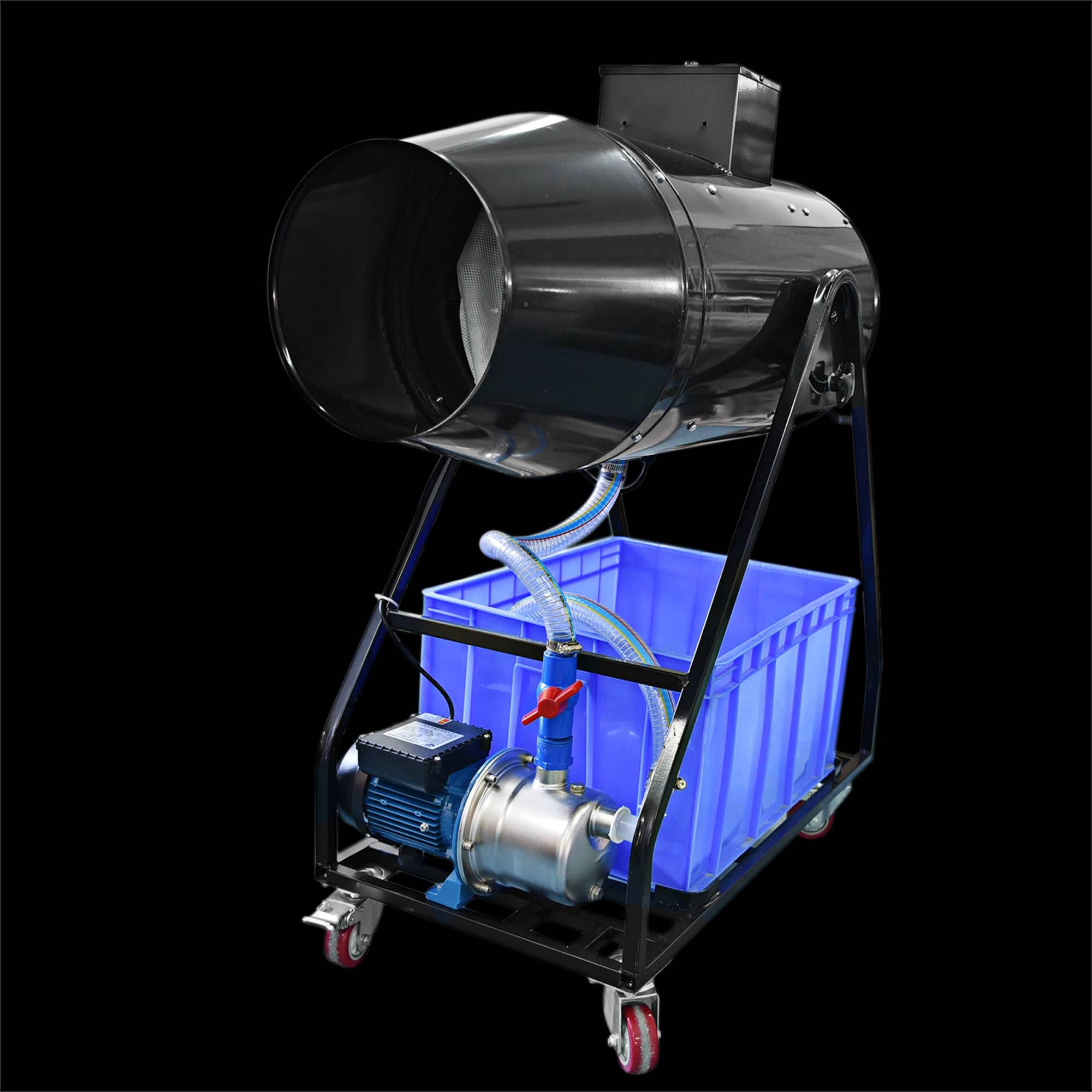
Siterui SFX 1800W Spraing foam machine High Power Professional Foam Party Maker
Elevate your event with the Siterui SFX 1800W Spraing Foam Machine. This high-power, professional foam party maker creates dense, vibrant bubbles—perfect for weddings and celebrations. Reliable and easy to use, it’s the foam and bubble machine for unforgettable moments.
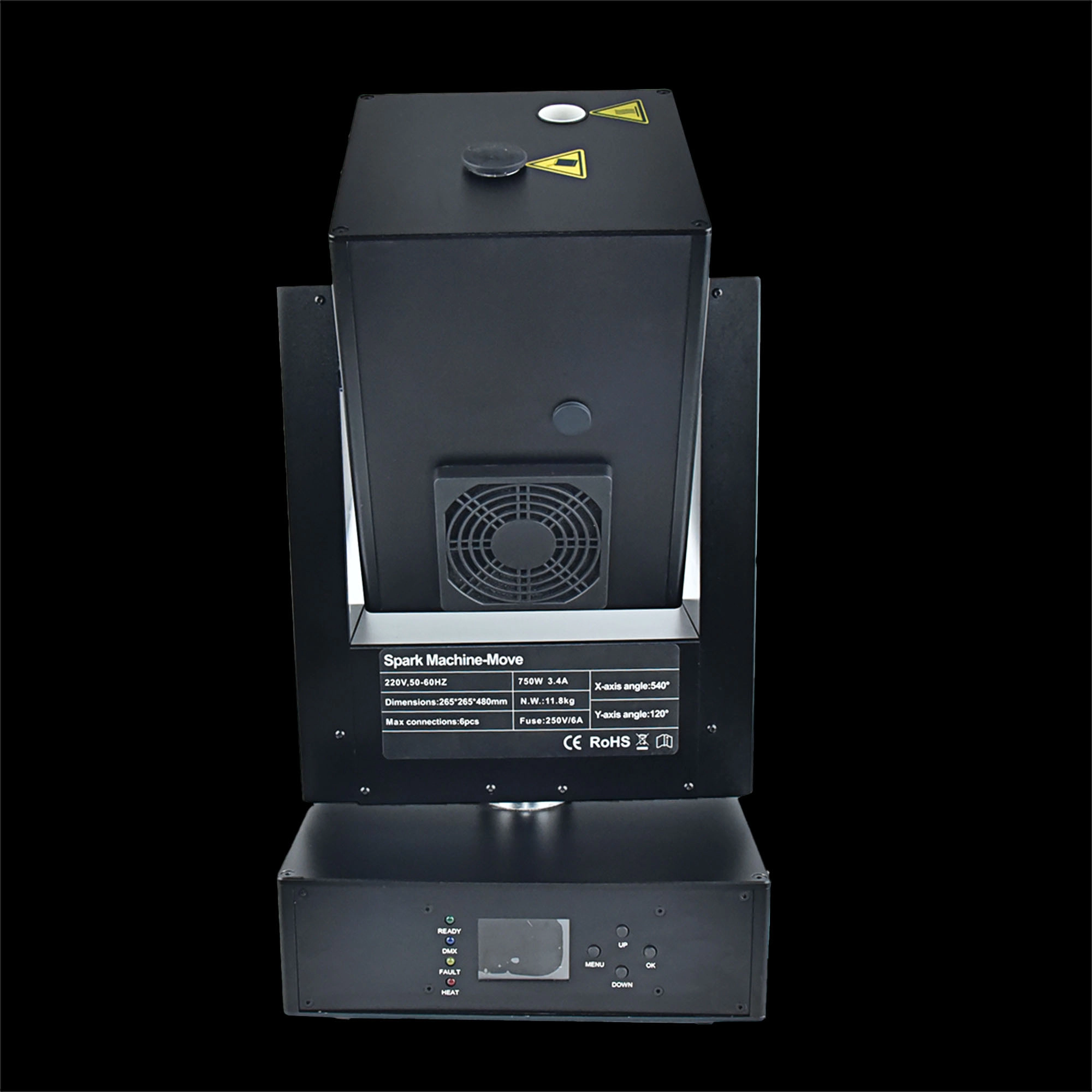
750w moving head spark machine
Siterui SFX 750w moving head spark machine delivers high-impact cold-spark effects with 360° moving head, DMX control, adjustable output and safe, long-lasting performance - perfect for concerts, weddings and stage shows.
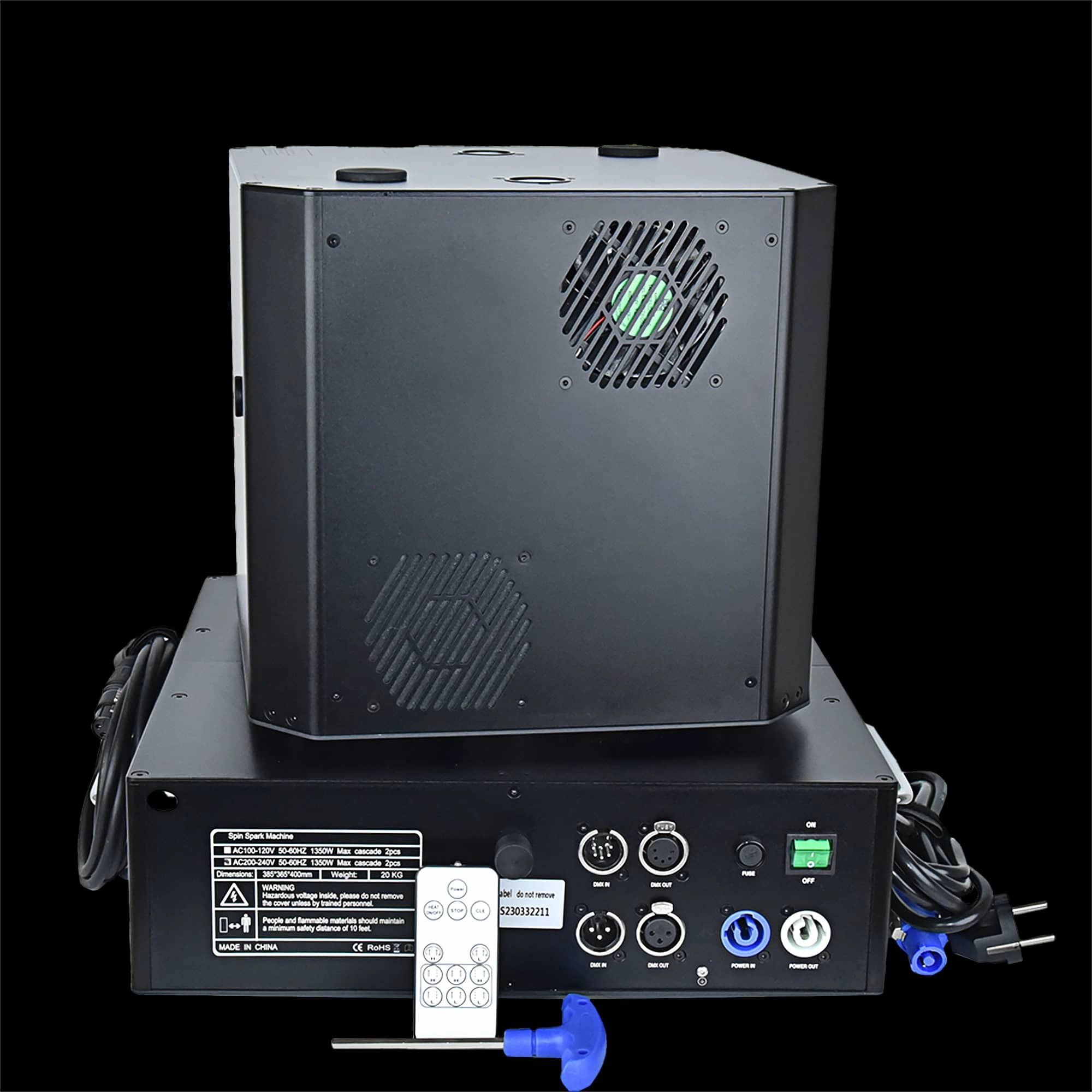
Double head 1300W Spin Spark machine DMX+Remote control
Double head 1300W Spin Spark machine -powerful dual-head 1300W spin spark effect with DMX + remote control for precise timing. Durable, professional-grade pyrotechnic effect ideal for concerts, clubs and events.
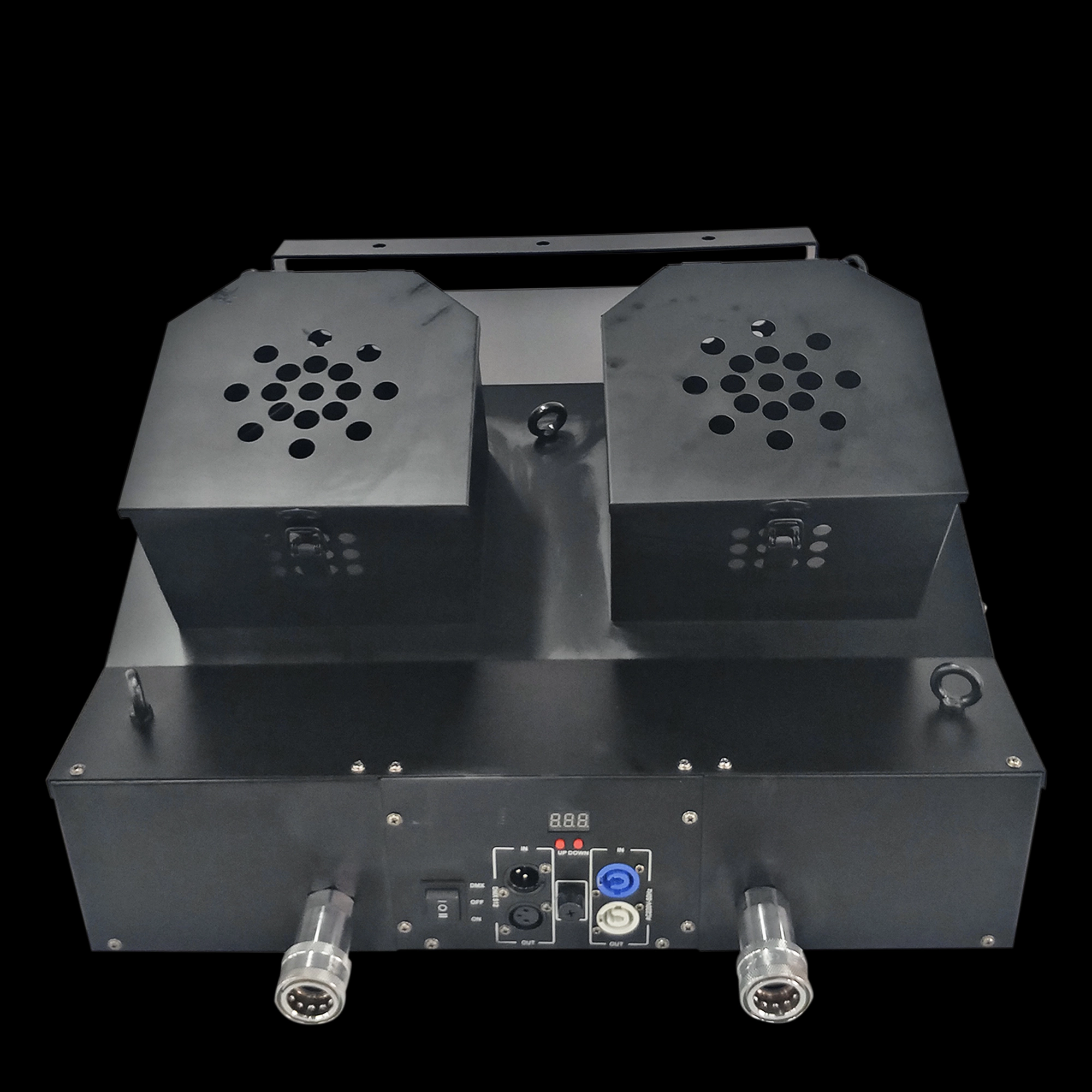
Snowstorm Paper Machine Double outlet sprayer snowstorm paper machine dual nozzle sprayer
Email: sales01@strlighting.com
WhatsApp: +86 189 2232 4800
© 2025 Siterui SFX All Rights Reserved.
 Scan QR Code
Whatsapp: +8618922324800
siteruisfx_stage_equipment
Siterui
SITERUI-SFX
STRlighting
@siterui.sfx