
Haze Machines Explained: The Definitive 2026+ Guide to Effects, Selection & Future Innovations
A comprehensive 2026-ready guide to haze machines, covering fluid types, maintenance, and the latest AI-driven innovations for professional stage effects.
What Exactly is a Haze Machine?
A haze machine, or hazer, is a specialized atmospheric device designed to produce a fine, translucent mist that enhances lighting beams without obscuring visibility. Unlike fog machines that create thick clouds, hazers generate microscopic particles that hang in the air for extended periods, creating a uniform canvas for light.
The "Why" Behind the Effect
In the professional lighting industry, the goal is often to make light beams visible—creating "volumetric light"—rather than just illuminating a surface. According to recent market data, the global stage lighting market is projected to reach USD 0.69 billion by 2025, driven largely by the demand for these immersive visual experiences. A high-quality hazer is the unsung hero that turns a standard moving head fixture into a architectural pillar of light.
Core Functions
· Beam Enhancement: Makes laser and light beams visible in mid-air.
· Contrast Control: Lowers the contrast of a scene for film and video, creating a "film look."
· Atmosphere: Adds depth and texture to a venue without the choking effect of heavy smoke.
Key Takeaways: Your Quick Guide to Haze Machines
· Haze vs. Fog: Haze is subtle and long-lasting; fog is dense and fleeting.
· Fluid Matters: Choose between water-based (convenient) and oil-based (long hang time) fluids carefully.
· Safety First: New 2024 OSHA HazCom updates strictly regulate aerosol and pressurized chemical labeling—always check your SDS.
· Smart Tech: The future lies in advanced haze machine technology featuring IoT and AI integration.
· Maintenance: Regular cleaning is the #1 way to prevent heater block failure.
Haze vs. Fog vs. Smoke: Unraveling the Atmospheric Mystery
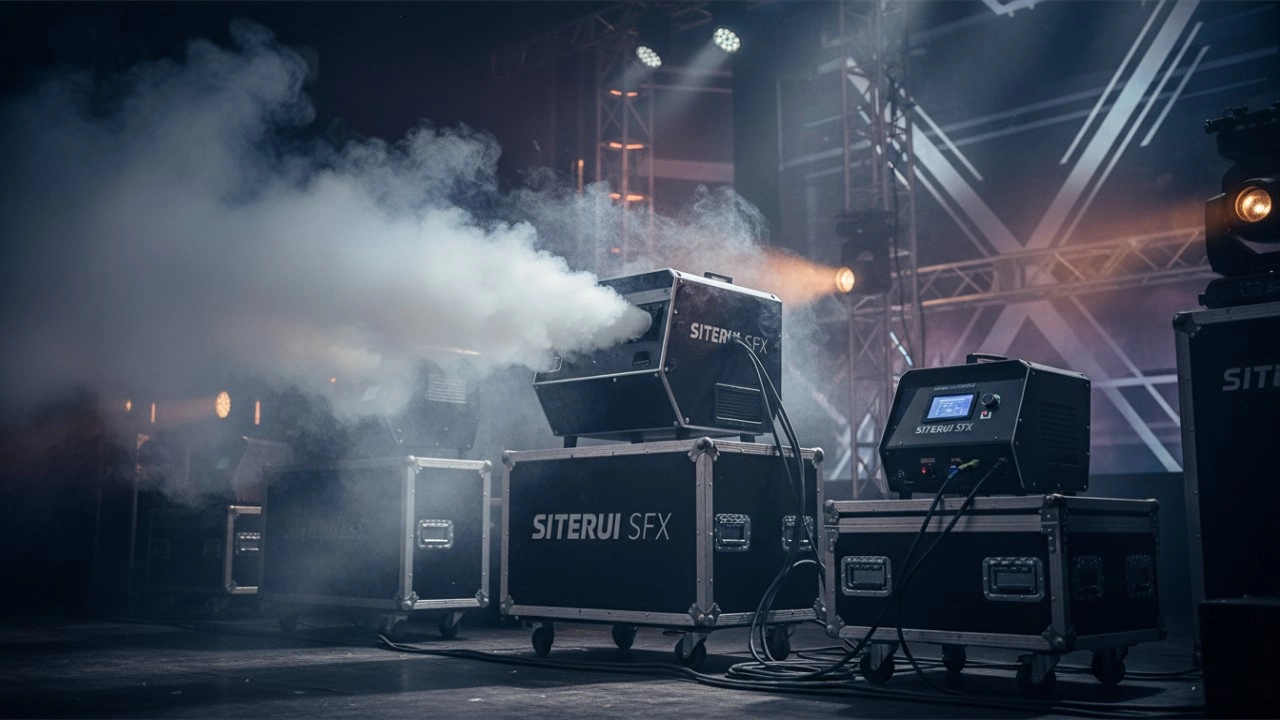
Fog machine vs haze machine differences come down to particle size, density, and intended application. Haze machines produce a nearly invisible mist (0.5 to 50 microns) intended to linger, while fog machines create opaque bursts for dramatic effect.
Detailed Comparison
To choose the right tool, you must understand the physics of the effect:
1. Haze Machines:
o Effect: Translucent, uniform mist.
o Hang Time: Long (30 minutes to 3+ hours).
o Best For: Concerts, broadcast studios, corporate events where visibility is key.
2. Fog Machines:
o Effect: Thick, opaque white clouds.
o Hang Time: Short (dissipates quickly unless chilled).
o Best For: Halloween effects, theatrical reveals, fire training.
3. Smoke Machines (Pyrotechnic/CO2):
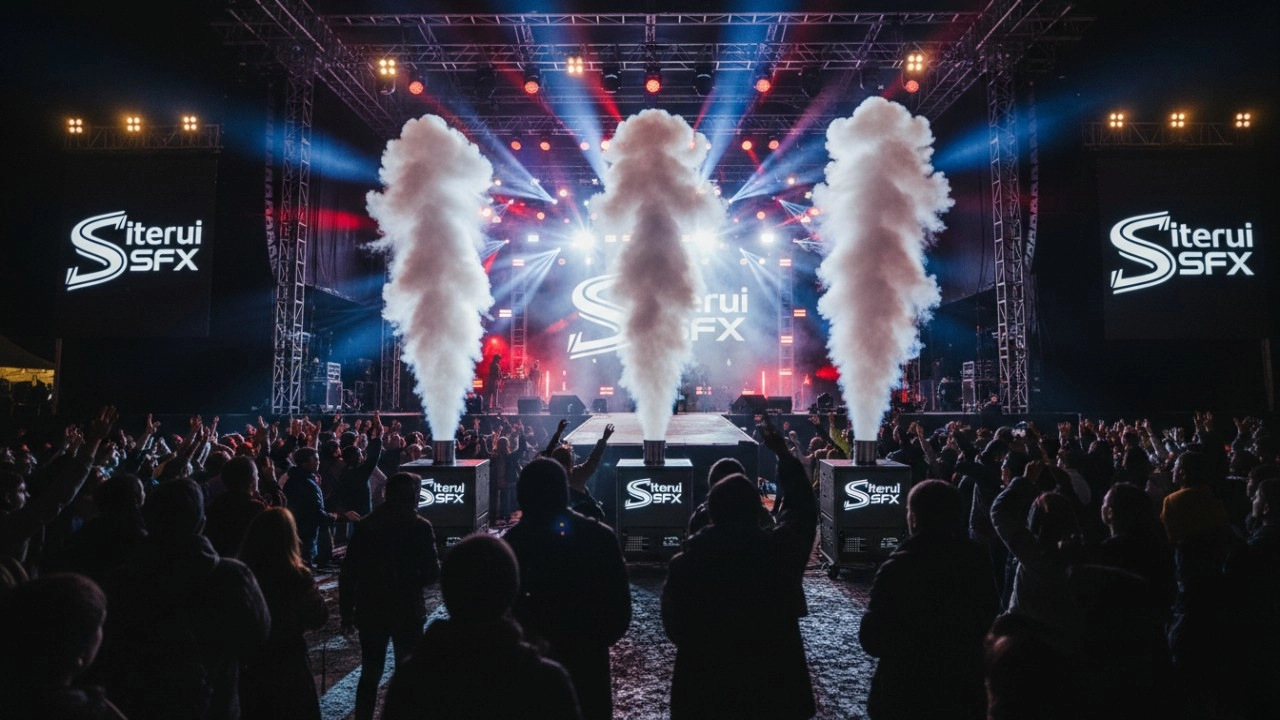
o Effect: Explosive bursts or rapidly rising columns.
o Best For: High-energy drops in DJ sets or special FX sequences.
How Haze Machines Work: The Science Behind the Subtlety
Most modern hazers utilize a thermal or compressor-based system to atomize fluid into microscopic particles.
The Mechanisms
· Thermal Hazers: Similar to foggers but designed to vaporize fluid at a higher efficiency to create smaller particles. They typically use a fan to disperse the vapor instantly.
· Cracker Hazers (Oil-based): These use an air compressor to force air through a nozzle, physically "cracking" the oil fluid into tiny droplets. This requires no heat, meaning no warm-up time.
· Ultrasonic Hazers: A piezo element vibrates at high frequency to agitate water into a mist. While quieter, the effect is often less dense than thermal units.
Types of Haze Machines & Their Ideal Applications
When selecting stage lighting haze effects, the choice often splits between water-based and oil-based technologies, each with distinct pros and cons.
1. Water-Based Hazers
· Pros: Cheaper fluid, easier to clean, leaves minimal residue on equipment.
· Cons: Larger particle size means it dissipates faster; requires continuous running.
· Ideal For: Touring bands, clubs, and venues where ease of use is paramount.
2. Oil-Based Hazers (Crackers)
· Pros: Incredible hang time (one burst can last hours), extremely fine particles, highly reflective.
· Cons: Can leave a slightly oily residue on lenses if used excessively; compressor noise.
· Ideal For: TV studios, high-end theater, and film sets requiring consistent continuity.
3. Integrated & Custom Solutions
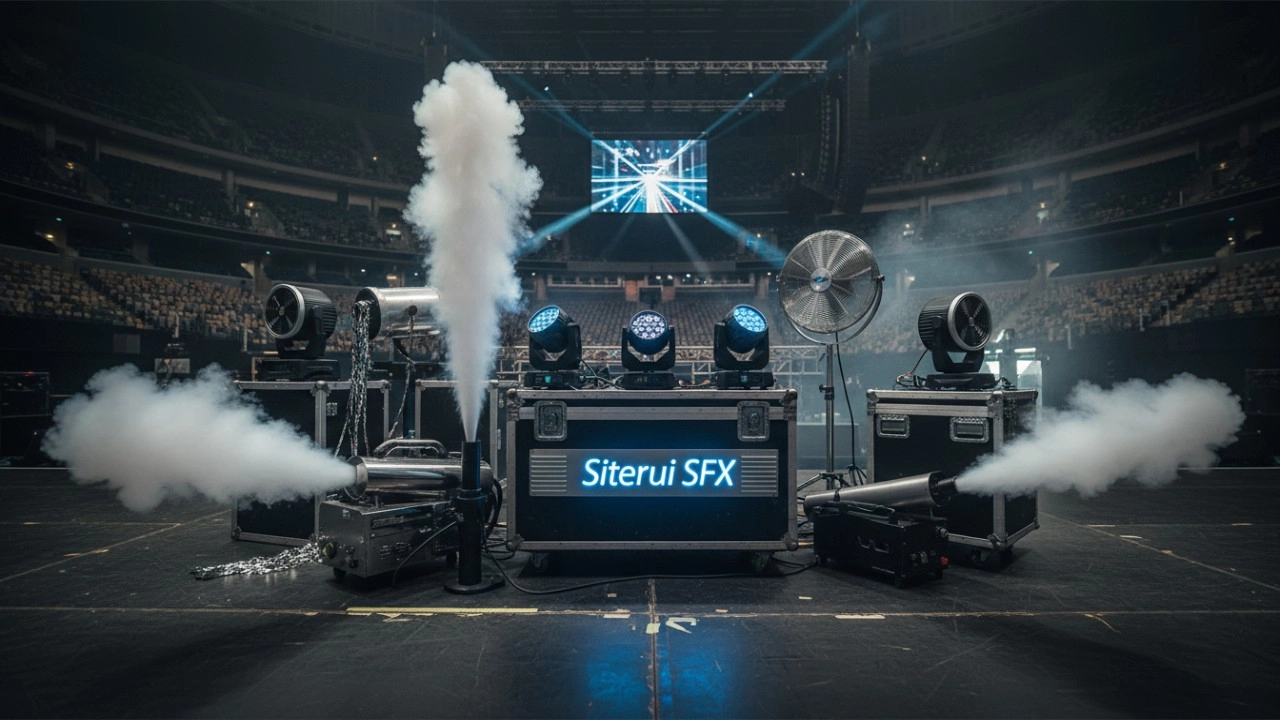
Leading manufacturers like Siterui SFX are bridging the gap with versatile machines that offer customizable casing and output. For instance, large-scale tours often require synced multi-device setups where hazers are daisy-chained via wireless DMX to fill an arena evenly—a capability Siterui emphasizes in their R&D.
Choosing the Perfect Haze Machine for Your Needs
Selecting a machine goes beyond price; you must evaluate output volume, control capabilities, and fluid compatibility to ensure the unit meets your specific production rigor.
Selection Criteria
· Control Options: In 2024, wireless DMX demand rose by over 22% in the US market. Look for machines with built-in wireless receivers. Siterui SFX specializes in wireless control systems, allowing technicians to adjust haze density from the console without running miles of cable.
· Output Volume: A small club needs 1,000-2,000 cu.ft/min; an arena needs 6,000+ cu.ft/min.
· Noise Floor: For theater, fan noise is a dealbreaker. Look for "silent mode" or variable fan speeds.
· Build Quality: Touring gear takes a beating. Siterui SFX, for example, offers custom casing services to ruggedize equipment for the road, ensuring longevity.
Haze Fluid: Types, Safety & The 2025 Regulatory Shift
Haze machine fluid types generally fall into water-based (glycol/glycerin mix) or mineral oil-based categories, but recent regulations have changed how these are handled.
The 2024 OSHA Update
Effective July 19, 2024, OSHA updated its Hazard Communication Standard (HazCom) to align with GHS Revision 7. This created new classifications for "Chemicals under pressure" and "Aerosols."
· Impact: If you buy haze fluid in pressurized canisters, the labeling requirements have become stricter. Always ensure your supplier provides an updated Safety Data Sheet (SDS) compliant with these 2024 standards.
Eco-Friendly Trends
Sustainability is a massive focus. The entertainment industry is moving toward biodegradable fluids to reduce environmental impact, a trend supported by the "Greenerlight Program." Using high-quality, efficient fluids from reputable manufacturers like Siterui SFX ensures you get maximum effect with minimal chemical waste.
Setup, Operation & Optimization
To achieve stage lighting haze effects that look professional, placement and airflow are just as important as the machine itself.
Setup Steps
1. Placement: Place the hazer upwind of the stage airflow (HVAC return). Let the room's natural air currents carry the mist.
2. Fan Assist: Use a separate AF-1 style fan to break up the "plume" immediately as it exits the machine. This prevents visible clouds and promotes even dispersion.
3. Warm-Up: Allow full heating cycles. Premature firing can result in "spitting" hot fluid.
4. DMX Addressing: Assign a dedicated channel for fan speed and pump speed independently if the machine allows. This gives you fine control over density vs. dispersion distance.
Essential Haze Machine Maintenance Guide
A haze machine maintenance guide is critical because the #1 killer of hazers is a clogged heater block caused by caramelized fluid residue.
Maintenance Checklist
· Flush Regularly: After every 20 hours of operation (or before storage), flush the system with distilled water or a manufacturer-approved cleaning solution (e.g., acetic acid mix, if manuals permit).
· Clear the Line: Never store a machine with fluid sitting in the lines for months. It will gum up.
· Check Filters: Air intake filters on the fans often get clogged with dust (and haze residue), causing the unit to overheat.
· Inspect Nozzles: For oil crackers, check the atomizer nozzle for blockage. A pin-sized obstruction can stop output entirely.
Expert Tip: Companies like Siterui SFX prioritize reliability in their engineering, but even the best hardware requires care. Their service teams often emphasize that 90% of repairs are avoidable with simple flushing routines.
The Future: Advanced Haze Machine Technology (2026+)
We are entering the era of advanced haze machine technology, driven by the convergence of AI and IoT (AIoT).
Trends to Watch
1. Smart Connectivity (IoT): By 2025, IoT integration in stage gear will allow for real-time diagnostics. Imagine a hazer that alerts your phone before it runs out of fluid or detects a heater anomaly.
2. AI-Driven Effects: "Edge computing" allows devices to process data locally. Future hazers could use sensors to measure room density and automatically adjust output to maintain a perfect, consistent level without an operator touching a fader.
3. Sustainable Power: With energy costs rising, new heater designs are becoming more efficient. LED-based heating indicators and low-power standby modes are becoming standard.
4. Customization: As seen with Siterui SFX's flexible manufacturing, the future is bespoke. Venues will demand machines built into set pieces or custom-branded architectural installs rather than generic black boxes.
Expert Tips for Mastering Your Haze Machine
· Don't Overdo It: You shouldn't see the haze; you should see the light beams. If the room looks foggy, you've gone too far.
· Layering: Use a floor fan to push haze up. Haze naturally settles; heat rises. Balancing this thermal layer is key to full vertical coverage.
· Fluid Consistency: Never mix fluid brands. The chemical composition (glycol to water ratio) is tuned to the heater's specific temperature. Wrong fluid = burnt smell + clogged machine.
Common Mistakes to Avoid
· Using Fog Fluid in a Hazer: This is the fastest way to break your machine. Fog fluid is too thick for hazer pumps.
· Ignoring Alarms: If a machine indicates "Fluid Low" or "Overheat," stop immediately. Running a pump dry will destroy the piston.
· Bad Placement: Pointing a hazer directly at a smoke detector. Optical smoke detectors are notoriously sensitive to haze. always isolate detectors or use "heat-rise" detectors in the performance zone.
Frequently Asked Questions (FAQ)
1. Can you use fog machine fluid in a haze machine?
No. Fog fluid is formulated for different vaporization temperatures and densities. Using it in a haze machine can clog the heater block, damage the pump, and void your warranty. Always use the fluid type specified by the manufacturer.
2. How long does haze last in a room?
Hang time depends on the fluid. Water-based haze typically lasts 30–60 minutes, while oil-based haze can linger for 3–4 hours. Ventilation and air conditioning will significantly reduce these times.
3. Do haze machines set off smoke detectors?
Yes, they can. Optical detectors are very sensitive to the fine particles of haze. It is standard procedure to isolate specific zones or switch to heat-based detection during performances, in compliance with local fire codes.
4. What is the difference between a hazer and a faze machine?
A "faze" machine is a hybrid. It uses standard fog fluid but has a fan to disperse it thinly, mimicking haze. It is cheaper but less consistent than a true hazer. A true hazer uses specialized fluid and high-pressure atomization.
References
Wikipedia — Theatrical smoke and fog
Panasonic — Haze vs Fog Machine
Comparing Professional Fog and Haze Machines for Stage Lighting in 2026
High-Impact CO2 Jet Systems for Electronic Dance Music Festivals in 2026
Advancements in Cold Spark Machine Technology for Indoor Events
Exploring Core Categories of Professional Stage Special Effects (SFX) Equipment
Recommended for you


Stay Informed or Connect with Us
Have questions about our latest news or updates?
Reach out to us—we're here to provide more insights or media support.
Email: sales01@strlighting.com
WhatsApp: +86 189 2232 4800
© 2025 Siterui SFX All Rights Reserved.
 Scan QR Code
Whatsapp: +8618922324800
siteruisfx_stage_equipment
Siterui
SITERUI-SFX
STRlighting
@siterui.sfx