
How much does a professional cold spark machine cost?
Cold spark machines (cold spark fountain, indoor sparkler, cold fire effect) are widely used in concerts, corporate shows and weddings because they create dramatic, low-temperature sparks safe for many indoor environments. Below are six detailed, buyer-focused questions that beginners frequently ask but rarely find fully answered online. Each answer draws on industry practice, manufacturer specifications, and venue/fire-authority requirements to help you make a safe, cost-effective purchase.
1) How much will a professional cold spark machine actually cost when you include purchase price, consumables, maintenance, and compliance paperwork for indoor concert use?
Purchase price: Professional cold spark systems are sold across a wide band based on output, control features and certification. Typical ranges you can expect today are:
- Entry-level professional units (single-nozzle, basic DMX, 1–3 m plume): roughly $1,500–$3,500 each.
- Mid-range systems (multi-nozzle arrays, 3–6 m plume, full DMX/Art-Net and presets): roughly $3,500–$8,000 each.
- High-end or modular rigs (large arrays, wireless control, redundant systems, integrated flight hardware): roughly $8,000–$20,000+ per unit or per controllable module.
Consumables and operating costs: Consumables include cold-spark powder or sealed cartridges, plus electricity and wear-and-tear items (nozzles, seals, compressor oil/filters). Real-world ranges seen from manufacturers and rental houses:
- Powder or cartridge cost: $30–$200 per cartridge or $20–$80 per kg for bulk powder depending on formulation and brand.
- Typical hourly consumable cost (venue shows with moderate effects): roughly $10–$80/hr per machine (intense continuous bursts push the high end).
- Power: 100–500 W nominal; compressors add intermittent peaks. Utility cost per show is usually under $10 but varies by runtime and local rates.
- Annual maintenance/service (recommended for rented or frequently used pro units): $200–$800+ per unit depending on service levels, parts, and whether compressor overhaul is needed.
Compliance and paperwork costs: To operate indoors you will usually need manufacturer test reports, MSDS for powder, and sometimes a certified fire-safety letter or third-party performance test. Manufacturers often charge for additional documentation or site-specific test reports ($150–$1,000 depending on scope). In summary, budget for an initial outlay (purchase) plus annual running costs; for planning: total first-year fully loaded cost per typical mid-range machine should be estimated at purchase price + $300–$2,000 (consumables, service, paperwork).
2) What is the true running cost per hour for a professional cold spark machine (powder, electricity, compressor wear) so I can price shows or rental rates accurately?
Running cost depends heavily on chosen intensity, nozzle size, and manufacturer efficiency. Use this step-by-step approach to calculate a realistic per-hour cost:
- Determine powder consumption: check the manufacturer spec in g/min or cartridges per minute. If the spec is not provided, request a bench test. Many pro units publish ranges: low-output uses only a few grams/min while high-output bursts can use many tens of grams/min.
- Calculate consumable cost: if powder is $40/kg and consumption is 20 g/min at a given setting, cost = 0.02 kg/min × $40/kg = $0.80/min → $48/hr.
- Add electricity and compressor load: for a machine drawing 200 W and a compressor intermittently adding 300–1000 W peaks, average electrical draw might be 0.3–0.8 kW. At $0.15/kWh that is $0.045–$0.12/min → $2.70–$7.20/hr.
- Factor in wear and maintenance reserve: allocate $0.50–$5.00/hr depending on usage intensity and warranty coverage.
Example realistic scenarios:
- Low-intensity ceremony runs: powder 5–10 g/min → ~ $3–$10/hr consumables; total running cost ~ $6–$20/hr.
- Concert-level continuous use: powder 15–40 g/min → ~ $18–$96/hr consumables; total running cost ~ $25–$110/hr.
Conclusion: for pricing shows and creating rental rates, calculate for worst-case intensity you plan to run and then include a margin for maintenance and unexpected certification paperwork.
3) How do I calculate number of units and placement for uniform cold spark coverage on a 15m × 10m stage while meeting typical venue spacing and safety constraints?
Step 1 — determine effective spread per machine: ask the manufacturer for the horizontal coverage (m) at your chosen vertical mounting height. Many nozzles give an effective curtain width of 1.5–3 m for a single outlet when mounted 2.5–4 m above the stage.
Step 2 — apply overlap: for visually continuous coverage, plan 10–25% overlap between adjacent nozzles. Effective spacing formula: spacing = effective nozzle width × (1 − overlap%).
Example: A nozzle with 2.5 m effective curtain width with 15% overlap → spacing = 2.5 × 0.85 = 2.125 m. For a 10 m wide stage: N = ceil(10 / 2.125) = 5 units across the front.
Step 3 — vertical placement and ceiling clearance: many venues require a minimum overhead clearance for spark effects. Typical practical heights:
- Indoor corporate/wedding use: 3.5–5 m mounting height to avoid ceiling contact.
- Concert stages with flyspace: 4–8 m mounting height to get a taller plume.
Step 4 — safety distances from people and drapery: maintain the manufacturer’s recommended safe distance to performers and fabrics — commonly 1–2 m lateral clearance to nearest person and avoid fabric directly above nozzles. Always coordinate with the venue’s fire marshal and perform a pre-show test or mockup.
Step 5 — cable and rigging allowances: each machine adds power and DMX lines and possibly an airline for compressor. Plan cable runs and redundancy (looping DMX or wireless backup) and ensure rigging points support combined weight of the device, safety chain and any mounting bracket.
4) Which exact certifications, test reports and MSDS should I request from a manufacturer to satisfy a venue or fire marshal for indoor use?
Required documents vary by jurisdiction and venue, but the following list is the industry-standard packet venues and AHJs commonly request before approving indoor cold-spark effects:
- MSDS (Material Safety Data Sheet) for the powder/cartridge identifying composition, handling, inhalation and first-aid measures.
- Independent third-party thermal emission test report showing surface and spark temperatures under representative operating conditions (issued by a recognized lab / test house).
- Documentation of certification marks applicable to your market: CE (EU) and RoHS are common; UL or ETL may be needed in North America. TUV reports are often accepted as evidence of safety testing.
- Manufacturer test report for indoor suitability and a “letter of suitability” or risk assessment outlining recommended clearances and operating instructions.
- Smoke/particulate emission report if available (some venues require assurance of low smoke and particle emission for indoor air quality).
- Installation & operation manual, wiring diagrams, power consumption documents, and maintenance logs for used equipment.
How to use these documents with the fire marshal: present the packet, show you will run the device at tested settings, provide a site-specific risk assessment (include audience distance, drapery, ceiling height and HVAC considerations), and be ready to perform a proof test on-site. If the manufacturer cannot provide independent lab reports, many AHJs will insist on a pre-event third-party test, so factor that cost and time into your planning.
5) What are the real performance and safety differences between compressed-air powder-feed cold spark systems and electrically heated (or alternative non-combustion) cold spark technologies?
There are two broadly used technical approaches in modern cold spark devices; each has trade-offs:
- Compressed-air powder-feed systems: these use a controlled airflow to atomize and eject metallic or alloy-based powder through a nozzle where it produces visible spark particles. Pros: simple, well-understood, continuous controllability, often easier to maintain in field conditions. Cons: compressor noise, periodic maintenance on compressors and filters, potential for dust-ingress issues if not filtered properly.
- Electrically activated (heated or induction-based) systems: these use an electrically heated element or electromagnetic activation to create a spark effect from supplied powder cartridges without a high-velocity air blast. Pros: often quieter (no compressor), sometimes lower visible dust and more precise start/stop latency. Cons: more complex electronics, potentially higher upfront cost and sometimes stricter electrical safety requirements.
Safety implications: both technologies are engineered to produce low-temperature spark effects compared with traditional pyrotechnics, but risk profiles differ. Compressed-air systems introduce moving pressurized air and airborne powder — so you must control powder containment, filtration and inhalation hazards. Electric systems reduce compressor-related variables but can concentrate thermal components and require more sophisticated electrical safety verification.
Recommendation: choose the technology that best matches your venue constraints (noise, available power, HVAC/air-quality concerns) and insist on independent testing and MSDS whether you buy compressed-air or electric systems. For indoor theatres with strict noise and air-quality requirements, electrically activated systems can be advantageous; for touring rigs and rental fleets, compressed-air systems are often more field-serviceable.
6) How do I transport and ship cold spark machines and powder internationally and by air without running into unexpected hazardous-material restrictions?
Powder composition and local transport regulations determine whether cold-spark powder is classified as a dangerous good for transport. Practical, stepwise guidance used by professional rental houses and manufacturers:
- Obtain the MSDS: the Material Safety Data Sheet is the primary document carriers and customs will request. It lists composition, transport classification, and any restrictions.
- Classify the powder with the vendor: ask the manufacturer to declare whether the powder is classified under IATA/IMDG rules. Many cold-spark powders are formulated to be non-flammable and non-explosive, but declarations vary.
- Prefer ground freight for powders when possible: ground carriers often have more permissive rules if the MSDS supports non-hazardous classification; airlines are stricter and many forbid certain metal powders in passenger and cargo aircraft.
- Pack machines separately and powder separately: many companies ship machines as non-hazardous equipment and ship consumable powder under special packagings following the MSDS. Keep original manufacturer packaging and safety labels intact for inspections.
- Notify carriers in advance and request written acceptance: do not assume air carriage is allowed. If an airline accepts the shipment, obtain written documentation and the required UN/ID numbers for manifests.
- For international shows, verify customs HS codes and import permissions for powders in your destination country; pay attention to quarantine and material import restrictions.
If in doubt, contact the manufacturer for their shipping classification and preferred carrier, and consult a freight forwarder experienced in live-event materials. Incorrect classification can lead to refused shipments, costly returns, or fines.
Closing summary — advantages of professional cold spark machines
Professional cold spark machines deliver dramatic, low-temperature spark effects that are repeatable, DMX-integrated and far safer for many indoor venues than open flame pyrotechnics. Their main advantages are repeatability, low residue and smoke (compared with traditional pyrotechnics), precise control for choreography (DMX/Art-Net), and modular scalability for different stage sizes. When purchased with proper documentation (MSDS, third-party thermal tests, CE/UL where applicable) and planned with venue AHJ approval, cold spark systems provide reliable, high-impact visual effects with manageable operating costs.
For an accurate equipment quote, required documentation package and site-specific planning, contact us for a quote at www.siteruisfx.com or email sales01@strlighting.com.
Comparing Professional Fog and Haze Machines for Stage Lighting in 2026
High-Impact CO2 Jet Systems for Electronic Dance Music Festivals in 2026
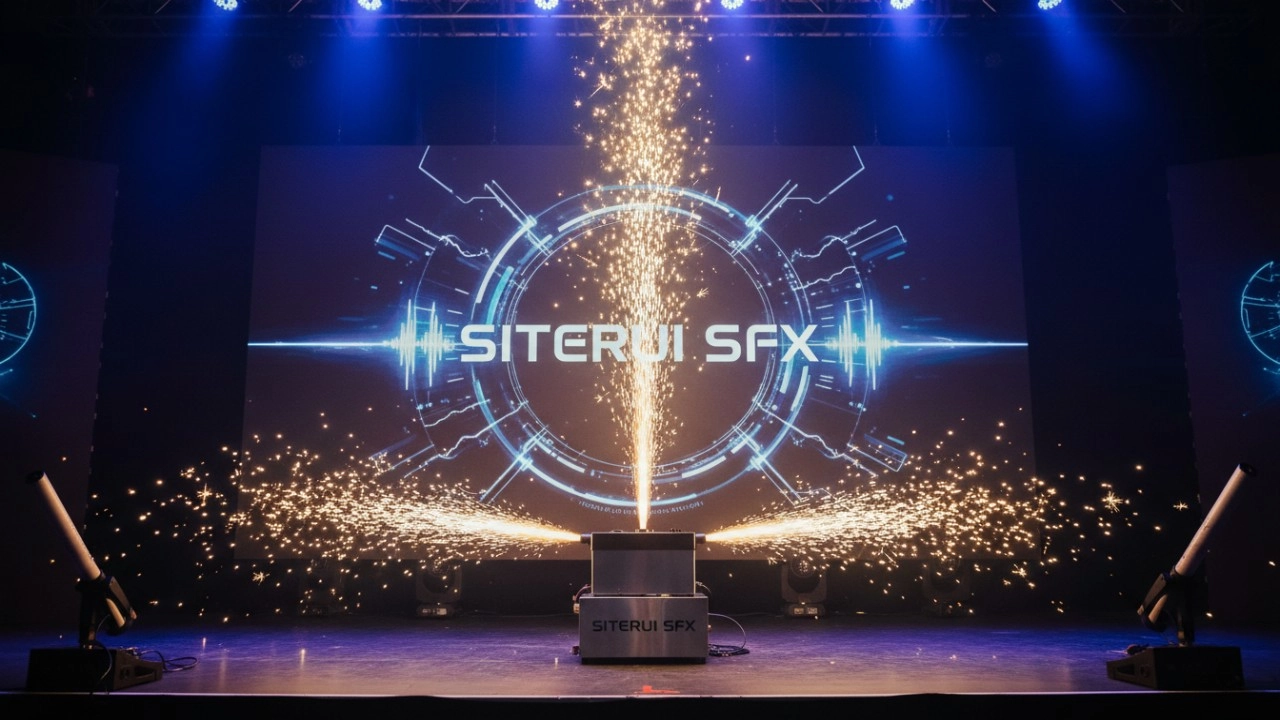
Advancements in Cold Spark Machine Technology for Indoor Events
Exploring Core Categories of Professional Stage Special Effects (SFX) Equipment
Recommended for you


Stay Informed or Connect with Us
Have questions about our latest news or updates?
Reach out to us—we're here to provide more insights or media support.
Email: sales01@strlighting.com
WhatsApp: +86 189 2232 4800
© 2025 Siterui SFX All Rights Reserved.
 Scan QR Code
Whatsapp: +8618922324800
siteruisfx_stage_equipment
Siterui
SITERUI-SFX
STRlighting
@siterui.sfx