
What safety protocols and training do operators need?
1) What exact clearances, surface protections and overhead restrictions are required when placing a cold spark machine on a wooden stage with acoustic foam above?
Answer:
Cold spark fountains and indoor-safe sparks are lower-thermal-output than traditional pyrotechnics, but they are not risk-free. For deployments over combustible surfaces (wood stage) or under acoustic foam, follow this step-by-step protocol:
- Pre-check manufacturer installation manual: manufacturers provide required minimum clearances, mounting orientation, and recommended non-combustible barriers. Use the manufacturer's spec sheet as the primary design constraint.
- Maintain a minimum lateral and vertical clearance as recommended by the manufacturer. If the manufacturer gives no specific number for a unique surface (like foam above), treat the foam as a combustible and consult the Authority Having Jurisdiction (AHJ)/fire marshal before use.
- Protect wood and floor finishes: place a non-combustible barrier (steel plate, fire-rated plywood with metal top, or stage-rated aluminum tray) under the machine sized at least 300–500 mm beyond the unit footprint to protect against stray granules and heat-exposed deposits.
- Overhead foam: acoustic foam and baffles are often combustible. Either remove/replace foam within the potential plume zone, or install a certified non-combustible shield (rated for the environment) between the spark path and the foam. Never rely on distance alone if the foam is directly over the unit.
- Use stage drape/fire-rated materials: ensure any drapes within the area are NFPA-compliant flame retardant and that current fire-retardant treatment certificates are available.
- Perform a dry run and hotspot inspection: run the unit at expected output for full scenario duration, then inspect surfaces after cool-down for scorch marks or smoldering residue. Document with photos and temperature probe readings if possible.
- Document and sign: include photos, clearance diagrams, and surface protection evidence in the site safety file to present to the AHJ or insurance underwriter.
These steps will minimize ignition risk and present a professional, auditable safety case for indoor cold spark use.
2) How do I calculate how many cold spark machines and placement patterns I need for a 500-person indoor venue while meeting fire marshal requirements?
Answer:
Calculation and layout for a crowd-scale indoor show is a mix of physics, manufacturer output charts, and jurisdictional safety requirements. Use this method:
- Determine focal points and sightlines: map stage, audience seating, aisles, emergency exits and ceiling heights.
- Consult manufacturer output charts: manufacturers publish effective spark plume height, spread angle, and particle travel distance at various power settings. Use the conservative (maximum) measurements for planning.
- Zoning approach: divide the stage/venue into demand zones (front-stage, center-stage, stage edges). Assign machines to zones so that plumes do not overlap into prohibited areas (exits, low ceilings, combustible rigging).
- Spacing rule of thumb: for many modern cold spark brands, maintain center-to-center spacing equal to the plume width at your chosen intensity plus 0.5–1.0 m buffer. Always cross-check with manufacturer guidance.
- Number of units: calculate required units by coverage area (e.g., for a 10 m stage width, using 1.5 m plume widths you’d need ~7 units at 1.5 m spacing). For a 500-person venue with elevated sightlines, prioritize frontal and center effects to minimize units required while maintaining visual impact.
- Safety overlays: overlay evacuation routes and ensure no effect projects toward aisles or exits. If plumes project toward occupied zones, reduce intensity or move fixtures.
- Submit plan to AHJ: present the plan to the fire marshal ahead of the event with machine specs, spacing diagrams, operational SOPs and emergency stop locations. The AHJ may require additional spacing or a standby fire warden.
- Insurance and COI: include the plan with your Certificate of Insurance (COI) and any manufacturer training certificates to help secure coverage.
This procedure balances visual coverage with regulator expectations and creates defensible documentation for permits.
3) What exact operator training, documentation and emergency procedures insurers and venues expect for cold spark machine use?
Answer:
Insurers and venues require operators to demonstrate competence and risk management. The following training and documentation checklist reflects common underwriting and venue expectations:
Operator training (required elements):
- Manufacturer-certified operator course (hands-on & written). Many manufacturers offer on-site or e-learning certification — keep certificates on file.
- Fire-safety training: basic fire extinguisher use, recognition of smoldering materials, and evacuation procedures. Where required, venue-level fire warden training.
- Electrical safety and DMX control training: understanding of mains isolation, grounding best practices and DMX fail-safe operation.
- Emergency stop and contingency drills: operators must be able to execute emergency stop procedures and communicate with venue staff under stress.
Documentation to carry on-site:
- Manufacturer specification sheet and safe operating procedures (SOPs).
- Risk assessment and method statement (RAMS) specific to the event and venue.
- Maintenance log and recent inspection record for each machine.
- Insurance Certificate of Insurance (COI) naming the venue where required.
- Training certificates for the assigned operator(s).
- AHJ approvals / permit documentation.
Emergency procedures (minimum):
- Clearly labeled E-stop accessible to operator and a designated stage manager.
- Prearranged communication plan with venue security and fire staff (radio channel, phone list).
- On-site Class ABC or CO2 extinguishers as recommended by the venue/AHJ.
- Post-incident logging and sample retention: if any unexpected smoldering or particulate is found after use, log the event, preserve samples (photographs & material swabs) and notify venue/AHJ and insurer.
Providing this full suite demonstrates professional competence and substantially improves venue and insurer confidence.
4) How can I independently test and verify manufacturer safety claims (temperature, particle ignition risk, residue) before my first commercial deployment?
Answer:
Independent verification reduces liability and improves acceptance by venues. A practical test protocol:
- Obtain manufacturer data: start with published plume dimensions, material safety data sheets (MSDS) for spark granules, and recommended settings.
- Test rig setup: replicate the intended installation (orientation, surface types, ceiling height) in a controlled test area; ensure a fire extinguisher and AHJ/qualified safety officer are present.
- Temperature testing: use a calibrated thermocouple and IR gun to measure surface temperatures on nearby materials during and after a full-duration run. Document peak temperatures and cool-down curve.
- Ignition margin tests: place representative samples of stage materials (treated wood, acoustic foam, stage carpet) at the minimum manufacturer-recommended clearance and operate the unit at max output for the event duration. Inspect for charring, melting or ignition after a sensible cool-down period (30–60 minutes).
- Residue and cleanup: evaluate residue collection needs. Collect and catalogue deposits for material analysis if necessary; confirm compatibility with stage vacuuming and waste procedures.
- Particle size and fall-out: measure fallout pattern and particle size distribution visually and with adhesive traps to ensure debris lands where expected.
- Independent lab / third-party testing: for critical or high-liability events, engage a local testing lab or accredited pyrotechnic test facility to produce a formal test report you can present to AHJ/insurers.
- Record everything: date, operator, machine serial number, granule batch, settings, weather (if outdoor), measurements, and photos/videos.
A documented test package will greatly improve confidence and make permit discussions more straightforward.
5) How do I integrate DMX control, software interlocks and fail-safe E-stops so a cold spark system meets live-show safety protocol?
Answer:
Integration must guarantee predictable behavior under normal and failure states. Implement this architecture:
- Hardware E-stop first: ensure a hard-wired emergency stop circuit (NC contact) that cuts mains power to the machine or its ignition subsystem. This must override DMX/software signals.
- Redundant interlocks: use two-layer interlocks — a hardware relay chain and a DMX/software interlock. If either layer signals fault, the system must default to safe (no ignition) state.
- DMX implementation best practices: implement RDM where possible for device monitoring (fan speed, temperature, fault codes). Use reserved channels for 'arming' and 'firing' with two-step arm/firing sequences to reduce accidental triggers.
- Timeouts and watchdogs: build software watchdog timers so the machine auto-disables if it loses continuous DMX or control signal for a configurable window (e.g., 1–3 seconds for shows demanding rapid recovery).
- Redundant communications: where possible, use separate control paths (primary DMX line and a secondary wired E-stop) so a control desk failure won't create an unsafe power state.
- Status indicators and remote monitoring: visible LEDs on the unit and remote status readouts on the lighting desk (OK, ARMED, FAULT) so stage crew can see machine state at a glance.
- Pre-show interlock verification: include a pre-show checklist and automated interlock test that proves E-stop, interlocks and DMX arming function before audience entry.
- Change control and lockout: restrict DMX patching and operational changes to trained crew and log all changes.
This layered approach ensures that both software and hardware failures default to a safe state appropriate for live events.
6) What PPE and routine maintenance schedules must operators follow to prevent mechanical failure and occupational hazards over the equipment lifecycle?
Answer:
Operators and rental houses must implement PPE, maintenance, and lifecycle management to reduce failure and health risks:
PPE for operators:
- Eye protection: ANSI/EN-rated safety glasses when loading granules and during maintenance.
- Respiratory protection: if granule dust is present during refill, use an N95/FFP2 respirator or local exhaust ventilation. Refer to the granule MSDS for specific requirements.
- Gloves: cut-resistant gloves for handling metal parts during maintenance; heat-resistant gloves if handling recently-run hardware.
- Hearing protection: if machines include fans or are used near loud audio equipment during maintenance.
Daily pre-show maintenance (checklist):
- Visual inspection for physical damage, corrosion, loose fasteners.
- Verify mounting security, brackets and safety wires.
- Confirm clean air intakes and exhaust; clear any granule buildup.
- Check emergency stop and indicator lights.
- Verify DMX connectivity and test a low-power firing cycle.
Scheduled maintenance (weekly/monthly depending on use):
- Clean internal chambers of residue following manufacturer cleaning procedure.
- Inspect heating/ignition elements and fans for wear. Replace bearings or fans per hourly-use thresholds in the manual.
- Confirm firmware/software is current and that device logs are reviewed for recurring faults.
- Granule feed mechanism: inspect feed screws, hoppers, or cartridges and replace worn parts.
Lifecycle and traceability:
- Keep a per-unit maintenance log (hours accumulated, repairs, part replacements, and operator sign-offs).
- Retire or perform major overhaul after the manufacturer's recommended service life or after an incident.
These practices lower the likelihood of on-stage failures and protect crew health.
Concluding summary — Advantages of cold spark machines
Cold spark machines (cold spark fountains/indoor-safe spark fountains) deliver dramatic visual effects with significantly lower perceived thermal risk and easier indoor deployment compared with conventional pyrotechnics. Advantages include: reduced need for outdoor-only restrictions, less residue and smoke, DMX-friendly control for synchronized shows, and often faster turnover for multi-show venues. When combined with manufacturer training, documented testing, layered interlocks and good PPE and maintenance regimes, cold spark systems provide a powerful, auditable effect solution for concerts, corporate events and indoor stages.
For a custom quote or to discuss site-specific safety planning and operator training, contact us at www.siteruisfx.com or email sales01@strlighting.com. We provide manufacturer-trained operator courses, test protocols and full RAMS packages to help secure permits and insurance approvals.
Comparing Professional Fog and Haze Machines for Stage Lighting in 2026
High-Impact CO2 Jet Systems for Electronic Dance Music Festivals in 2026
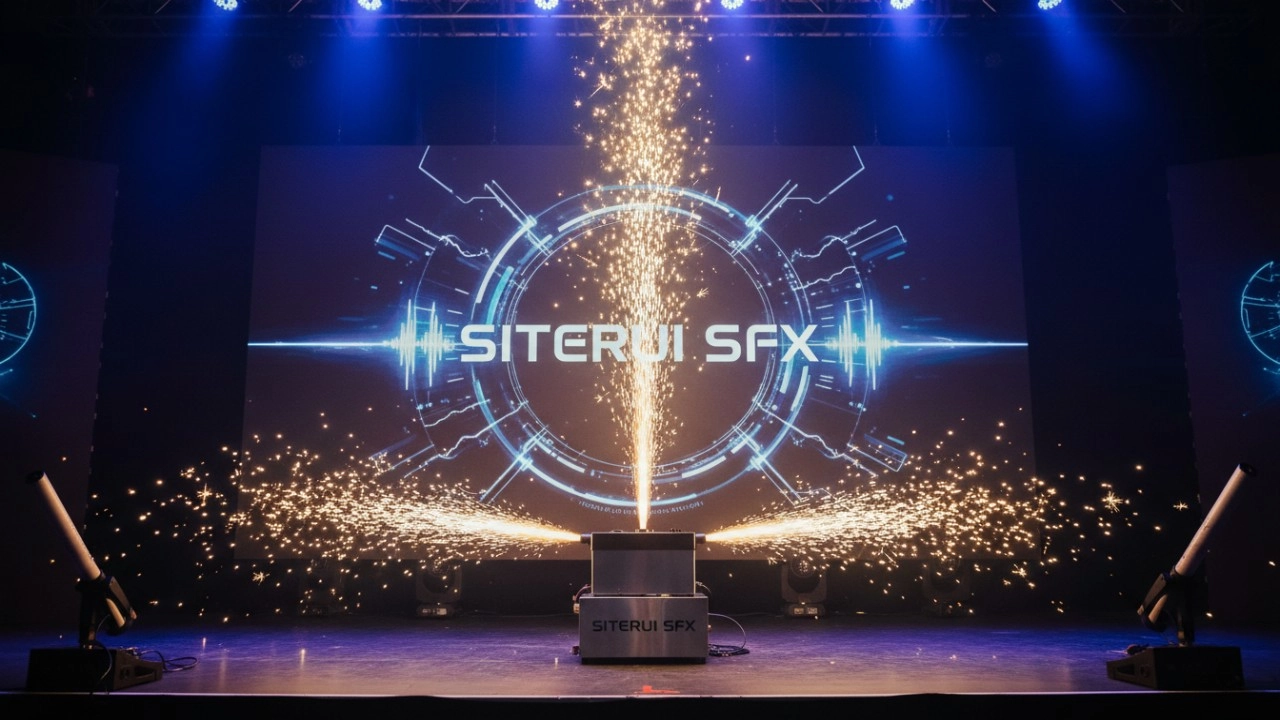
Advancements in Cold Spark Machine Technology for Indoor Events
Exploring Core Categories of Professional Stage Special Effects (SFX) Equipment
Recommended for you


Stay Informed or Connect with Us
Have questions about our latest news or updates?
Reach out to us—we're here to provide more insights or media support.
Email: sales01@strlighting.com
WhatsApp: +86 189 2232 4800
© 2025 Siterui SFX All Rights Reserved.
 Scan QR Code
Whatsapp: +8618922324800
siteruisfx_stage_equipment
Siterui
SITERUI-SFX
STRlighting
@siterui.sfx