
What is the ROI of investing in a cold spark machine for venues?
1) How many cold spark machines do I need to get even coverage for a 500-seat theater without tripping power circuits?
A correct equipment count balances visual coverage, sightlines, and electrical capacity. Don’t rely on marketing photos — plan with the machine’s published throw, pattern width, and power draw. Steps to calculate:
Gather manufacturer specs: pattern width (m), throw height (m), power draw (W), control protocol (DMX/trigger), and duty cycle. If spec sheets conflict, ask the vendor for measured output diagrams and certified power draw tests.
Visual coverage plan: divide your stage/house area into coverage zones based on pattern width. Example method: if one cold spark fountain produces a 3 m wide visible curtain at 6 m distance, a 10 m stage front requires four units spaced ≈2.5–3.3 m apart to achieve overlapping coverage and avoid dark gaps.
Electrical load check: sum the power draw of all units that will operate simultaneously and compare to available circuit capacity. Use the venue’s breaker rating and apply continuous load rules (NEC-style guidance: treat continuous loads as 80% of breaker capacity for safety). Example workflow:
- Total watts = sum of unit wattages.
- Convert to amps: Amps = Watts / Voltage (e.g., 230V or 120V depending on locale).
- Ensure Amps ≤ 80% of breaker Amps for continuous operation (e.g., on a 20 A/120 V circuit, stay below 16 A).
Practical tips:
- Distribute machines across multiple circuits to avoid nuisance tripping. Label circuits on-site and map connectors for each machine in your load-in plan.
- Consider in-rig relays or DMX-controlled power distribution to stagger starts if total inrush current is high.
- If manufacturer power specifications are unclear, request measured inrush and running current curves. A qualified electrician should verify distribution and approve any temporary rigging.
Why this is a pain point: buyers often undercount units because product photos exaggerate coverage and manufacturers list pattern widths under ideal conditions. Planning by measured specs avoids last-minute rentals or dark spots in the show.
2) What is the true per-event consumable cost for a 4‑minute grand finale and monthly consumable budgeting for a wedding venue?
Consumables (spark granules) are a recurring cost and a common blind spot. The correct approach is to use manufacturer consumption rates then apply local pricing. Steps:
Get consumption rate from the manufacturer: grams (g) or kilograms (kg) per minute per machine during the programmed emission. If not listed, request measured consumption at specified puffs/levels. Manufacturers commonly publish “g/min at full output.”
Price-per-unit: check current market cost for the approved consumable (often sold as branded granular blend) and its packaging (e.g., 1 kg bag). Prices vary by region and supplier; factor shipping and hazardous-material handling if applicable.
Example calculation (illustrative — replace with specs from your vendor):
- Suppose a unit consumes 40 g/min at full output.
- A 4-minute finale = 160 g per machine.
- If you run 4 machines, total = 640 g (0.64 kg).
- If the branded granules cost $25/kg, consumable cost for the finale = 0.64 × $25 = $16.
Monthly budgeting for a wedding venue:
- Estimate average usage per event (e.g., 2 minutes average use vs. 4-minute finales) and events/month.
- Add a 10–15% buffer for test runs, training, and wasted/contaminated granules.
Why this matters: some venues budget rental fees but overlook the annual cost of consumables, freight, and hazardous-material handling fees. By planning per-gram consumption and stocking based on lead times, you avoid show-day shortages and sudden extra costs.
3) What documentation and tests will fire marshals and insurers actually accept for indoor cold spark use?
Fire marshals and insurers look for evidence-based risk mitigation, not marketing claims. Required and strongly recommended documents/tests:
- CE/ETL/UL markings where applicable and copies of the certification reports.
- Manufacturer’s technical datasheet showing thermal output, particulate emission rates, and recommended clearances.
- MSDS (Material Safety Data Sheet) for the spark granules and any cleaning solvents used onsite.
- Third-party test reports: surface temperature measurements at typical distances, char tests on common stage materials, and smoke/particulate emission tests (if required).
- A venue-specific risk assessment and method statement: location, rigging, operator qualifications, evacuation plans, and proposed mitigations.
- Proof of operator training: certificates or signed logs showing staff trained on the equipment and emergency shut-down procedures.
Operational evidence that helps approvals:
- A controlled live demo in the venue with representative materials and documentation of measured surface temps.
- Photographic evidence from other certified venues with comparable construction and occupancy loads.
Why this is a pain point: many online answers say “it’s safe,” but inspectors want documented measurements and a clear operating plan. Preparing documentation in advance reduces delays and rejected permits.
4) Can cold spark machines be integrated with DMX/light rigs and show-control systems reliably, and what adapters or protocols are needed?
Integration is a major value—synchronous effects sell High Quality experiences. Most professional cold spark machines support one or more control methods: standalone trigger, DMX512, contact closure, or network protocols (Art-Net/sACN) via a gateway. Integration checklist:
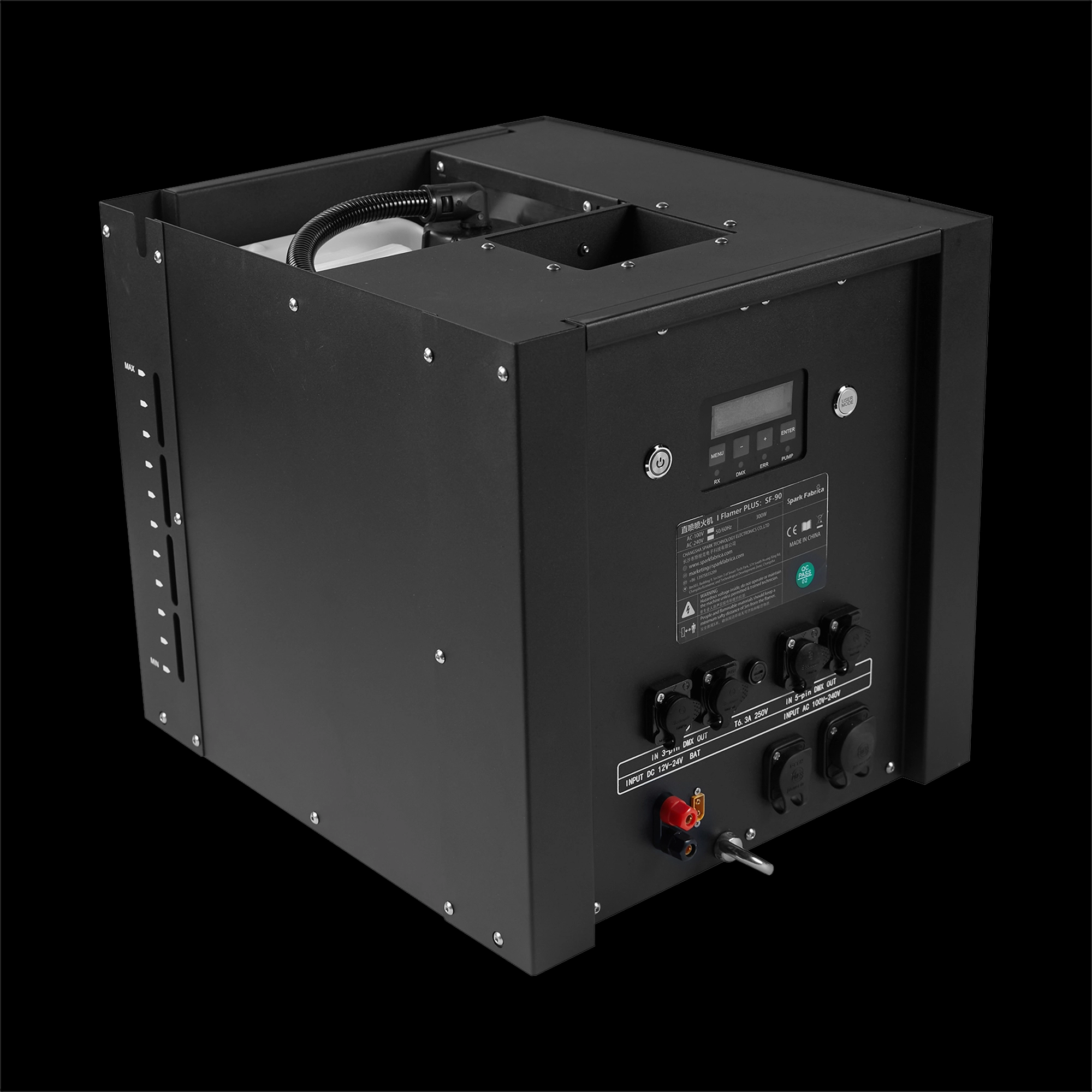
- Confirm available control inputs on the unit: DMX in/out, external trigger (dry contact), remote UART, or Ethernet.
- For DMX512 control: determine channel layout (trigger, duration, intensity, safety lock). Many units use 1–4 channels; request the published channel map and test in your console.
- For networked shows: use an Art-Net/sACN-to-DMX node when the unit is DMX-only. Ensure frame rates and latency are within your cue timing requirements.
- For large rigs: consider an industrial DMX splitter and isolation transformers to prevent ground loops.
- Safety interlocks: implement E-STOP and watchdog timers in your show-control software so a lost DMX signal defaults the unit to safe/off state.
Practical tips:
- Pre-program test cues and run rehearsal tests with full house sound and lighting to validate timing and visibility.
- Label DMX addresses and keep spare DMX terminators and patch cables onsite.
Why this is a pain point: beginners assume plug-and-play; in reality, channel mapping, latency, and safety interlocks require planning and a small test budget to avoid show-day problems.
5) For rental houses running ~200 events/year, what is the realistic lifespan, common failure modes, and maintenance schedule for cold spark machines?
Rental operations stress equipment. Expect mechanical wear in feed systems, motors, and nozzles rather than catastrophic failure of a heating element (these are ‘cold’ devices). Recommended maintenance program:
- Daily/Between-event checks: clean feed path and hopper; check for moisture or contaminants in granules; run a short startup test to confirm feed motor and nozzle function.
- Weekly (or every 10–15 shows): inspect drive motors, auger/screw feed for wear; lubricate moving parts per vendor guidance; check and tighten electrical connectors.
- Monthly (or every 30–50 shows): full inspection: replace wear items such as feed screws/nozzles if scoring or deformation appears; check bearings and motors for play; verify DMX connectors and wiring integrity.
- Annual (or every 200–300 shows): send to manufacturer or qualified service center for calibration, replacement of critical wear parts, and firmware updates.
Common failure modes:
- Feed jamming from contaminated/湿 granules — strict dry storage and particle screening reduce this.
- Motor or gearbox wear in the feed mechanism — keep rotation hours logged and maintain spare parts.
- Nozzle erosion/clogging — replace nozzles on schedule and stock spares.
Lifecycle expectations: with proper maintenance, a professional-grade unit used heavily (200 events/year) should remain serviceable 3–7+ years before requiring major overhauls. Heavy-use fleets will incur predictable mid-life part costs (motors, controllers) — budget 10–20% of initial purchase per year for maintenance/replacements in a rental house model.
Why this is a pain point: online threads understate ongoing service costs. Planning spares and service intervals improves uptime and profit predictability.
6) What is the ROI model for buying cold spark machines vs renting per event — break-even timelines with real-world example scenarios?
ROI depends on four levers: purchase price, rental cost avoided, added revenue per event, and annual operating costs (consumables, maintenance, insurance increments). Use a clear formula and scenario analysis.
Core formula: Break-even events = (Purchase price + Annual fixed incremental costs × years considered) / (Rental cost avoided per event + Additional net revenue per event - Variable cost per event)
Define terms:
- Purchase price: cost to buy X units (use real quotes for your vendor).
- Rental cost avoided: what you would otherwise spend to rent equivalent units per event.
- Additional net revenue: direct High Quality packages or incremental ticket/sponsorship revenue attributable to the effect.
- Variable cost per event: consumables + per-event labor and power.
Conservative example (replace values with your quotes):
- Buy 4 units at $4,500 each = $18,000 total purchase.
- Rental cost avoided: average local rental = $600 per event for comparable set of machines.
- Consumables & per-event labor: $40/event.
- Additional direct revenue when offered as a High Quality package: $300/event (weddings/celebrations sellability).
Net saving per event = Rental avoided ($600) + Additional revenue ($300) - Variable cost ($40) = $860.
Break-even events = $18,000 / $860 ≈ 21 events.
Interpretation:
- If you use the units for 30 events/year and charge a High Quality or avoid rentals, you pay back the purchase within one season.
- If you only use them 8–10 times/year, renting may be cheaper.
Sensitivity factors:
- If rental market average is lower ($350), break-even increases (18,000 / (350+300-40)=18,000/610≈30 events).
- Factor in depreciation, insurance increases, storage costs.
Practical ROI improvements:
- Offer tiered High Quality packages, sponsor-branding opportunities, or higher-priced ticket packages for shows with cold spark effects.
- Use machines across multiple revenue streams: in-house shows, private events, corporate, and rentals to other promoters.
Why this is a pain point: online ROI answers often list vague payback times. This model gives an actionable spreadsheet approach — plug in your local rental rates, your negotiated purchase price, and your expected utilization to get a real break-even figure.
Concluding summary: advantages of investing in cold spark machines for venues
Cold spark fountains deliver high-impact, low-heat indoor pyrotechnic effects that expand programming flexibility without the open-flame risks of traditional pyrotechnics. Advantages for venues include: decreased per-event rental costs when utilization is moderate-to-high; strong upsell opportunities (High Quality packages and enhanced ticket pricing); easier regulatory clearance compared with hot pyrotechnics when backed by manufacturer tests and operator training; and reliable DMX integration for synchronized shows. The key to maximizing ROI is measured planning: obtain precise manufacturer specs, document tests for inspectors/insurers, implement a disciplined maintenance program, and model revenue against local rental market rates.
For a custom ROI calculation, load plan, or to request verified technical specs and service quotes, contact us for a quote at www.siteruisfx.com or email sales01@strlighting.com.
Comparing Professional Fog and Haze Machines for Stage Lighting in 2026
High-Impact CO2 Jet Systems for Electronic Dance Music Festivals in 2026
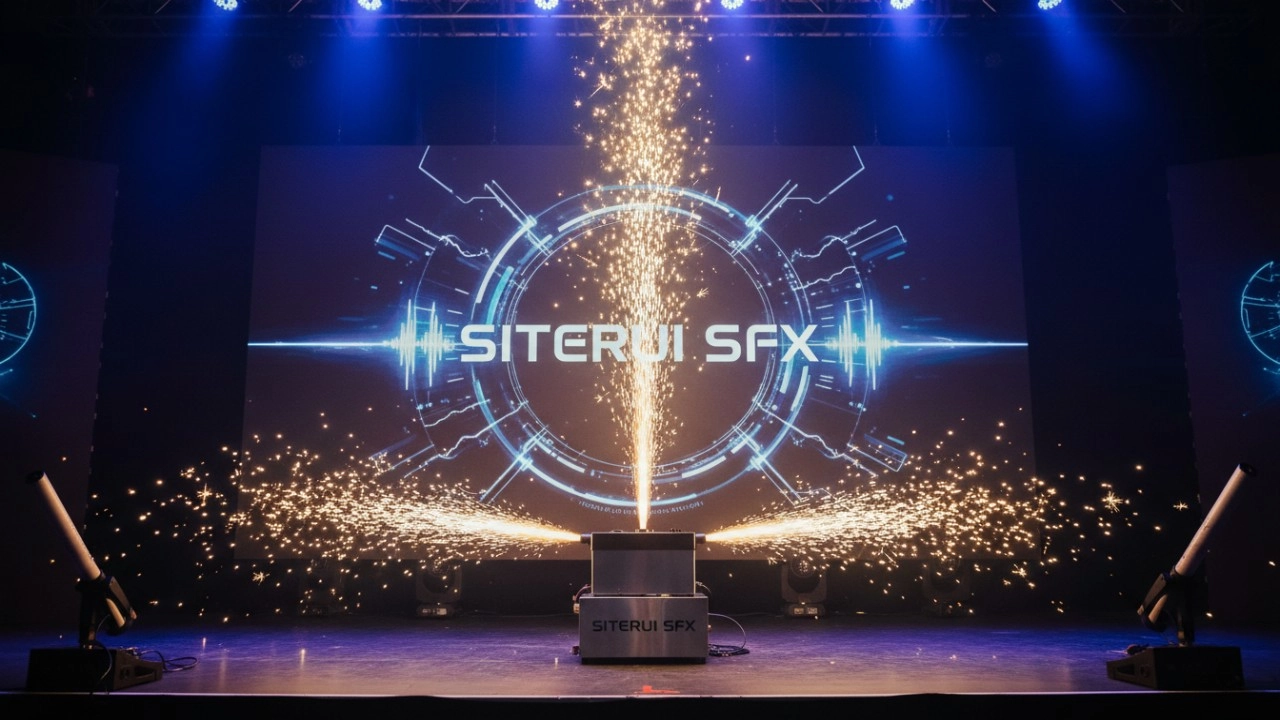
Advancements in Cold Spark Machine Technology for Indoor Events
Exploring Core Categories of Professional Stage Special Effects (SFX) Equipment
Recommended for you


Stay Informed or Connect with Us
Have questions about our latest news or updates?
Reach out to us—we're here to provide more insights or media support.
Email: sales01@strlighting.com
WhatsApp: +86 189 2232 4800
© 2025 Siterui SFX All Rights Reserved.
 Scan QR Code
Whatsapp: +8618922324800
siteruisfx_stage_equipment
Siterui
SITERUI-SFX
STRlighting
@siterui.sfx