
how long does a commercial fog machine last with heavy rental use? | Insights by Siterui SFX
1. How many service hours can I realistically expect from a mid-range commercial fog machine under continuous 8–10 hour daily rental use?
For heavy rental use (multiple 8–10 hour events per week) realistic lifespan depends on build quality, duty cycle, and maintenance. Industry-observed ranges are:
- Entry-level/prosumer units: typically 500–1,500 operational hours before major service or part replacement is needed.
- Mid-range rental-grade machines: typically 1,500–3,000 hours when maintained to manufacturer guidelines.
- Top-tier / modular commercial rigs (high-grade heaters, replaceable pumps, designed-for-rental): 3,000–5,000+ hours with proactive servicing.
Why the wide range? Heater assemblies, pumps and PCBs are wear items. Heater cycles and high-duty operation create thermal stress on elements and solder joints; pump contamination (residue from fog fluids) and buildup in nozzles shortens MTBF. Heavy rental houses that insist on regular preventive maintenance and use recommended fluid and cleaning protocols regularly push equipment toward the upper end of these ranges. Fog machine lifespan therefore ties directly to service discipline and fluid selection.
Signs you’re nearing end-of-life include slower output for the same settings, longer heat-up times, intermittent firing faults, increased pump noise and repeated clogging despite cleaning.
2. Which components fail most often under heavy rental use and what are realistic repair or replacement intervals and costs?
Common failure points for rental fleets:
- Pump (diaphragm/gear): frequent failure due to fluid contamination and wear. Typical replacement interval under heavy use: 300–1,000 hours. Estimated parts cost: $30–$250 depending on pump type and brand; labor if outsourced varies.
- Heating element / heater block: will degrade with thermal cycling. Replacement interval: 1,000–3,000 hours depending on load. Estimated parts cost: $100–$700.
- Solenoids, valves and fittings: 300–1,200 hours depending on fluid residue. Parts cost: $10–$150 each.
- PCBs / control boards and connectors: electronics fail from heat and repeated power cycling. Intermittent faults can appear at 1,000+ hours; replacement: $150–$800.
- Fans and blowers: bearings wear; 1,000+ hours typical. Parts cost: $20–$200.
Practical advice: for rental houses budget for spare pumps and common consumables per unit in your fleet and schedule proactive parts replacement at service intervals. Many rental shops plan a wear-replacement cycle (swap pump or O-rings) every 300–500 hours for heavy-use machines to avoid event failures.
3. How does fog fluid choice (water-based vs oil-based, low-residue vs economy) impact longevity under heavy rental schedules?
Fog fluid chemistry is one of the single largest determinants of maintenance frequency and lifespan:
- Water/glycol-based fluids (common theatrical fog): lower residue when high-quality fluids are used; still leave glycols that can build up in nozzles and pumps. Good distilled-water-based formulas reduce mineral buildup.
- Oil-based (mineral oil) and heavy haze fluids: typically leave more oily residue and tend to accumulate in heater channels and nozzles, increasing cleanings and pump wear.
- Economy/unknown-brand fluids: often contain additives or impurities that accelerate clogging and corrosion.
Recommendations for rental fleets:
- Use manufacturer-recommended fluids or known professional brands; avoid generic cheap fluids for units in heavy rotation.
- Keep separate machines dedicated to oil-based or water-based fluids when possible — cross-contamination increases cleaning and failure risk.
- Flush regularly with the recommended cleaner or distilled water per manufacturer instructions. This reduces carbonization and extends pump life.
Choose fluids marked low residue for machines expected to run long duty cycles. Proper fluid selection reduces cleaning time, unscheduled repairs, and extends heater and pump life appreciably.
4. What preventative maintenance schedule (daily/weekly/monthly at specific hour marks) will maximize uptime and lifespan for rental machines?
A formal preventive maintenance routine directly increases lifespan and reduces event failures. For heavy rental use, adopt the following schedule:
- Daily (or between each rental night): visual inspection, empty/inspect fluid reservoir, run a short 1–2 minute flush with distilled water or manufacturer cleaner (if fluid allows), check for leaks, verify fan and pump noise are normal.
- Weekly (or every 50–100 hours): clean external filters and air intakes, check and tighten fittings, inspect wiring and connectors, test DMX/remote controls, perform a longer 5–10 minute cleaning flush.
- Monthly (or every 200–300 hours): replace O-rings and small seals, inspect pump diaphragm for wear, deep-clean heater/boiler section per manufacturer procedure (commercial cleaners or prescribed vinegar/distilled-water protocol if allowed), verify firmware and control board indicators, and check and replace any worn gaskets.
- Major Service (every 1,000–1,500 hours): replace pump and critical wear components preemptively, test heater efficiency, clean or replace fans, and perform bench testing for full performance curve.
Record all maintenance in a log per unit (hours in service, fluid types used, cleaning dates, part replacements). This enables data-driven retirement or rebuild decisions and supports warranty claims or resale value.
5. Can I extend a unit’s lifespan by changing operating parameters—duty cycle, heat settings or by retrofitting components?
Yes, operating strategy and sensible upgrades can extend life:
- Reduce duty cycle: shorter bursts and longer soak/recovery times reduce thermal stress on heaters and solder joints. For heavy use, avoid continuous full-output operation for hours on end.
- Lower average heat/turn down output when full volume isn’t needed; heating elements last longer at lower steady-state temperatures.
- Use external distribution (fans, ducting) so the machine can run at moderate output for the same stage effect.
- Upgrade consumables: high-quality pumps, stainless fittings, and improved seals will tolerate rental strain better.
- Consider modular or serviceable models: machines designed so pumps, heater blocks and boards are quick-swappable reduce downtime and extend in-service life because worn components are replaced before causing collateral damage.
Caveat: major retrofits to control boards or heaters can void warranties and require expertise. Work with experienced service techs or factory-authorized technicians.
6. How do I model total cost of ownership (TCO) and cost-per-hour for heavy-rental fog machines?
TCO lets you price rentals and plan fleet replacement. Use this formula:
Total Cost of Ownership per hour = (Purchase Price + Cumulative Maintenance + Cumulative Repairs + Labor + Disposal/Depreciation) / Total Expected Hours
Example conservative scenarios for planning:
- Mid-range unit: Purchase $3,000, expected lifetime 2,000 hours, average annual maintenance & repairs $600 (apportioned over lifespan $1,200). TCO = ($3,000 + $1,200)/2,000 = $2.10 per operational hour (exclude labor and shipping).
- High-end rental unit: Purchase $6,000, expected life 4,000 hours with strict maintenance, average repairs $1,000 ($1,000 apportioned) → TCO = ($6,000 + $1,000)/4,000 = $1.75/hr.
Add routine labor (in-house technician time), spare parts inventory cost and capital depreciation into your final pricing. Rental houses generally budget an annual maintenance reserve equal to ~5–15% of fleet book value for heavy-use fleets.
Practical tip: track real failures and repair costs per unit in the first 500 service hours; this empirical data will quickly refine your TCO assumptions.
Conclusion: advantages of choosing rental-grade commercial fog machines and disciplined maintenance
Investing in rental-grade fog machines, using manufacturer-recommended fluids, and following a disciplined preventive maintenance schedule yields lower long-term operating costs, higher uptime, fewer event failures and better performer reliability. Modular and serviceable machines reduce downtime because worn pumps and heaters can be swapped quickly, extending in-service life and improving resale value. For rental houses, budgeting for spare pumps, seals and a scheduled service every 200–300 hours under heavy use is an industry best practice that maximizes MTBF and minimizes surprise costs.
Contact us for a quote and fleet evaluation: www.siteruisfx.com — sales01@strlighting.com
Top 10 Cold Spark Machines for 2026: A Deep Dive into Performance, Powder Life, and Durability
How to Choose a Snow Machine: The Definitive Checklist to Avoid Costly Mistakes (2026 Guide)
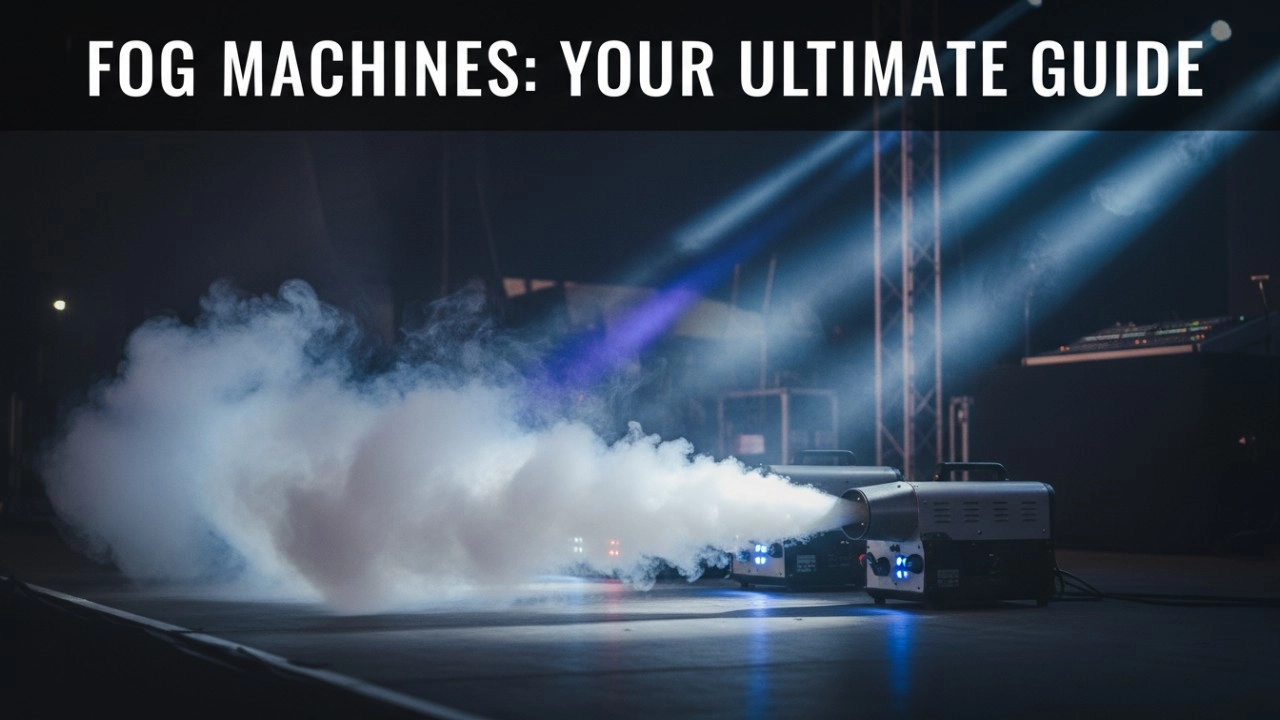
Fog Machines Explained: Technology, Control Systems, and Modern Stage Applications
Haze Machines Explained: The Definitive 2026+ Guide to Effects, Selection & Future Innovations
Recommended for you


Stay Informed or Connect with Us
Have questions about our latest news or updates?
Reach out to us—we're here to provide more insights or media support.
Email: sales01@strlighting.com
WhatsApp: +86 189 2232 4800
© 2025 Siterui SFX All Rights Reserved.
 Scan QR Code
Whatsapp: +8618922324800
siteruisfx_stage_equipment
Siterui
SITERUI-SFX
STRlighting
@siterui.sfx