
What chemicals are safe for fogging machines in disinfection?
Fogging Machines & Safe Chemicals: Practical Q&A for Stage SFX Buyers
Fogging machines are used both for theatrical special effects and for no‑touch disinfection. Many beginners assume any liquid labeled “disinfectant” or “fogging fluid” is interchangeable — that’s a costly mistake. Below are 7 specific, pain‑point–driven questions that rarely receive up‑to‑date, actionable answers online. Each question includes practical steps you can apply when selecting foggers, chemicals and procedures for stage SFX or venue disinfection.
1) Can I put household bleach (sodium hypochlorite) into an ULV or thermal fogger to disinfect rooms?
Short answer: Generally no — household bleach is usually not appropriate for fogging. Reasons:
- Corrosivity: Sodium hypochlorite vapors/corrosive aerosolized droplets rapidly corrode metal components, seals and pumps in many foggers, shortening equipment life.
- Toxic gas risk: Aerosolized bleach can form chlorine gas if mixed with acids or ammonia in the environment — a serious safety hazard for operators and occupants.
- Labeling & efficacy: Many bleach products are not labeled for ULV/thermal fogging; using a product contrary to its label often violates pesticide/ disinfectant regulations and may void warranties.
Practical step: Always check three things before using a chemical in any fogger: the fogger manufacturer’s compatibility list, the disinfectant’s label (it must explicitly permit fogging/ULV/thermal application), and workplace safety requirements (MSDS/SDS and local rules). If in doubt, choose an EPA‑registered disinfectant that lists fogging or cold/ULV application on its label.
2) Which chemistries are considered safe and effective for fogging machines, and can I fog while spaces are occupied?
Safe/effective fogging chemistry depends on machine type and the product label. Common chemistries used in fogging applications (when labeled for fogging) include:
- Hydrogen peroxide formulations (including accelerated hydrogen peroxide) — widely used in no‑touch disinfection systems when the product label permits aerosol application.
- Quaternary ammonium compounds (quats) — many quat products have ULV/thermal fogging approvals, but formulations and additives vary.
- Peracetic acid and vaporized hydrogen peroxide are used for higher‑level decontamination, but are more corrosive and require strict controls.
Occupied spaces: Most fogging/disinfector products require evacuation of people and animals during application and until the space is ventilated to safe levels. Only products that explicitly state safe use in occupied spaces (rare) should be considered for that scenario. Operator PPE and ventilation must follow product SDS and OSHA/NIOSH recommendations.
3) How do I match fogger type (thermal vs ULV/cold) to disinfectant chemistry?
Match by fluid base and droplet generation method:
- Thermal (hot) foggers vaporize a fluid and produce a dense visible fog. They typically require oil‑based fogging fluids or formulations designed for thermal fogging. Water‑based disinfectants usually are not suitable for thermal devices and can damage heating elements or create inconsistent chemistry.
- ULV (Ultra Low Volume) or cold foggers use mechanical atomization to make fine droplets (commonly described in the 5–50 µm range depending on device). These accept many water‑based disinfectants and insecticides — but only if the product label and the fogger manufacturer state compatibility.
Always consult the fogger manufacturer’s compatibility guidance. Using the wrong fluid can clog pumps, damage seals, void warranties and create safety hazards.
4) How do I calculate dose (amount to fog) and ensure adequate contact time in a room?
There’s no universal “ml per room” rule — the product label governs both dilution and required contact time. Use this stepwise method:
- Find the disinfectant’s label instructions for application method (ULV/thermal fogging) and the recommended application rate (often given as a volume per cubic meter or per surface area) and the required contact time.
- Calculate room volume in cubic meters (length × width × height).
- Compute the total product volume required: room volume × labeled ml/m3 (if the label provides an ml/m3 rate). If the label provides only a dwell/contact time after application, follow the manufacturer’s fogger run‑time charts to deliver the product volume recommended for that room size.
- After application, allow the full labeled contact time before wiping or reoccupying. Ensure ventilation to clear residual aerosol if the label calls for aeration before reentry.
Tip: Ask both the disinfectant vendor and the fogger OEM for an application chart: they often supply tables converting room volumes to fogger run time for their machine/product pairing.
5) What maintenance and flushing procedures prevent chemical damage and cross‑contamination in foggers?
Good maintenance extends machine life and prevents chemical residues from contaminating later runs:
- After each use, flush the system thoroughly with clean water (or a manufacturer‑approved neutralizing/flush solution) until the tank, lines and nozzle run clear.
- Avoid long‑term storage of corrosive chemistries in the machine. Immediately flush corrosive or viscous solutions from the system.
- Follow a periodic deep‑service schedule: inspect and replace diaphragms, seals, O‑rings and filters at OEM recommended intervals, and lubricate moving parts per the manual.
- Keep a chemical log (what was run, concentration, date) to avoid cross‑contamination and to help troubleshoot when residue build‑up occurs.
6) How does droplet size affect disinfection efficacy and surface wetting — what should I set my fogger to?
Droplet size determines how long particles remain airborne, whether they produce surface wetting or merely create an aerosol, and how distribution occurs:
- Smaller droplets (<10 µm) stay airborne longer and penetrate airflow, but may not deliver enough liquid to reliably wet surfaces to the required contact time.
- Larger droplets (>50 µm) settle quickly and can cause uneven wetting and dripping.
- ULV systems commonly target a droplet size range that balances airborne reach with surface wetting (often described in ULV specs). The correct droplet size depends on the product label and the desired outcome (surface disinfection vs. room misting).
Practical approach: Match droplet size to the chemistry and the label instructions. If the product requires visible surface wetting during application, set the device toward the larger end of the recommended range; if aiming to treat HVAC or high airflow areas, a smaller aerosol may be needed — but ensure surface contact time is still achieved.
7) Are there regulatory, insurance or documentation requirements I should know when purchasing fogging equipment for public venues or theaters?
Yes — taking shortcuts can create liability:
- Use only EPA‑registered disinfectants for purposes that match their label. Applying a disinfectant in a manner inconsistent with its label may be illegal and may affect claims or insurance coverage.
- Train operators and document procedures, SDS/MSDS handling, PPE used, and ventilation steps. Maintain logs of each fogging event (product, batch, dilution, room, operator, start/end times).
- Follow OSHA rules for worker protection when handling disinfectants and aerosols; implement respiratory protection and ventilation as required by the product SDS.
- Ask your insurer about coverage for fogging operations; some insurers require specific vendor training, PPE records and product labeling to pay out for related claims.
Buying checklist for stage SFX and disinfection purchasers
Use this quick checklist when evaluating vendors and chemicals:
- Confirm fogger type (thermal vs ULV) and the exact chemistries it supports.
- Obtain written compatibility statements from both the fogger OEM and the disinfectant manufacturer.
- Ask for an application chart (room volume → run time/dose) and a droplet‑size spec for the device.
- Verify the disinfectant is EPA‑registered for the target microorganism and for fogging application if you intend to use it for disinfection.
- Check maintenance, spare‑parts availability and service network — rapid access to replacement nozzles, diaphragms and pumps reduces downtime.
- Confirm operator training offerings and request SDS plus a written standard operating procedure (SOP) for your venues.
Siterui SFX — why it’s a strong choice for stage and venue buyers
Siterui SFX combines fogging hardware designed for theatrical reliability with materials‑compatibility testing and technical support tailored to venue operators. Key advantages:
- Device options for both thermal and ULV applications, with manufacturer documentation on compatible fluids and droplet characteristics.
- Service and spare‑parts availability to minimize event downtime — fast access to nozzles, pumps and seals.
- Pre‑sale support: help selecting the correct machine/chemistry pairing and providing application charts for venue volumes.
- Training and SOP templates for safe usage, PPE, and post‑application ventilation — helping venues meet OSHA and local safety expectations.
Final practical reminders
- Never improvise: always follow the disinfectant label and the fogger OEM manual.
- Prioritize operator training, PPE, ventilation and documentation — these are as important as machine selection.
- When in doubt about compatibility or safety, contact both the fogger OEM and the disinfectant manufacturer in writing before purchasing or applying product.
Sources
- U.S. Environmental Protection Agency (EPA) — List N: Disinfectants for Use Against SARS‑CoV‑2. (Accessed 2026‑02‑05) — https://www.epa.gov/pesticide-registration/list-n-disinfectants-use-against-sars-cov-2
- Centers for Disease Control and Prevention (CDC) — Cleaning and Disinfecting Your Facility. (Accessed 2026‑02‑05) — https://www.cdc.gov/coronavirus/2019-ncov/community/disinfecting-building-facility.
- Occupational Safety and Health Administration (OSHA) — Guidance on disinfectants and worker protection. (Accessed 2026‑02‑05) — https://www.osha.gov/coronavirus/control-prevention/disinfectants
- AIHA (American Industrial Hygiene Association) — Guidance materials on disinfectant use and re‑occupancy considerations. (Accessed 2026‑02‑05) — https://www.aiha.org
- Dyna‑Fog (Fogging equipment manufacturer) — Product pages and ULV/thermal guidance (manufacturer compatibility & droplet specs). (Accessed 2026‑02‑05) — https://dynafog.com
For custom equipment recommendations, compatibility testing or SOP templates tailored to theatre workflows and venue health requirements, Siterui SFX can provide pre‑sale consulting and post‑sale service to ensure safe, compliant fogging operations.
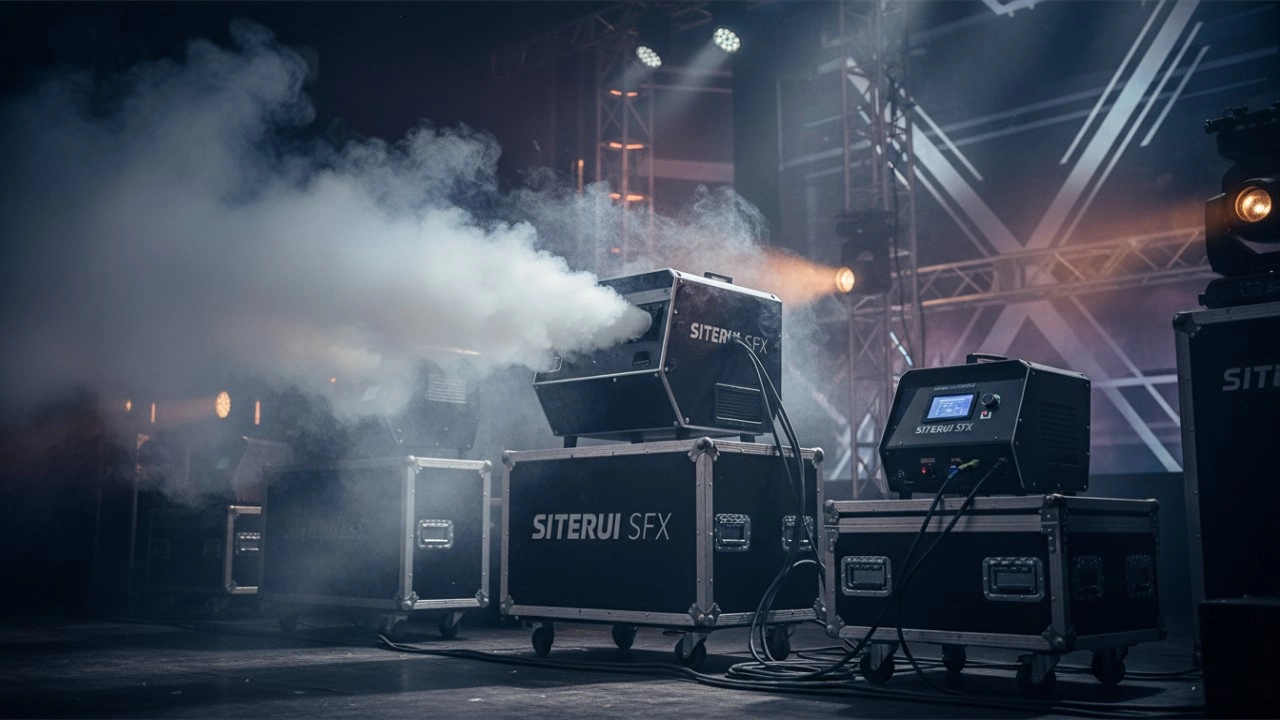
Comparing Professional Fog and Haze Machines for Stage Lighting in 2026
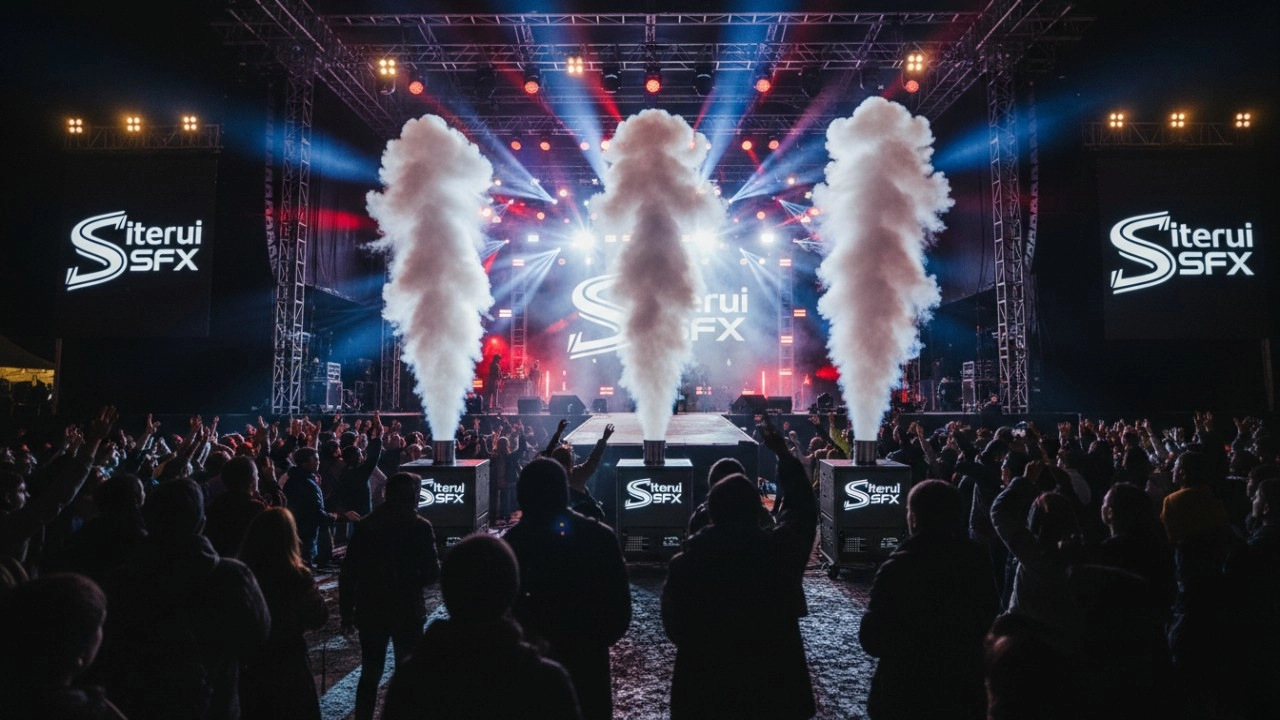
High-Impact CO2 Jet Systems for Electronic Dance Music Festivals in 2026
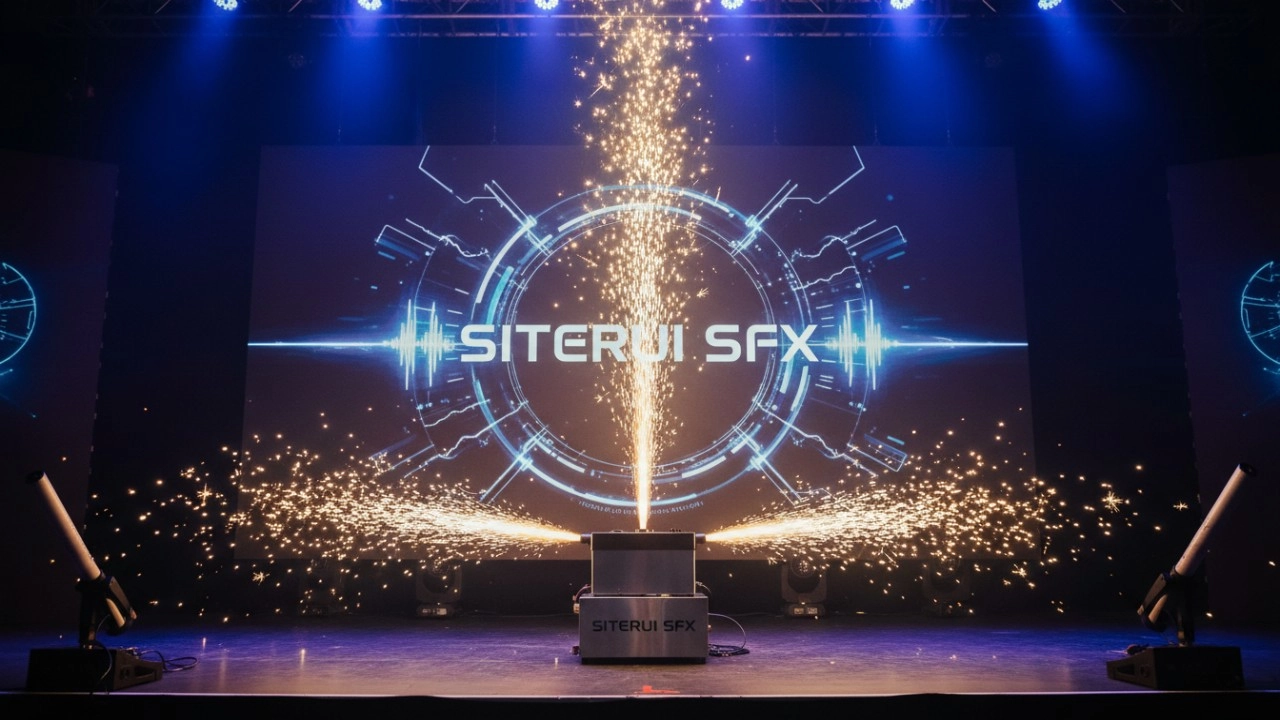
Advancements in Cold Spark Machine Technology for Indoor Events
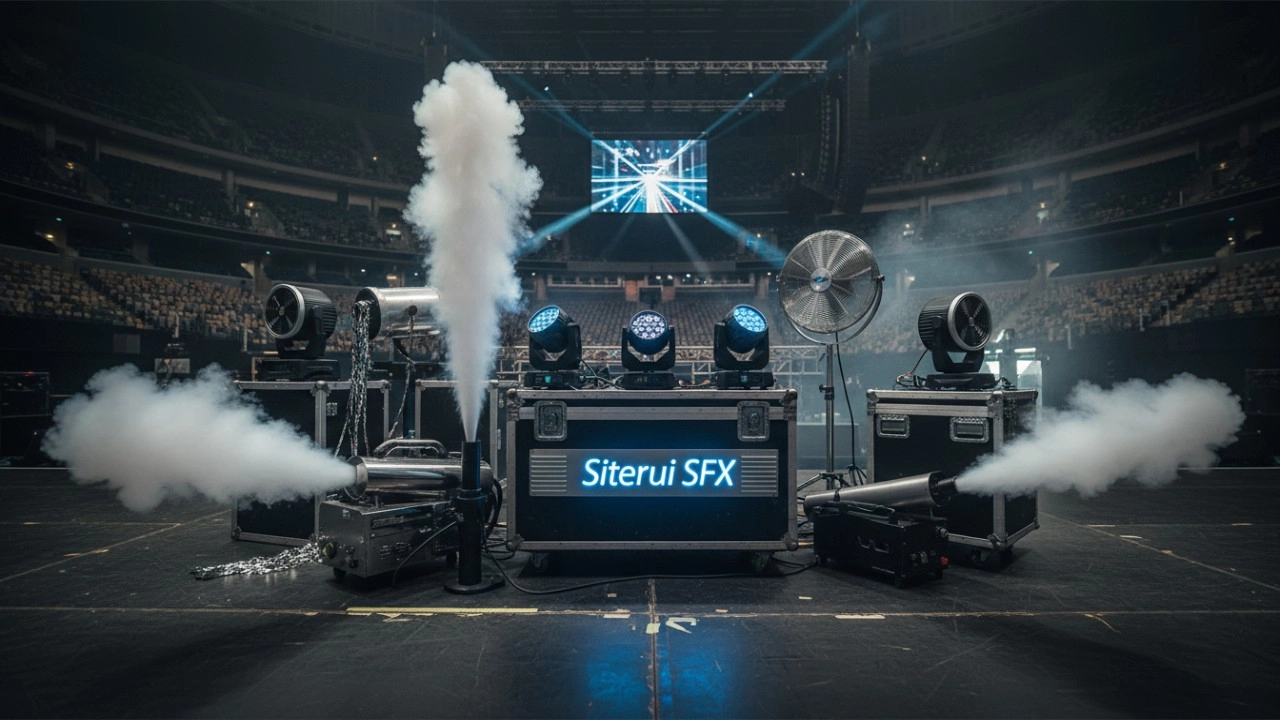
Exploring Core Categories of Professional Stage Special Effects (SFX) Equipment
Recommended for you


Stay Informed or Connect with Us
Have questions about our latest news or updates?
Reach out to us—we're here to provide more insights or media support.
Email: sales01@strlighting.com
WhatsApp: +86 189 2232 4800
© 2025 Siterui SFX All Rights Reserved.
 Scan QR Code
Whatsapp: +8618922324800
siteruisfx_stage_equipment
Siterui
SITERUI-SFX
STRlighting
@siterui.sfx