
how to choose the right commercial fog machine for large stage events? | Insights by Siterui SFX
As a stage special effects equipment expert, this guide answers six deep, frequently-asked long-tail questions that many beginners and even some buyers find poorly covered online. The answers focus on real buying-spec checks—fog output, duty cycle, DMX control, fog fluid safety, ventilation, power logistics, maintenance, and vendor evaluation—so you can select a commercial fog machine that reliably delivers the look you want for large stage events.
1) How do I calculate the required fog output to uniformly fill a large theater or arena within a target cue time (e.g., 20–40 seconds) without overwhelming performers?
Start by calculating the venue volume: length × width × height (m³ or ft³). Fog machines are commonly rated by volumetric output (m³/min or ft³/min) or fluid output (mL/min). Use the manufacturer’s volumetric rating where available.
Simple sizing method (practical, not absolute):
- Step 1 – Measure venue volume (V).
- Step 2 – Decide acceptable fill time (Tfill) for the cue (in minutes).
- Step 3 – Compute theoretical output required = V / Tfill.
- Step 4 – Adjust for real-world factors: HVAC air changes, stage rigging obstruction, and audience/performer safety. Multiply theoretical output by 1.5–3× to cover diffusion losses and ventilation pulling fog away. Use higher multiplier for arenas with strong HVAC or open house roofs.
Example (illustrative): a 50m × 30m × 12m stage house is 18,000 m³. For a 0.5-minute (30s) fill, theoretical output = 36,000 m³/min. After applying a 2× real-world factor, target rated output ≈ 72,000 m³/min (or distributed across multiple machines). In practice, large events rarely rely on a single unit; they use multiple units staged for even distribution and redundancy.
Key checks when talking to vendors or reading specs:
- Confirm whether the output rating is instantaneous plume volume or sustained discharge (some manufacturers report peak burst only).
- Ask for a time-to-fill estimate for your specific venue or for comparable venues they've serviced.
- Plan multiple machines and staggered firing if even coverage or rapid cue transitions are required.
2) What duty cycle, warm-up time, and continuous-run specs should I require for a fog machine when running long concerts with repeated cues?
For long concerts or repeated cues you need a machine rated for continuous, high-duty operation. Consumer and light-commercial units often have duty cycles < 25% and will overheat under concert schedules.
Minimum technical checklist:
- Duty cycle: prefer continuous-duty or explicit manufacturer rating for continuous operation; if listed as percentage, aim for ≥ 50% for moderate shows and continuous for multi-hour use.
- Warm-up time: pro units typically state warm-up in minutes—plan pre-warm before doors open. Short warm-up (<10 minutes) is convenient but ensure the machine supports repeated bursts without cool-down delays.
- Reservoir & refill: larger reservoirs or external pump-fed tanks reduce the need for mid-show refills. Inline fluid sensors and low-fluid interlocks prevent dry-fire damage.
- Thermal protection/overheat: machines should have built-in thermal cutout and clear restart procedures to minimize downtime.
Operational tip: job-specific redundancy is essential. Use at least one backup unit per critical stage zone and pre-stage warmed spare machines to swap in if a unit trips.
3) How can I ensure consistent fog density and even coverage across a wide stage using multiple fog machines—placement, DMX timing, and fluid matching?
Consistency is technical planning, not guesswork. Uneven density is typically caused by differing output settings, mismatched fluids, poor placement, or network timing delays.
Best-practice steps:
- Use identical models and firmware where possible. Same units with identical nozzle geometry and pump characteristics ensure more consistent particle size and output.
- Match fog fluid batch and formulation across all machines. Different fluids (or even different batches) can change fog particle density, color under lights, and hang time.
- Placement: distribute units along key stage axes, aiming for overlapping coverage rather than single-point blasts. Low-angle units create ground-hugging fog; elevated units produce mid-air effects—combine both for depth.
- DMX or control timing: synchronize cue macros via DMX512/Art-Net/RDM to fire units with precise offsets. Account for plume travel time—units farther from the center may need earlier triggers.
- Calibrate: run pre-show calibration cues with metered intervals and visually confirm coverage under production lighting. Adjust nozzle angle and machine output curves in the control console.
Pro tip: Use smoke/haze density meters or simple light-scatter sensors in key zones during tech rehearsals to quantify uniformity rather than relying solely on sight.
4) Which fog fluid types are safest and compliant for indoor large events, and how do they affect visibility, residue, fire detectors, and HVAC interaction?
Fog fluid chemistry matters for safety, detector interaction, performer comfort, and equipment longevity. Common base chemistries are glycol-based (propylene glycol or triethylene glycol), glycerin blends, and water-based fluids; hazers often use specialized water-glycol blends producing fine aerosols that hang longer with lower visibility impact.
Safety and compliance checklist:
- Always request the Safety Data Sheet (SDS/MSDS) from fluid suppliers and review inhalation, skin, and residue data. Use fluids specifically labeled for theatrical indoor use.
- Detector interaction: some dense fog outputs can trigger smoke detectors. Coordinate with the venue and fire marshal; use detector masking protocols, or use low-obscuration haze or engineered smoke approved for indoor use. Test with the venue’s detection system in a controlled pre-show test.
- Residue and equipment: heavier glycerin blends can leave visible residue on lighting and optical surfaces over time; water-based low-residue fluids reduce maintenance on moving lights and lenses.
- Performer comfort: check for respiratory irritation warnings on SDS and run a performer sensitivity test during rehearsals.
- Regulatory: follow local fire code and venue policies. Some jurisdictions require vendor documentation or pre-approval from the fire marshal for theatrical smoke/fog use.
Manufacturer tip: use manufacturer-recommended fluids to keep the warranty valid and to ensure the fog machine’s nozzle and pump compatibility.
5) What power, cabling, weatherproofing, and logistics must I plan for when deploying commercial fog machines at outdoor festivals or multi-venue tours?
Large stage events impose logistical constraints beyond raw output. Your purchasing and production planning should address electrical load, IP rating for weather, transport, rigging, and storage.
Electrical and logistics checklist:
- Power draw and circuits: consult the machine’s rated amperage and required voltage. Pro units can require dedicated 20A (or higher) circuits or 230V supply. Always plan separate circuits for multiple units to avoid tripping a single breaker.
- Cable management: use stage-rated power distro and appropriately sized cables. For touring, maintain labelled multicore power looms for fast deployment.
- IP and weatherproofing: for outdoor use look for IP-rated enclosures or protective housings; standard indoor units are not weatherproof and should be placed in covered, ventilated enclosures or use weather-rated covers.
- Noise and ventilation: pumps and fans can create audible noise; plan machine placement and acoustic baffling as needed. Outdoors, pay attention to wind direction which significantly affects plume behavior.
- Transport & mounting: choose units that fit flight cases or road cases, and confirm safe rigging points. Quick-release brackets and DMX thru-chains reduce rigging time.
Operational advice: Document a site-specific deployment plan (power layout, machine positions, backup units, and safe refill points). For festivals, pre-assign crew to monitor fluid levels and thermal status between acts.
6) How should I assess manufacturer warranty, spare parts availability, and total cost of ownership (TCO) — including fluid consumption and maintenance — when deciding to buy vs. rent high-output fog machines?
Buying vs renting depends on frequency of use, maintenance capability, and long-term costs. TCO includes purchase price, consumables (fog fluid), spare parts, scheduled maintenance, and service downtime risk.
Buying-vs-renting decision framework:
- Frequency of use: buy if you run regular large events (monthly/weekly) and can amortize purchase plus maintenance. Rent if usage is occasional or requirements vary widely per event.
- Fluid consumption: estimate fluid consumption per hour under your planned cues (manufacturers often publish fluid burn rates). Multiply by expected hours per year to budget fluids and storage logistics.
- Spare parts & service network: confirm local repair centers, parts lead times (nozzles, pumps, heaters), and whether the manufacturer provides on-site support for tours. Short lead times are critical for tours and festivals.
- Warranty & extended service agreements: compare base warranty coverage, optional extended warranty that covers wear parts, and return-to-base vs. on-site service terms.
- Resale and trade-in: high-quality commercial units retain value. Factor projected resale price after useful life into TCO models.
Procurement tip: require vendors to provide a two-year maintenance plan quote and consumables estimate based on your production schedule. This lets you compare apples-to-apples between purchase and rental offers.
Concluding summary: advantages of choosing the right commercial fog machine for large stage events
Choosing the correct commercial fog machine (right fog output, compatible fog fluid, continuous-duty design, DMX control, proper power and weather ratings, plus a solid spare-parts and service plan) delivers consistent visual impact, decreases on-site risk, reduces downtime, and lowers long-term costs. Properly sized and spec’d fog equipment protects performers and audiences, simplifies tech rehearsals, and preserves lighting and optical equipment by reducing residue and unnecessary overuse.
For a tailored recommendation, supply your venue dimensions, typical cue schedule, HVAC profile, and whether the show is indoor or outdoor. Contact us at www.siteruisfx.com or email sales01@strlighting.com for a custom quote and site-specific deployment plan.
Top 10 Cold Spark Machines for 2026: A Deep Dive into Performance, Powder Life, and Durability
How to Choose a Snow Machine: The Definitive Checklist to Avoid Costly Mistakes (2026 Guide)
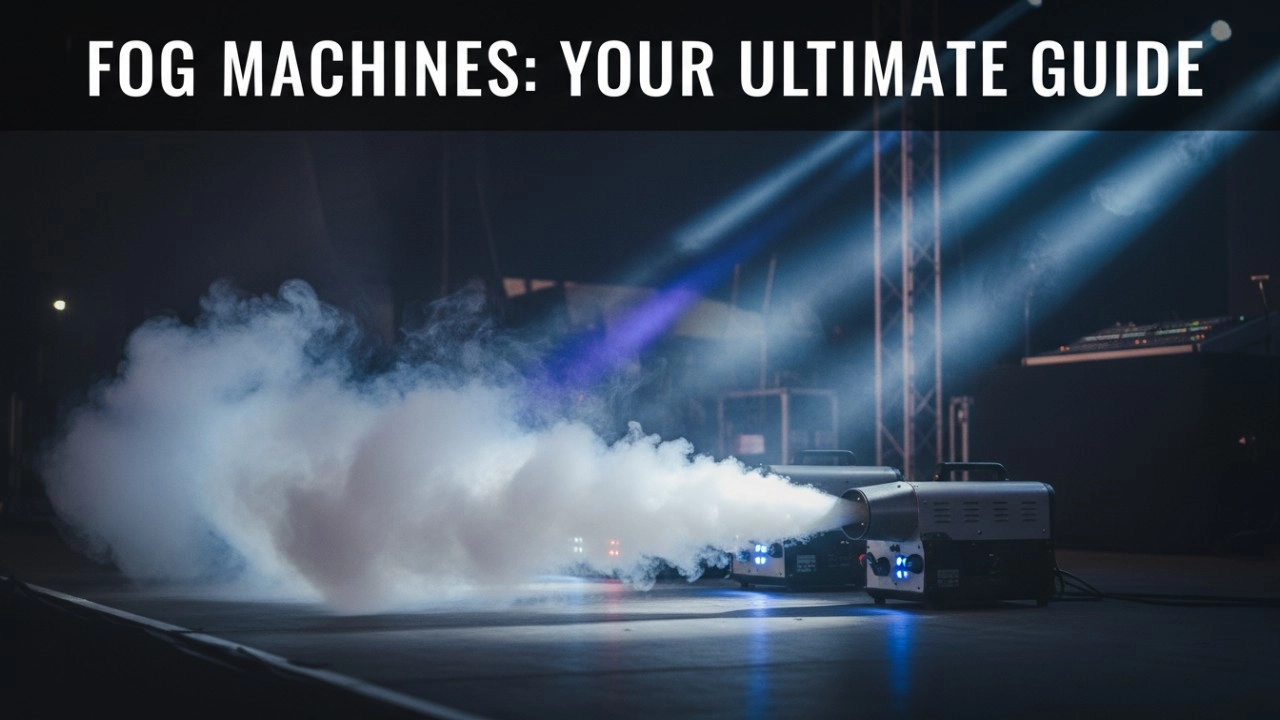
Fog Machines Explained: Technology, Control Systems, and Modern Stage Applications
Haze Machines Explained: The Definitive 2026+ Guide to Effects, Selection & Future Innovations
Recommended for you


Stay Informed or Connect with Us
Have questions about our latest news or updates?
Reach out to us—we're here to provide more insights or media support.
Email: sales01@strlighting.com
WhatsApp: +86 189 2232 4800
© 2025 Siterui SFX All Rights Reserved.
 Scan QR Code
Whatsapp: +8618922324800
siteruisfx_stage_equipment
Siterui
SITERUI-SFX
STRlighting
@siterui.sfx