
What safety precautions are needed when using foggers?
Fogging Machine Safety & Procurement: 6 Under-Answered Questions for Stage Effects Buyers
As a stage special effects equipment professional, choosing and operating a fogging machine (fogger) safely is as important as artistic effect. The answers below focus on specific procurement and operational pain points that are frequently glossed over online. Each section gives concrete procedures, checks, and decision criteria you can apply when buying or operating foggers in theatres, touring rigs, houses of worship, or film sets. Throughout the article you’ll see practical references to fog fluid types, DMX control, detector interaction, maintenance, exposure monitoring, and electrical safety that matter when evaluating stage special effects equipment.
1) How can I verify that a specific fogging machine is compatible with a particular fog fluid without voiding warranty or damaging the heater?
Why this matters: Manufacturers sometimes list broad categories (glycol-based or oil-based) but fluids vary in viscosity, additives, and residue potential. Using the wrong fluid can clog pumps, coat heaters, cause corrosion or cause warranty denial.
Actionable verification steps:
- Request the machine's official fluid compatibility list from the manufacturer or distributor. This is the primary authoritative source for warranty compliance.
- Obtain the MSDS/SDS of the fluid and the machine. Compare chemical families: propylene glycol, dipropylene glycol, glycerol, and mineral oil have different flashpoints, residues and solvent properties. If an SDS shows solvents or additives not commonly used in theatre fluids, seek clarification.
- Ask for or review the heater element material and pump type. Stainless steel or specific plated heaters handle organic glycols differently than plain alloys. Progressive cavity pumps tolerate higher-viscosity fluids better than some gear pumps.
- Perform a bench test (small volume) under warranty-safe conditions: run one short cycle (5–10 minutes) with the fluid, then inspect outlet, tubing and heater surfaces for residue or discoloration. Document the test and get manufacturer concurrence in writing if possible.
- Prefer fluids from recognized stage suppliers (MSDS available, theater-grade) rather than generic or industrial fog fluids. Venue operators often ban mineral oil-based fluids because they leave oily residues on rigging and lighting fixtures.
Procurement tip: Include a clause in purchasing/distribution contracts that specifies allowed fluid families for warranty validity, and require the supplier to certify compatibility in writing for touring use.
2) How do I measure and validate crew and audience exposure to fog aerosols during a run of shows?
Why this matters: Repeated show runs, pre-show rehearsals and load-ins can create cumulative exposures that concern operators, employees and venue managers. Generic reassurances (it’s safe) aren’t sufficient for risk-averse stakeholders or regulatory reviews.
Concrete validation workflow:
- Engage an industrial hygienist for a baseline assessment. They will define sampling strategy, select instrumentation and interpret results against occupational guidelines.
- Use both real-time and integrated sampling: a particle counter (optical/aerosol photometer) for immediate concentrations and a gravimetric/integrated sampler for mass-based analysis and chemical lab confirmation (to identify the fluid constituents actually present in the air).
- Sample at representative positions: performer breathing zone, FOH audience center, and backstage. Also sample during set-up, rehearsal and at peak fog output to capture worst-case exposures.
- Compare measurements to relevant guidance: consult the fluid SDS for recommended exposure controls and refer to public health/occupational guidance (OSHA, NIOSH) and local regulations. If SDS lists no OELs (common for proprietary blends), use conservative precautionary limits and document control measures.
- Implement and document administrative controls if required: reduce fog duty cycle, increase ventilation, alter fogger placement, or rotate staff to limit individual exposure time.
Record-keeping: Maintain exposure logs, instrument calibration certificates and a copy of the hygienist's report in the venue safety file — this supports both safety and compliance during inspections.
3) What practical maintenance schedule prevents clogging and extends pump/heater life for touring or heavy rental fogging machines?
Why this matters: Touring rigs and rental fleets experience varied fluids and operators. Poor maintenance leads to mid-run failures and costly downtime.
Recommended maintenance regimen (operationally realistic and widely used in pro rental houses):
- After every use: Flush the system with a manufacturer-approved flush solution or at minimum with distilled water (if compatible) until output clears. This prevents concentrated residues from hardening in nozzles and heater jackets.
- Weekly (for frequent use): Remove and inspect nozzles, strainers and quick-release fittings. Clean or replace inline filters. Check tubing for hardening or discoloration and replace if necessary.
- Monthly: Inspect pump seals, O-rings and electrical connectors. Lubricate pump shaft or recommended parts per manual. Verify DMX and control interlocks operate correctly.
- Per season or manufacturer hours interval: Have a certified technician perform an internal inspection—heater element integrity, thermal cutouts, pressure relief valves and PCB checks. Keep a maintenance log with hours and service actions.
- Use only recommended tubing and fittings; avoid improvised materials that degrade under heat or in contact with glycol-based fluids.
Procurement checklist: When buying, ask for spare parts availability (nozzle kits, pump rebuild kits), field-service manuals, and whether the vendor offers scheduled maintenance contracts for touring equipment.
4) How can I prevent false fire alarms and coordinate with venue fire detection systems when using foggers?
Why this matters: False alarms disrupt performances, incur fines and may damage relationships with local fire authorities. Detectors respond to aerosols differently and theater fog can trigger photoelectric smoke detectors and beam detectors if not managed.
Mitigation steps:
- Early engagement: Notify the local fire authority and the venue's fire alarm monitoring company well before first use. Obtain any required permits or written approvals and follow their conditions (some require a fire watch or alarm pre-programming).
- Understand detector types and siting: Photoelectric detectors are sensitive to light-scattering particles produced by theatrical fog. Aspirating or very sensitive detectors in plenums may need temporary isolation or adjusted sensitivity during performances (only with authority approval).
- Position fogging machines strategically: Keep machine output away from detection zones, vents and beams. Use directional nozzles and ducting to confine dispersion paths and reduce localized particle density near detectors.
- Use lower-output haze or variable duty cycles for scenes near detectors. Haze (smaller particle size, continuous low output) often achieves visibility goals with lower instantaneous particle concentrations than short bursts of dense fog.
- Document controls and test runs: Run the planned fog cues during a supervised test with fire/maintenance staff present and record detector responses. If detectors are triggered, refine placement and duty cycles until the system is reliable.
Tip: Never tamper with or permanently disable detectors. Any sensitivity adjustments or zoning changes must be performed by certified fire alarm technicians and approved by authorities.
5) For choreography-heavy shows, how do I choose between a standard fogging machine and a low-lying fog system to reduce slip and breathing risks?
Why this matters: Low-lying effects (dry ice or chilled glycol-based fog) create dramatic looks close to the stage floor but bring additional hazards: condensation, surface residue and CO2 concentrations when using dry ice.
Decision matrix and safety controls:
- Artistic requirement: If you need a thin floor layer that hugs the ground, low-lying systems (glycol chilled or dry-ice systems) are appropriate. For volumetric mid-air effects and light-beam enhancement, a conventional fogging machine or hazer is better.
- Slip and residue control: Low-lying fogs often produce liquid residues on the floor, especially in enclosed spaces and when chilled. Implement anti-slip flooring treatments, throttled fog output during dancer entrances, and post-show floor inspections. Test floor friction with a tribometer if available.
- Asphyxiation and CO2: Dry ice sublimation elevates ambient CO2 locally. For enclosed or poorly ventilated spaces, monitor CO2 and ensure sufficient fresh-air makeup. Chilled glycol low-lying machines do not produce CO2 but rely on the same fog fluids — treat fluid exposure risks similarly.
- Operator control: Use interlocked control schemes (DMX512 or remote key-switch) that allow the operator to kill fog output instantly if performers report slip or breathing issues. Ensure operators are trained to cut fog immediately.
Procurement tip: If purchasing for dance-heavy productions, choose a fogging machine or low-lying system vendor who can provide slip-test data and references from other dance companies or venues.
6) What safety precautions are needed when using foggers?
Why this matters: Generic admonitions (use common sense) don't help technical crews, venue managers or buyers demonstrate they met due diligence for audience and crew safety.
Comprehensive precautions (operational checklist):
- Know the fluid: Always have and review the SDS/MSDS for the fog fluid. Train operators on the documented hazards, first aid measures, recommended PPE and spill procedures.
- Ventilation and air management: Ensure the HVAC system provides adequate fresh-air dilution for the expected fog duty cycle. If unsure, consult an HVAC engineer or industrial hygienist and consider temporary increases in outside air during shows with heavy fog use.
- Personal protective equipment (PPE): For operators handling concentrated fluids, use chemical-resistant gloves and eye protection. For cleaning or dealing with residues, use appropriate gloves and ensure good hand hygiene.
- Electrical safety: Use only grounded circuits and GFCI-protected supplies where water or condensation is possible. Inspect power cables for damage; avoid daisy-chaining high-current devices. Adhere to IP ratings for the unit in damp environments.
- Training and written procedures: Create SOPs (standard operating procedures) for set-up, cueing, emergency shutoff, cleaning, and storage. Train all operators and keep a runbook or cue sheet with fog timing and duty cycles.
- Audience and performer considerations: Post notices if effects could affect sensitive groups (asthma, migraines). Allow staff or audience to opt out from exposure zones, and provide alternate seating if practical. For performers, include fog exposure in rehearsal planning so they can acclimate.
- Fire-safety coordination: As above, get pre-approval from fire authorities. Do not use fluids that are labeled flammable. Keep flammable materials away from foggers’ hot surfaces.
- Monitoring and escalation: Install local particle or CO2 monitors when using novel effects or during long runs. Define clear escalation: fault → operator shutdown → notify stage manager → notify venue management/medical if needed.
- Labeling and storage: Store fluids in original labeled containers, in a cool dry area away from electrical panels. Keep spill kits and absorbents on site and provide secondary containment for bulk storage.
- Documentation: Keep records of training, equipment maintenance, SDSs, exposure measurements and correspondence with authorities — this demonstrates due diligence and supports insurance or regulatory reviews.
In short: combine correct fluid selection, engineering controls (ventilation, detector coordination), administrative controls (training, SOPs) and proper PPE to reduce risk to staff and audiences.
Closing: Why these procurement details matter for stage special effects equipment buyers
The choices you make when buying fogging machines — fluid compatibility, maintenance capacity, detector interaction planning, and measurement strategies — directly affect show reliability, crew safety, and venue relationships. Addressing the six specific, operational questions above reduces downtime, prevents false alarms, preserves warranties, and ensures you can produce the intended artistic result without avoidable risk.
Siterui SFX Advantage
Siterui SFX brings decades of professional experience in stage special effects equipment and a full-service approach: certified-compatible fogging machines, transparent SDS documentation, available maintenance contracts, and technical support for detector coordination and exposure monitoring. We supply CE/UL-vetted units, provide spare parts and on-tour service guidance, and help venues integrate fog and haze cues safely and repeatably. For tailored equipment specs, maintenance plans or on-site testing, contact Siterui SFX at www.siteruisfx.com or sales01@strlighting.com.
Contact us for a quote and to discuss a safety-first production plan: www.siteruisfx.com — sales01@strlighting.com
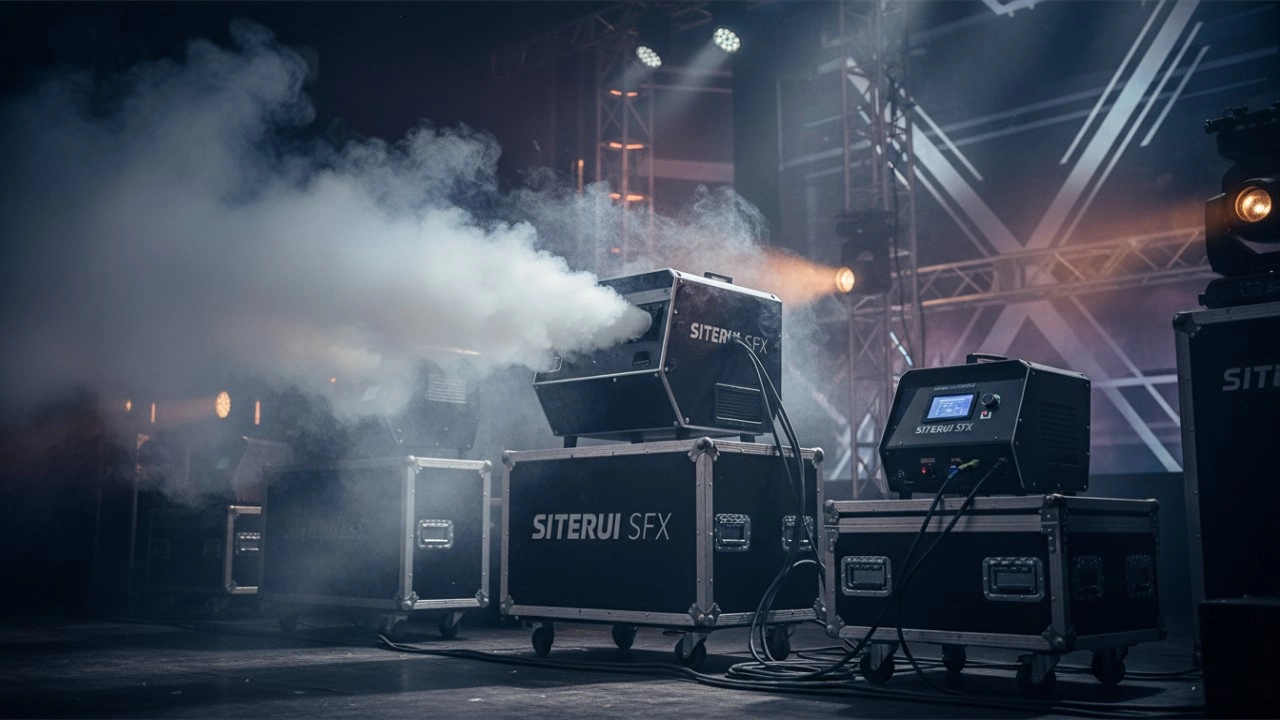
Comparing Professional Fog and Haze Machines for Stage Lighting in 2026
High-Impact CO2 Jet Systems for Electronic Dance Music Festivals in 2026
Advancements in Cold Spark Machine Technology for Indoor Events
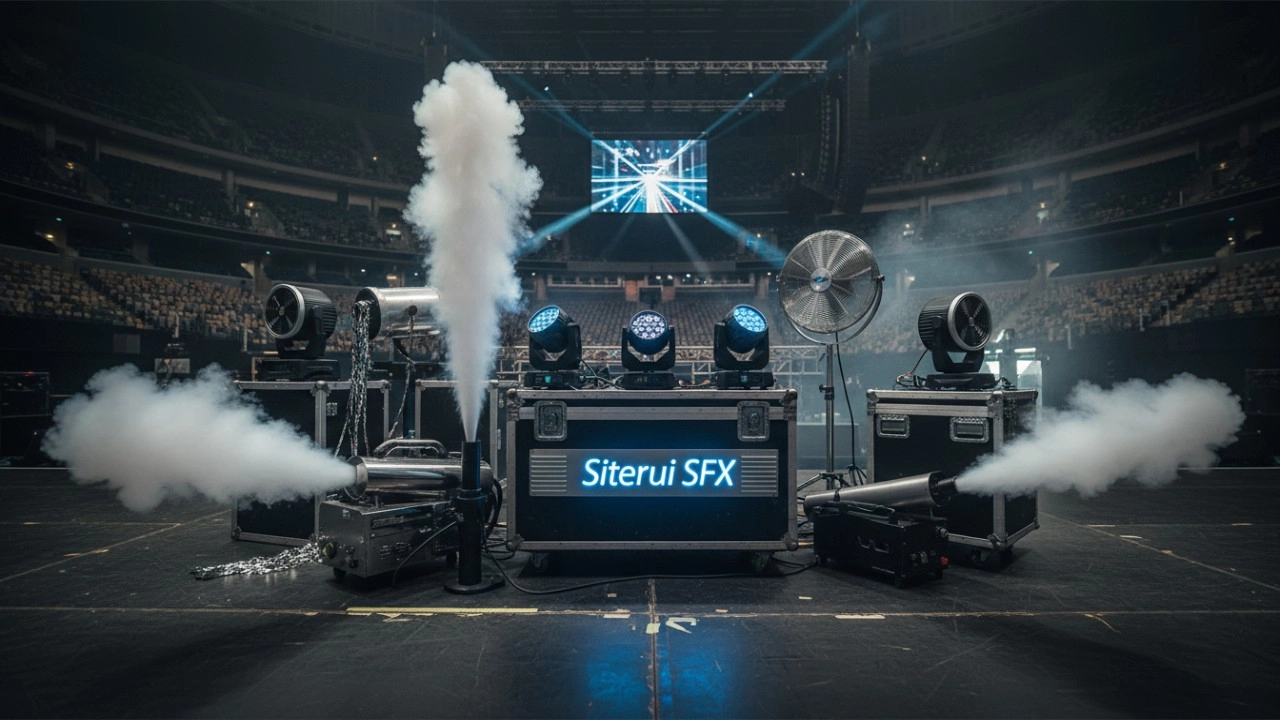
Exploring Core Categories of Professional Stage Special Effects (SFX) Equipment
Recommended for you


Stay Informed or Connect with Us
Have questions about our latest news or updates?
Reach out to us—we're here to provide more insights or media support.
Email: sales01@strlighting.com
WhatsApp: +86 189 2232 4800
© 2025 Siterui SFX All Rights Reserved.
 Scan QR Code
Whatsapp: +8618922324800
siteruisfx_stage_equipment
Siterui
SITERUI-SFX
STRlighting
@siterui.sfx