
How do cold spark machines work: safety and tech explained?
1) Can cold spark machines be safely used indoors with blackout drapes and what venue prep will satisfy a fire marshal?
Short answer: Yes—when you follow manufacturer specs, verified test data, and venue-specific fire-safety measures. Cold spark (cold spark fountain) systems are non-pyrotechnic special effects that produce incandescent metallic particles at much lower heat than traditional pyrotechnics. However, ‘safe’ is contextual: venue materials (drapes, foam, props), ventilation, automatic fire suppression systems, and local authority having jurisdiction (AHJ) rules determine acceptability.
Practical prep checklist to pass inspection:
- Obtain manufacturer test reports showing measured particle surface temperature at defined distances (e.g., 1 m, 2 m) and provide these to the fire marshal.
- Supply MSDS/SDS for the proprietary spark powder and documentation of non-flammability classification from lab tests.
- Conduct a site-specific pre-show test with identical tech, mounting and run-time. Capture thermal images (FLIR) and a short video for the AHJ.
- Ensure minimum audience/device separation per manufacturer (commonly 2–4 m). Increase distance if nearby materials are combustible; drapes are typically considered combustible unless fire treated.
- Fire-safety engineering: provide a written risk assessment, designate a trained operator and standby fire marshal or fire extinguisher crew if required, and confirm that automatic suppression systems will not be accidentally triggered by the device’s exhaust.
- Use non-flammable barriers or heat shields behind the device if mounting close to curtains. Maintain manufacturer-specified clearances from walls, ceilings, and lighting fixtures.
Why inspections still matter: despite low-heat operation, fine metal particles can deposit on surfaces and reduce ignition margins. Always validate with the venue’s officials and get approvals in writing.
2) How do I calculate real powder consumption and per-show operating cost for cold spark machines?
Manufacturers may list “feed rate” and “run time,” but real consumption depends on mode, height setting, and duty cycle. To estimate and control costs, measure and log during dry runs.
Reliable method to calculate costs:
- Weigh the hopper (or pre-measured cartrige) before a test run (grams).
- Run the effect for a controlled continuous interval (e.g., 5 minutes) at the intended intensity/height.
- Weigh remaining powder and compute grams per minute (g/min). Repeat for each intensity level (low/med/high).
- Multiply g/min by scheduled total run-time per show to get grams per show; convert to kg and multiply by your powder cost per kg.
Industry-typical figures (manufacturer-claimed ranges): feed rates commonly range from single-digit g/min on compact units to several dozen g/min on high-output systems. Powder price varies widely: lower-cost bulk powders for rental houses may run in the low tens of dollars per kg; branded certified powders used in professional events can be higher. Expect wide variance — always verify with the vendor.
Example (workflow, not universal): If measured feed = 12 g/min and effect runs 3 minutes per show, consumption = 36 g per show. At $40/kg powder, cost per show ≈ $1.44. Include occasional nozzle spillage and maintenance consumables when budgeting.
3) What specific certifications, lab tests and documentation should I demand from manufacturers before purchase?
Ask for verifiable reports and certificates — not marketing claims. The following documents are industry-standard items you should request before procurement:
- Electrical safety: CE (LVD), UL or equivalent, plus EMC (EMC/CE) test reports showing the control electronics comply with emissions/immunity norms.
- Mechanical/safety: TÜV test reports or independent lab safety validation for the heater and feed assembly, including over-temperature protection and fail-safe operation.
- Material safety and chemical: MSDS/SDS for the spark powder, plus lab test results reporting composition, particle size distribution and absence of regulated heavy metals or toxic additives.
- Thermal/ignition testing: Independent thermal imaging and flammability tests that measure particle surface temperature, peak radiant heat at specified distances, and deposition/ignition trials on common theatre fabrics.
- Emissions testing: Volatile organic compound (VOC) and particulate emissions tests if you plan indoor use in constrained ventilation environments.
- Endurance and reliability: Manufacturer-provided MTBF or burn-hour test data showing consistent output over expected rental cycles, plus maintenance schedules and spare-parts lists.
- Control and interlock documentation: DMX/Art-Net mapping, recommended wiring diagrams for emergency stop (E-STOP) and fire alarm interface, plus firmware version and update policy.
If a vendor cannot provide third-party lab reports or only offers internal tests, require an on-site demo with an engineer and request to witness or commission independent tests before final acceptance.
4) How do I integrate cold spark machines with DMX/Art-Net and venue safety interlocks (E-STOP, fire alarm)?
Professional integration requires both control-layer configuration (DMX/Art-Net) and hardware-layer safety interlocks. Cold spark machines are commonly used like other stage effects devices: DMX channels control intensity, duration, and enable. But you must add hardwired failsafes.
Best-practice integration steps:
- Use DMX for normal show control: map discrete channels for Master Enable, Intensity, Burst/Duration, and Operating Mode. Ask vendor for exact channel map and default addresses.
- Implement a hardware E-STOP loop that cuts mains power and/or triggers a fast-acting relay to stop the powder feed motor and heater. Design the E-STOP to be latching and reset only at the machine with a keyed or guarded reset.
- Integrate with venue fire alarm and suppression systems using a monitored input that will put the cold spark machine into a safe shutdown state on alarm. Do not rely solely on DMX for emergency stops.
- Provide a local “safety enable” key switch and status LEDs. The operator must be able to verify the safety chain (E-STOP state, interlocks, and fire alarm input) before effect enablement.
- Use opto-isolated DMX converters and surge protection. Keep control cables away from mains power runs to avoid EM noise that can accidentally trigger outputs.
- Document the wiring and publish a one-page quick-start safety sheet for venue staff and touring technicians that shows the emergency shutdown procedure.
Example DMX logic pattern (typical): Channel 1 = Master Enable (0 = safe, 255 = armed). Channel 2 = Intensity (0–255). Channel 3 = Burst Length / Mode. Then overlay hardware interlock: if E-STOP open or fire input active, hardware forces Master Enable = 0 regardless of DMX.
5) Why do cold spark machines clog or produce uneven sparks after heavy use, and how do I fix it?
Common causes of inconsistent output are contamination, humidity, improper powder grade, worn feed components, or blocked nozzles. Fixing the problem quickly avoids show interruptions.
Troubleshooting and maintenance steps:
- Power-down and clean: remove hopper, inspect for foreign material. Use dry, lint-free compressed air at low pressure (per manufacturer guidance) to clear feed paths—do not use high-pressure that compacts powder.
- Check powder quality: confirm hygroscopic or clumped powder. Store powder in sealed desiccant-lined containers. If powder is caked, discard and use fresh certified batch; do not use improvised or unknown powders.
- Inspect the auger/feeder motor and gearbox: listen for grinding or slipping. Replace worn auger screws and lubricate per manual.
- Examine the nozzle and heating chamber: remove carbonized residues and check for blocked orifices. Replace nozzle seals if distorted by heat cycles.
- Verify compressed air quality and pressure: oil, water, or particulates in supply lines cause clogging; fit coalescing filters and regulators and drain moisture traps regularly.
- Run calibration cycles: many units allow you to tune feed pulse length and heater duty to restore consistent spark height. Log the settings that work for each powder batch.
- Maintain a spare-parts kit: extra nozzles, o-rings, auger segments, and a manufacturer service contact for fast replacement of heating elements or control boards.
Preventative maintenance schedule (commercial use): daily quick-clean and inspection, weekly filter and nozzle check, monthly full teardown inspection, and documented maintenance logs for rental/production records.
6) What are realistic particle temperatures at different distances and how can I validate them on-site?
Manufacturer claims typically state that spark particles are low-heat compared with pyrotechnic sparks; many brands publish particle temperatures or maximum measured surface temperatures. Real-world temperatures depend on particle metallurgy, mass, velocity and air cooling. Industry-typical measurements often indicate particle surface temps that are safe to brief contact at certain distances, but you must validate for your configuration.
On-site validation methods:
- Thermal imaging: use a high-resolution FLIR camera to record particle temperature at target distances (1 m, 2 m, etc.). Ensure camera settings account for small hot particles (high frame rate and spot-size calibration).
- Thermocouple sampling: affix a fine-gauge thermocouple bead on representative target surfaces (non-critical test coupons such as treated fabric swatches or steel plates) and run the effect for a defined burst to record temperature rise.
- Deposition ignition test: place representative fabric samples and other stage materials at the intended exposure distance and perform a timed burst. Observe for charring, smoldering, or ignition for a conservative safety margin.
- Third-party lab: for repeatable certification and venue acceptance, commission an independent lab to run particle temperature mapping and deposit/ignition tests to recognized standards.
Practical guidance: don’t rely on a single metric. Use combined thermal imaging, direct thermocouple reading, and material deposition tests to create safety limits and required separation distances. Document results and include them in the risk assessment you provide the venue. If manufacturer data conflicts with your own tests, defer to the more conservative outcome and notify the vendor.
Conclusion: Advantages of cold spark machines for stage productions
Cold spark fountains (cold spark machines) offer a controllable, repeatable, and lower-heat alternative to traditional pyrotechnics: indoor-capable with proper approvals, DMX-compatible for show integration, relatively low consumable costs when measured and managed, and reduced debris/cleanup compared with powder-based pyros. They enable high-impact visual effects with faster turnaround and fewer regulatory hurdles if used according to tested safety limits and with the correct documentation.
For a site-specific safety assessment, product specification sheet, or a quote for certified cold spark systems and installation, contact us at www.siteruisfx.com or sales01@strlighting.com.
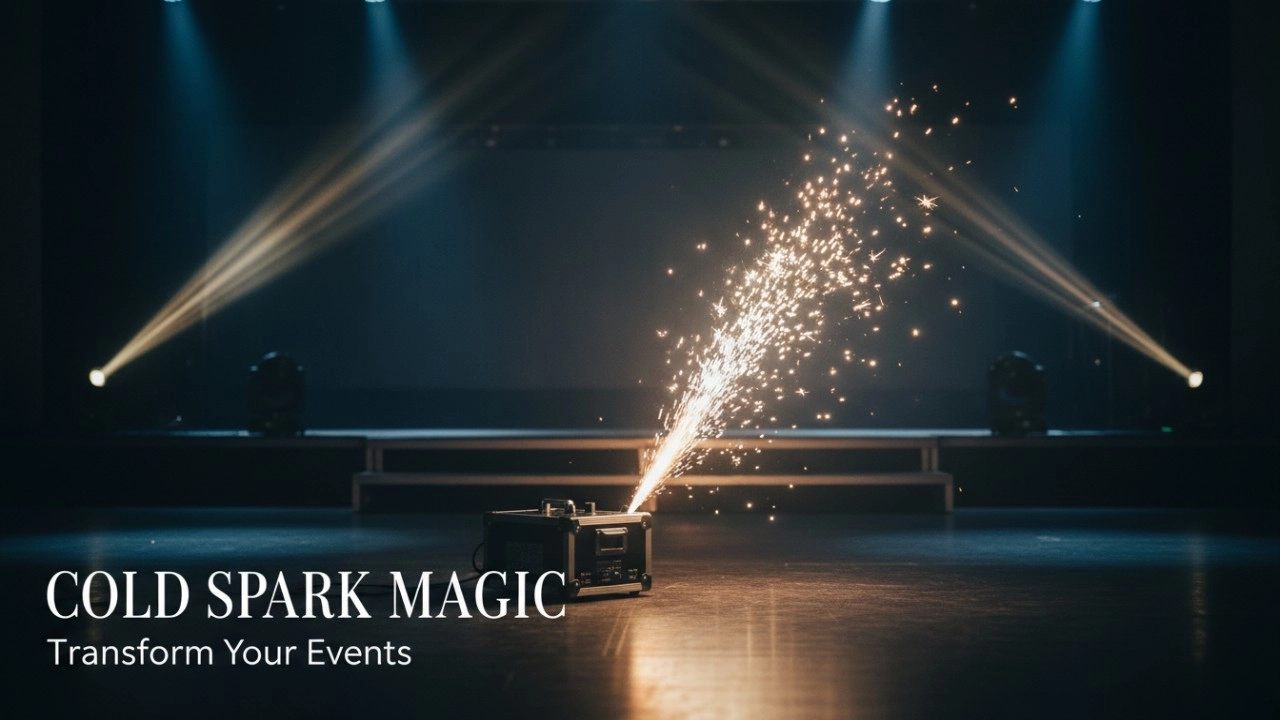
Top 10 Cold Spark Machines for 2026: A Deep Dive into Performance, Powder Life, and Durability
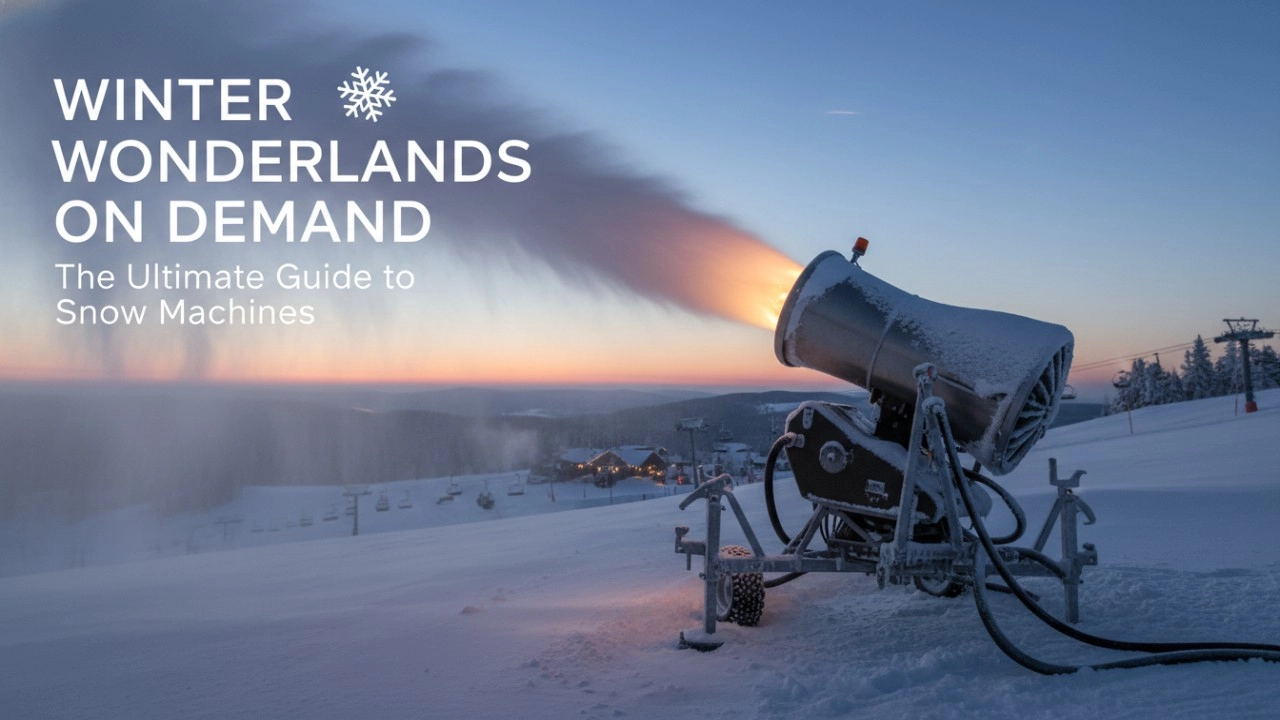
How to Choose a Snow Machine: The Definitive Checklist to Avoid Costly Mistakes (2026 Guide)
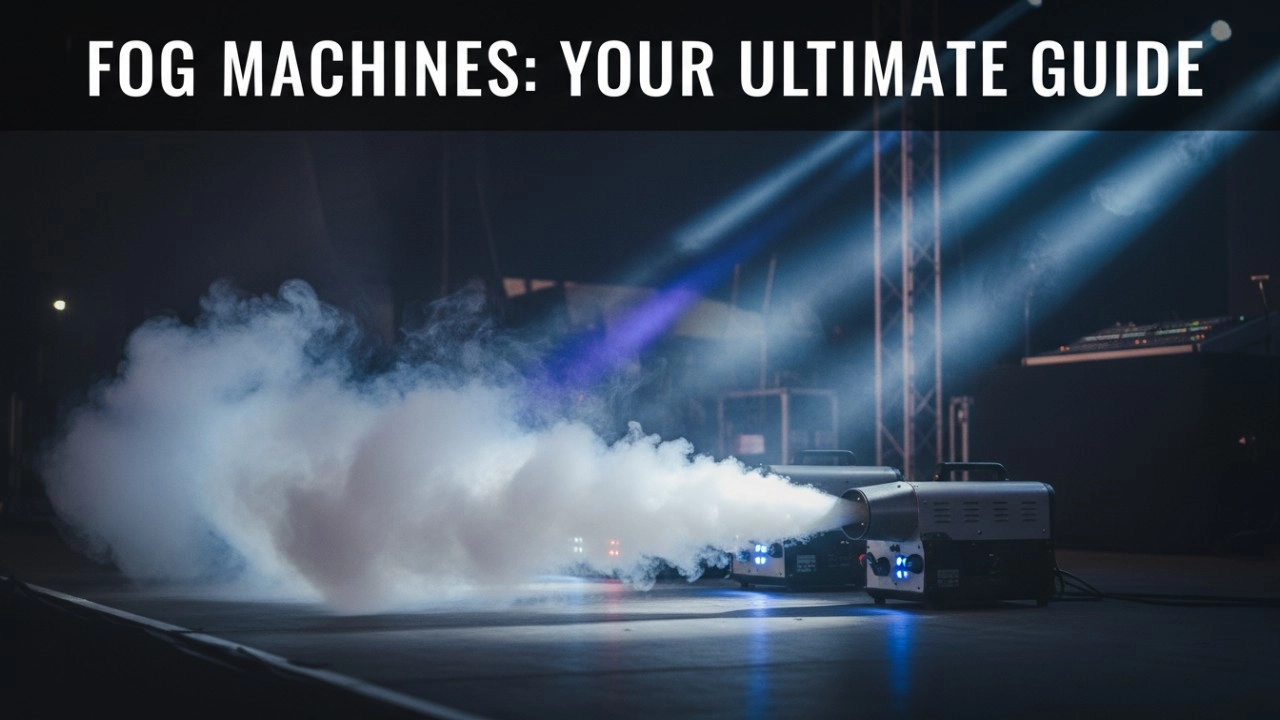
Fog Machines Explained: Technology, Control Systems, and Modern Stage Applications
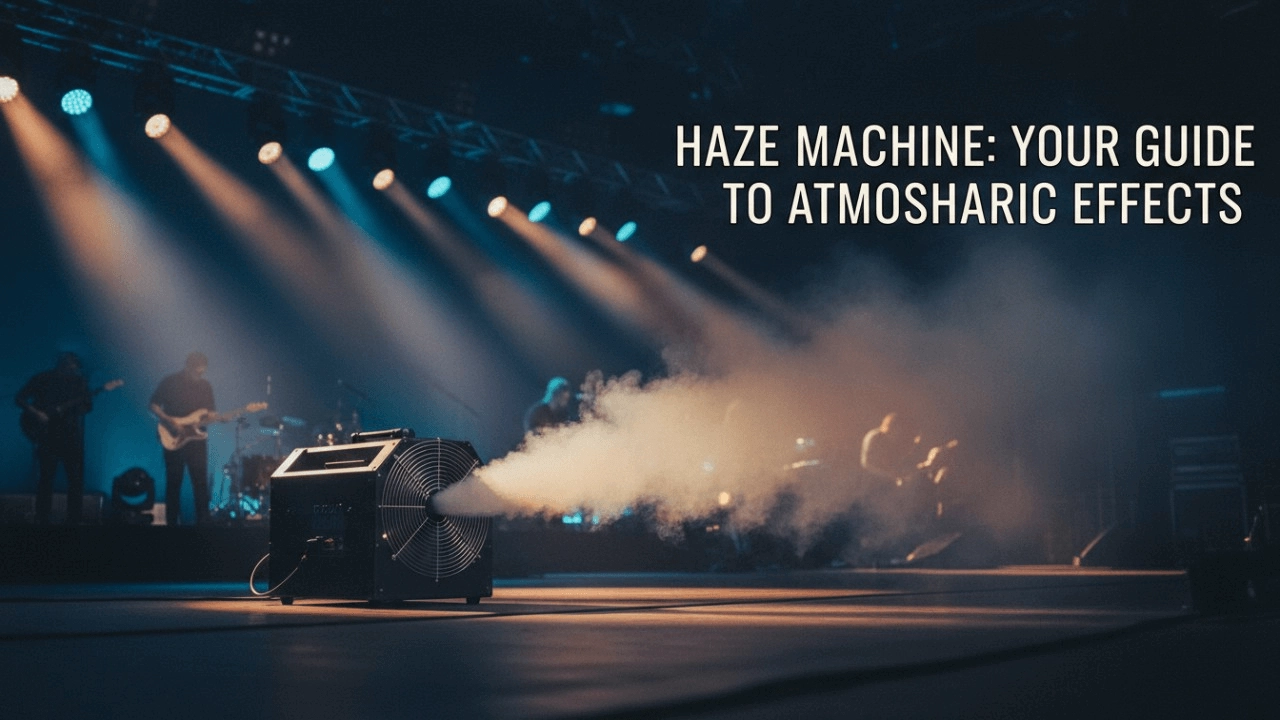
Haze Machines Explained: The Definitive 2026+ Guide to Effects, Selection & Future Innovations
Recommended for you
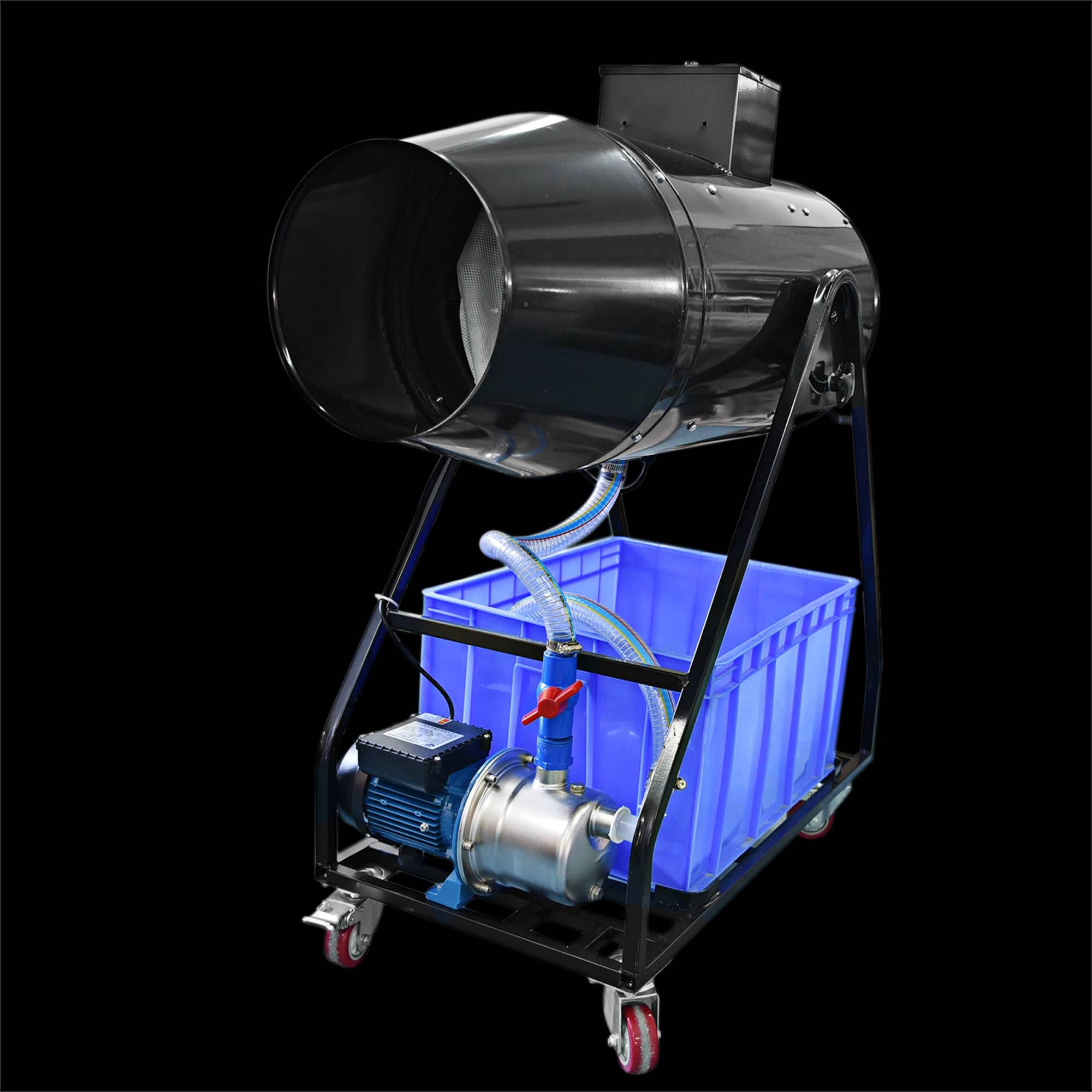
Elevate your event with the Siterui SFX 1800W Spraing Foam Machine. This high-power, professional foam party maker creates dense, vibrant bubbles—perfect for weddings and celebrations. Reliable and easy to use, it’s the foam and bubble machine for unforgettable moments.
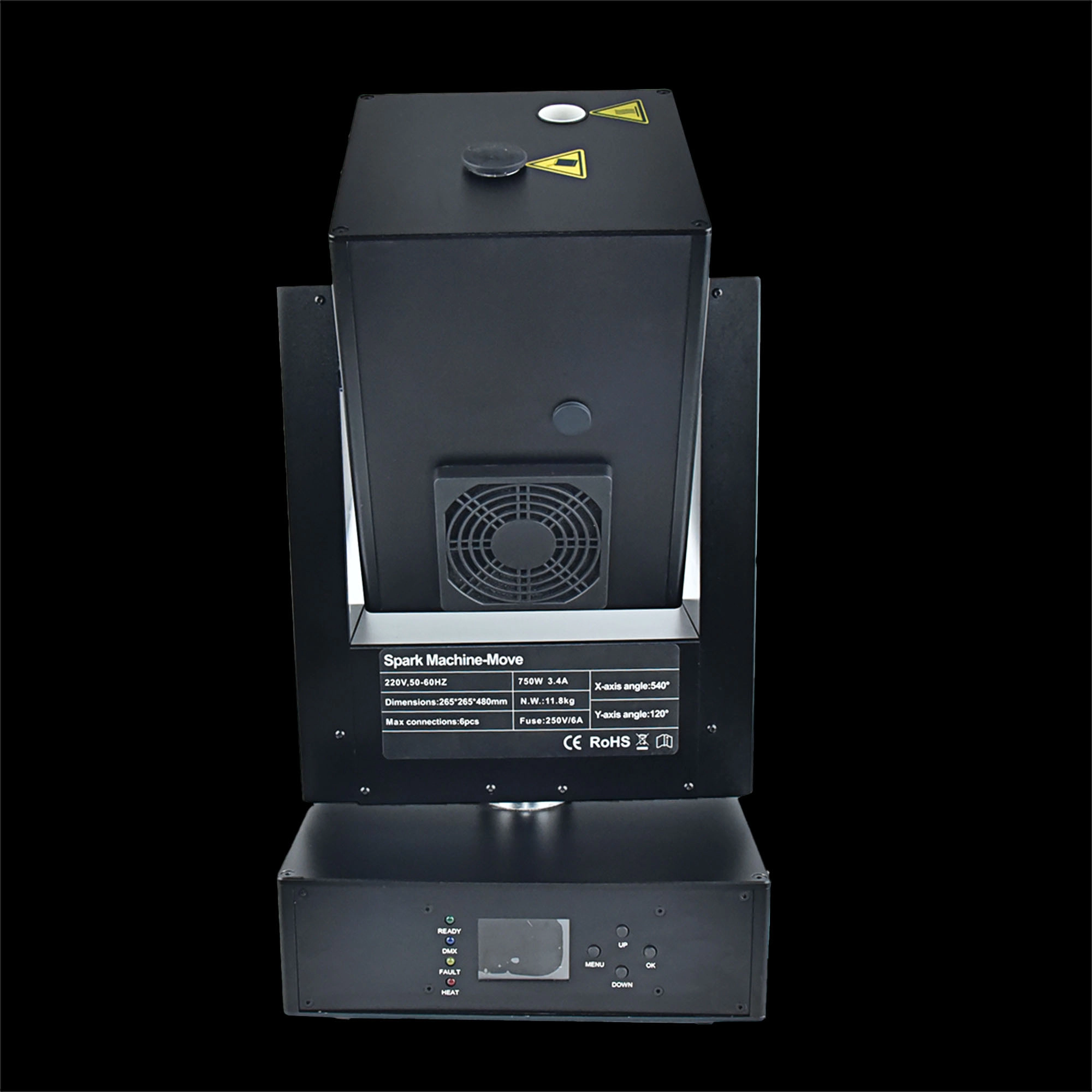
Siterui SFX 750w moving head spark machine delivers high-impact cold-spark effects with 360° moving head, DMX control, adjustable output and safe, long-lasting performance - perfect for concerts, weddings and stage shows.
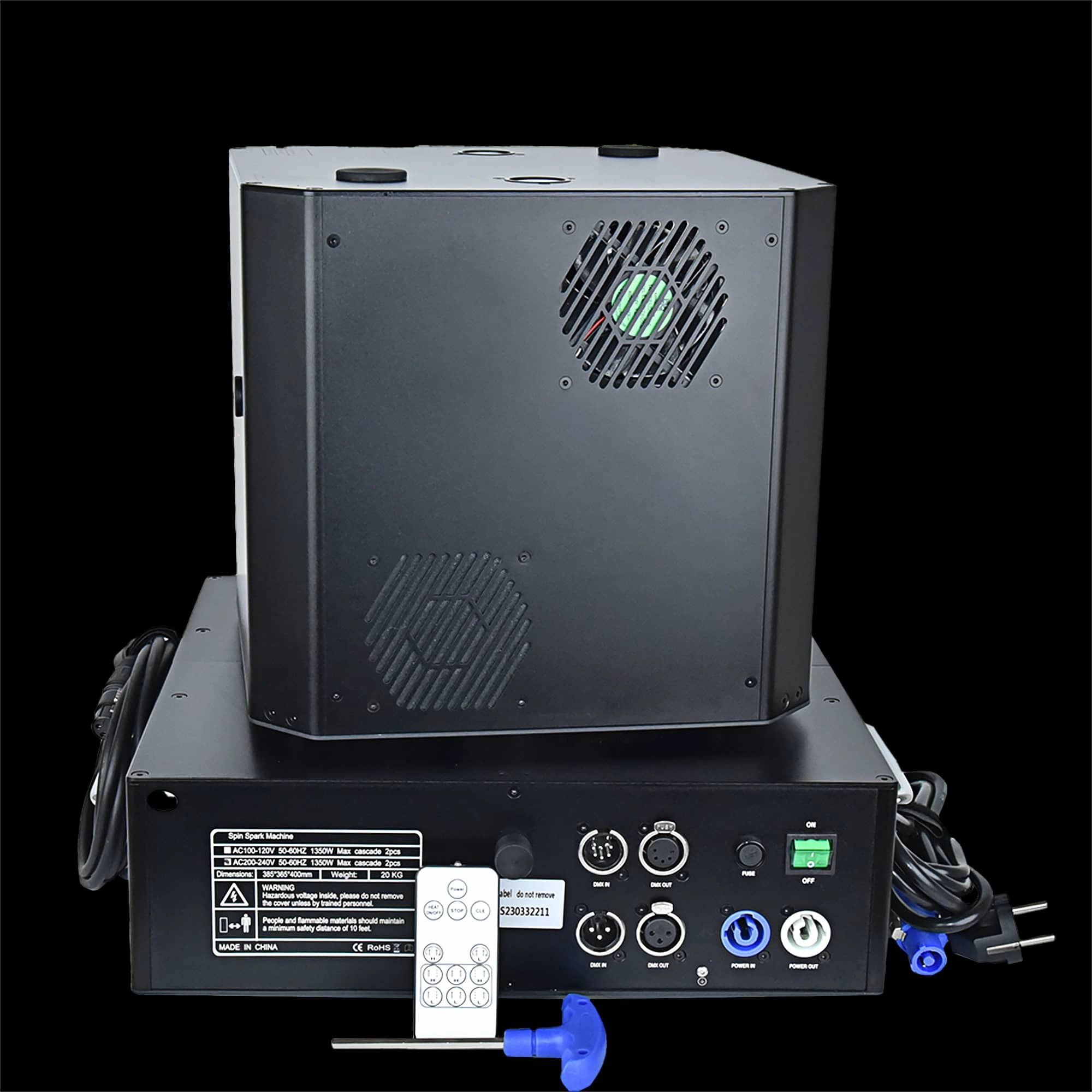
Double head 1300W Spin Spark machine -powerful dual-head 1300W spin spark effect with DMX + remote control for precise timing. Durable, professional-grade pyrotechnic effect ideal for concerts, clubs and events.
Stay Informed or Connect with Us
Have questions about our latest news or updates?
Reach out to us—we're here to provide more insights or media support.
Email: sales01@strlighting.com
WhatsApp: +86 189 2232 4800
© 2025 Siterui SFX All Rights Reserved.
 Scan QR Code
Whatsapp: +8618922324800
siteruisfx_stage_equipment
Siterui
SITERUI-SFX
STRlighting
@siterui.sfx